Home service businesses face unique challenges in managing mobile teams, unpredictable job durations, and high-volume customer requests.
Leveraging automation can help streamline operations without compromising service quality. A home service artificial intelligence (AI) agent can handle routine tasks such as scheduling, follow-ups, and client communication, freeing staff to focus on more complex work.
Let us explore the top use cases of AI agents that drive measurable improvements in home service operations today.
Automate appointment scheduling for home service clients
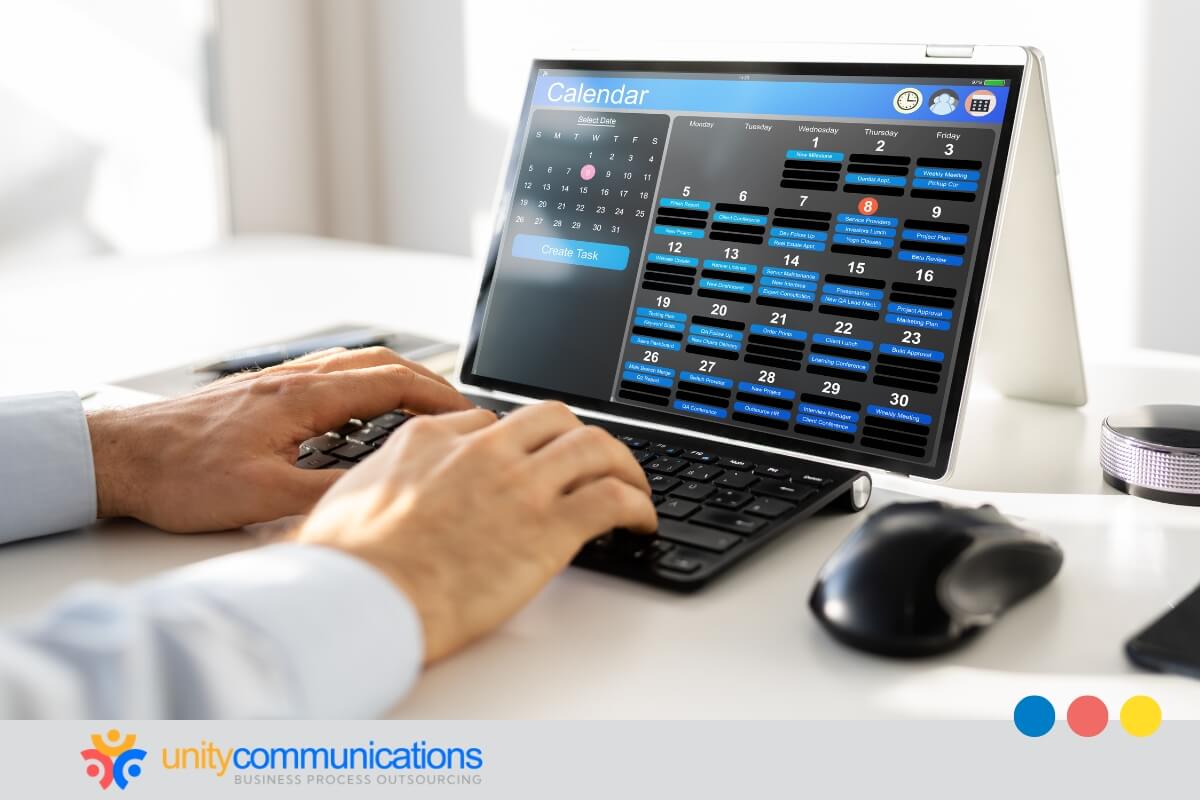
Efficiently managing appointments is crucial for home service businesses; timely service and accuracy directly influence customer satisfaction. Many companies address scheduling complexity through third-party providers.
The business process outsourcing (BPO) definition revolves around delegating coordination to external teams to enhance efficiency, scalability, and productivity. AI agents apply the same operational principles while functioning as a virtual scheduling team with the following capabilities:
Real-time booking and calendar management
An AI receptionist provides a great customer experience by checking available staff and resources and offering accurate time slots. Automated updates synchronize calendars in real time to prevent double-booking or missed appointments, while immediate scheduling enhances efficiency by reducing back-and-forth with clients.
Seamless rescheduling and cancellations
Customers can quickly reschedule or cancel appointments without speaking with the staff. The system automatically updates calendars and notifies relevant personnel of changes. Efficient rescheduling keeps operations smooth and reduces administrative workload.
Automated reminders and confirmations
AI agents notify clients of their appointments via SMS, email, or voice. Timely reminders decrease no-shows and last-minute cancellations, improve customer satisfaction, and boost revenue.
Management of recurring or multi-service appointments
AI agents can automatically manage recurring bookings, scheduling future appointments while aligning with staff availability and service duration. This prevents scheduling conflicts and keeps calendars consistently organized.
24/7 availability for scheduling
AI agents can accept and modify appointments outside regular business hours, giving customers flexibility and ensuring no request goes unanswered. This 24/7 availability increases convenience, captures opportunities, and strengthens customer trust and satisfaction.
Forbes shares that over 60% of business owners believe AI will improve customer relationships. AI agents support this shift by streamlining appointment management with speed and accuracy.
Mini case example
Consider a mid-sized HVAC company during summer peak season. The business receives a mix of emergency calls (no cooling), routine tune-up requests, and follow-ups for recently installed systems.
An AI scheduling agent can triage these requests in real time by asking a few structured questions (symptoms, location, urgency, and system type), then offering available appointment windows based on technician skill sets and travel distance.
If the customer reports a high-risk issue, such as a system failure during extreme heat, the AI agent can automatically prioritize the job and escalate it to an on-call dispatcher.
In practice, this reduces missed calls after business hours, speeds up booking, and prevents schedulers from spending time on repetitive rescheduling and confirmation tasks, especially when job durations vary widely and same-day availability changes quickly.
Manage customer inquiries and qualify leads
Promptly responding to inquiries and identifying high-quality leads are essential for growing your business. Much like how outsourcing works, AI agents can serve as an extension of your team. They answer routine questions, flag prospects for follow-up, and qualify leads before handing them off to human staff.
Instant responses to customer questions
AI agents can answer inquiries about services, pricing, and availability in real time. Rapid responses prevent potential customers from seeking competitors, improve engagement, and increase conversion.
Data collection for follow-up
You can program a home service AI agent to request customer consent and collect contact information, service preferences, and special requirements. The system then stores the data in your customer relationship management (CRM) platform for future engagement and more personalized service.
Lead qualification and scoring
AI systems improve resource allocation by collecting information about the customer’s needs, urgency, and location to determine lead quality. They can flag high-priority or high-value leads for immediate human follow-up.
Automated routing to sales or service staff
AI automatically routes qualified leads to the right team member based on expertise, location, or availability. This process ensures the most suitable person handles each inquiry quickly, improving response times and increasing conversion rates.
Conversation insights and intent analysis
AI agents analyze customer language, intent, and engagement patterns during inquiries to understand what prospects actually want. These insights help identify buying signals, common objections, and service demand trends. Managers can use this intelligence to refine sales scripts, adjust service offerings, and improve overall conversion strategies.
According to Grand View Research, the global AI market size could reach over $3.4 trillion by 2033. Much of this projected growth is tied to automation in customer service and operational workflows, as small and mid-sized businesses adopt conversational AI to reduce response times and manage rising customer expectations.
Payment processing
Accurate and timely payment processing is critical for home service businesses to maintain healthy cash flow. AI agents can generate quotes, process payments, and automatically confirm transactions with speed and accuracy.
Instant service quotes
AI agents calculate and provide customers with immediate quotes based on service type, duration, and materials. More transparent pricing builds trust and expedites the decision-making.
Note, however, that while AI-generated quotes work well for standardized services with predictable scope, complex or diagnostic-heavy jobs still require human review or on-site confirmation to avoid pricing discrepancies.
Secure payment processing
These AI tools can securely facilitate online or phone payments. They process transactions quickly while maintaining data security, reducing errors, and protecting sensitive financial information.
Automated invoicing and receipts
AI agents automatically generate invoices and issue receipts after payment. Clients receive proof of payment without waiting for manual processing, ensuring accuracy and compliance with financial standards.
Payment reminders and follow-ups
For pending or overdue payments, the home service AI agent can automate reminders to increase payment collection rates. Follow-ups reduce administrative effort and improve cash flow consistency.
Payment analytics and revenue insights
AI agents analyze payment data to track revenue trends, average transaction values, and payment completion rates. These insights help identify delays, failed payments, or pricing friction points.
With clearer visibility into cash flow patterns, managers can optimize pricing strategies, improve collection processes, and forecast revenue more accurately.
Dispatch management

McKinsey found that 80% of respondents say efficiency is a primary goal for adopting AI. In home service businesses, this focus manifests in AI-driven call routing and staff dispatching to optimize delivery and operating costs.
Intelligent call routing
The system automatically routes calls to the appropriate department or service agent based on its assessment of staff specialization, workload, and client needs. Intelligent routing reduces wait times and quickly resolves problems.
Location-based dispatching
AI agents assign jobs based on staff proximity to service locations. Reduced travel time improves efficiency, lowers operating costs, and facilitates timely service delivery.
Availability management
The system cross-references staff schedules and workloads before confirming appointments to avoid scheduling conflicts and properly allocate resources. This approach maintains operational reliability.
Emergency or priority handling
Home service AI agents escalate urgent requests to the nearest qualified staff, ensuring fast response and reliable service.
AI agents simplify routing and dispatching to enhance the overall client experience, reduce costs, and optimize resource utilization.
Support for multilingual communication and accessibility
Serving diverse customers requires communication in different languages and formats. An AI IVR system can interact with clients in their preferred language and accommodate accessibility needs.
Multilingual support
AI agents communicate in different languages by using multilingual large-language models (LLMs) for text-based conversations and combining speech-to-text and text-to-speech tools for phone calls. Some systems also use translation layers and multilingual retrieval (RAG) to deliver accurate answers and appointment actions in the customer’s preferred language.
Accessibility features
Currently, 35.49% of people use AI tools daily, highlighting how integrated these technologies have become in everyday life. This widespread use extends to accessibility, where AI systems provide voice, text, or visual support to clients with disabilities. This makes interactions user-friendly, inclusive, and compliant with accessibility standards.
Localized communication
AI agents can adapt phrasing, formatting, and cultural context based on location or demographic. Tailored communication improves clarity and engagement, while localized interactions strengthen trust and professionalism.
Automated transcription and translation
Home service AI agents can transcribe and translate calls or messages in real time to keep client records accurate and reduce misunderstandings and operational delays.
Multilingual and accessibility-ready home service AI agents support clear, professional communication for all customers, strengthening brand reputation and expanding the potential client base.
Compliance and data security adherence
Governments are increasing their role in AI, with U.S. federal agencies introducing 59 AI-related regulations in 2024. An AI agent should support adherence to the General Data Protection Regulation (GDPR), the Health Insurance Portability and Accountability Act of 1996 (HIPAA), and other industry-specific rules to reduce your liability and build customer trust.
Secure data storage and encryption
A secure AI receptionist or agent features built-in encryption protocols to protect data during transit and storage and prevent unauthorized access. Examples include role-based access controls (RBAC), single sign-on, and multifactor authentication.
Call and interaction recording controls
Home service AI agents allow businesses to configure recording settings for compliance and operational needs, capturing interactions without violating privacy. Proper recording practices foster accountability and respect customer confidentiality.
Audit logs and monitoring
The system creates logs for every interaction, which you can access for review or audit. This simplifies compliance reporting, enhances internal accountability, and boosts monitoring.
Automated compliance enforcement and policy alignment
You can configure AI agents to automatically enforce data-handling rules in line with regulatory requirements and internal policies. This includes consent prompts, data retention limits, and access restrictions applied in real time. Automated enforcement reduces human error and ensures consistent compliance across every customer interaction.
When choosing the best AI receptionist or agent, prioritize those that support compliance and data security to avoid reputational damage and hefty penalties.
Analytics-driven service tracking and reporting
Tracking service requests becomes truly valuable when paired with advanced analytics. AI agents transform raw request data into actionable intelligence by analyzing trends, performance patterns, and customer behavior. These insights help home service businesses optimize operations, forecast demand, and improve customer satisfaction with confidence.
Data-rich request analytics
Every service request is automatically captured, categorized, and analyzed, creating a clean dataset that reveals trends in request volume, peak demand periods, and recurring service issues. Structured data enables accurate forecasting and long-term performance analysis.
Real-time operational insights
Live analytics dashboards provide visibility into active jobs, appointment progress, and workload distribution. Managers can identify delays, capacity constraints, or service gaps as they happen, enabling faster, data-driven interventions.
Performance metrics and trend analysis
Home service AI agents generate detailed reports on response times, job completion rates, technician productivity, and customer feedback. Trend analysis highlights inefficiencies, recurring bottlenecks, and shifts in performance over time, supporting continuous optimization.
Customer behavior and interaction analytics
The system analyzes inquiry patterns, follow-ups, resolution rates, and satisfaction signals. These insights uncover opportunities to improve service quality, reduce repeat issues, and enhance customer experience strategies.
Customizable analytics and reporting views
Reports and dashboards can be tailored for operational teams or executives, ensuring each stakeholder sees the most relevant metrics. Custom analytics views make insights easier to interpret and act on.
By focusing on analytics rather than just tracking, AI agents turn service request data into a strategic asset. Home service businesses gain clearer visibility and measurable improvements in efficiency and customer satisfaction.
Why pair home service AI agents with humans

While AI agents can streamline operations, they are not without limitations, particularly in field service environments where variables change quickly.
- Inaccurate quoting for complex jobs. AI-generated estimates might fall short when a job requires on-site inspection. Hidden damage, nonstandard installations, or outdated equipment can make automated pricing inaccurate. Overreliance on AI quoting without human review can lead to underpricing or customer disputes.
- Dispatch errors due to incomplete data. If CRM records are outdated or technician skill tags are misclassified, AI-driven dispatching can assign the wrong technician to a job. This increases travel time, delays service, or requires costly rescheduling.
- Escalation delays during urgent situations. In emergency cases, AI systems must escalate immediately. Poorly configured workflows might lead to dangerous delays if urgency-detection rules are imprecise.
- Customer frustration with rigid automation. Some customers prefer speaking with a human, especially when discussing billing disputes or warranty concerns. If escalation pathways are unclear or slow, AI-first systems can negatively affect satisfaction.
To mitigate these risks, more home service businesses leverage human-AI hybrid models. This approach combines the speed and scalability of AI agents with the judgment, empathy, and contextual understanding of human staff.
Human-in-the-loop (HITL) decision-making
AI agents handle data processing, prioritization, and recommendations, but human staff validate decisions when complexity or risk is involved. This ensures that automated actions remain aligned with business policies and customer expectations. Human oversight also reduces errors and improves confidence in AI-driven workflows.
Scalable automation with human quality control
You can automate routine operational tasks at scale, while human agents monitor outputs and intervene when needed. This balance can expand your capacity without compromising service standards. Human quality checks promote accuracy, compliance, and consistency across automated processes.
Enhanced customer experience through hybrid support
AI agents manage initial inquiries, scheduling, and updates, while human agents step in for sensitive or nuanced interactions. This hybrid approach preserves empathy and personalization where it matters most. Customers benefit from faster responses without feeling disconnected from real support.
Smarter workforce allocation
AI analytics identify workload patterns and performance gaps, enabling managers to deploy human staff more strategically. By offloading repetitive work to AI, teams can focus on higher-value activities such as customer retention and service improvement. This leads to better productivity and reduced burnout.
Optimized BPO and automation integration
Human-AI models align seamlessly with BPO environments by combining trained agents with intelligent automation. AI agents execute automated outsourced tasks, while human teams manage escalation, optimization, and continuous improvement. The result is a flexible, cost-efficient operating model that scales intelligently.
To emphasize the value of a hybrid model, let’s suppose a residential cleaning company uses an AI agent to handle booking requests, collect home size details, identify special requirements (such as deep cleaning, post-renovation cleanup, or pet-related concerns), and generate preliminary pricing.
For standard recurring cleanings, the AI confirms appointments and assigns teams based on availability and proximity. However, when a client requests specialized services, reports delicate materials, or disputes prior billing, the system routes the case to a human supervisor before final confirmation. The AI manages routine coordination at scale, while staff validate edge cases, adjust scope, and preserve service quality.
The bottom line
AI agents help home service businesses improve efficiency and satisfaction by streamlining scheduling, customer management, and lead qualification. By automating routine tasks, supporting multilingual communication, and integrating with core systems, staff can focus on delivering high-quality services.
Discover how a home service AI agent can transform your operations. Let’s connect today and explore a solution tailored to your business.
Frequently asked questions
What is a home service AI agent?
A home service AI agent is an automated system that handles scheduling, customer inquiries, follow-ups, and other routine tasks. It allows staff to focus on delivering services while ensuring smooth, efficient customer interactions.
How can AI agents reduce no-shows and missed appointments?
AI agents automatically send reminders, confirmations, and follow-up messages to clients. Timely notifications keep schedules on track and minimize cancellations or forgotten appointments.
Can AI agents handle customer inquiries and lead qualification?
Yes, AI agents can answer questions, gather necessary information, and prioritize leads based on urgency or value. They can route qualified leads to the right staff for faster and more effective follow-up.
How do home service AI agents integrate with existing systems?
A home service AI agent can connect seamlessly with CRMs, scheduling platforms, phone systems, and communication tools. Integration ensures consistent data, automated workflows, and accurate recordkeeping.
Are AI agents capable of handling multiple languages and accessibility needs?
Yes, AI agents can communicate in multiple languages and provide accessibility features such as voice, text, or visual support. This ensures all clients receive professional and inclusive service.
How do AI agents ensure data security and compliance?
AI systems encrypt sensitive data and implement role-based access controls. Secure data handling protects customers and reduces organizational risk.
How do AI agents support human staff rather than replace them?
AI agents handle repetitive and time-consuming tasks, allowing human staff to focus on complex decision-making and customer relationships. This human-in-the-loop approach improves productivity while preserving service quality and accountability.
Can AI agents scale during peak demand or seasonal surges?
Yes, AI agents can handle high volumes of requests simultaneously without performance degradation. This scalability ensures consistent response times during busy periods without the need to rapidly increase headcount.
What kind of reporting and insights do AI agents provide?
AI agents generate real-time and historical reports on request volume, response times, appointment outcomes, and customer behavior. These insights help managers identify trends, optimize resources, and make data-driven operational decisions.