As your business grows, ticket volume increases. But how do you strengthen technical and help desk support without straining your budget and the existing team?
Scaling companies can consider outsourced technical support and help desk call center services. An outside provider handles the daily ticket load, adding support capacity without hiring and training more staff. Your team then has more time for core work.
This article discusses the specific functions to outsource and how to delegate these tasks together to a single vendor.
What are outsourced technical support and help desk call center services?
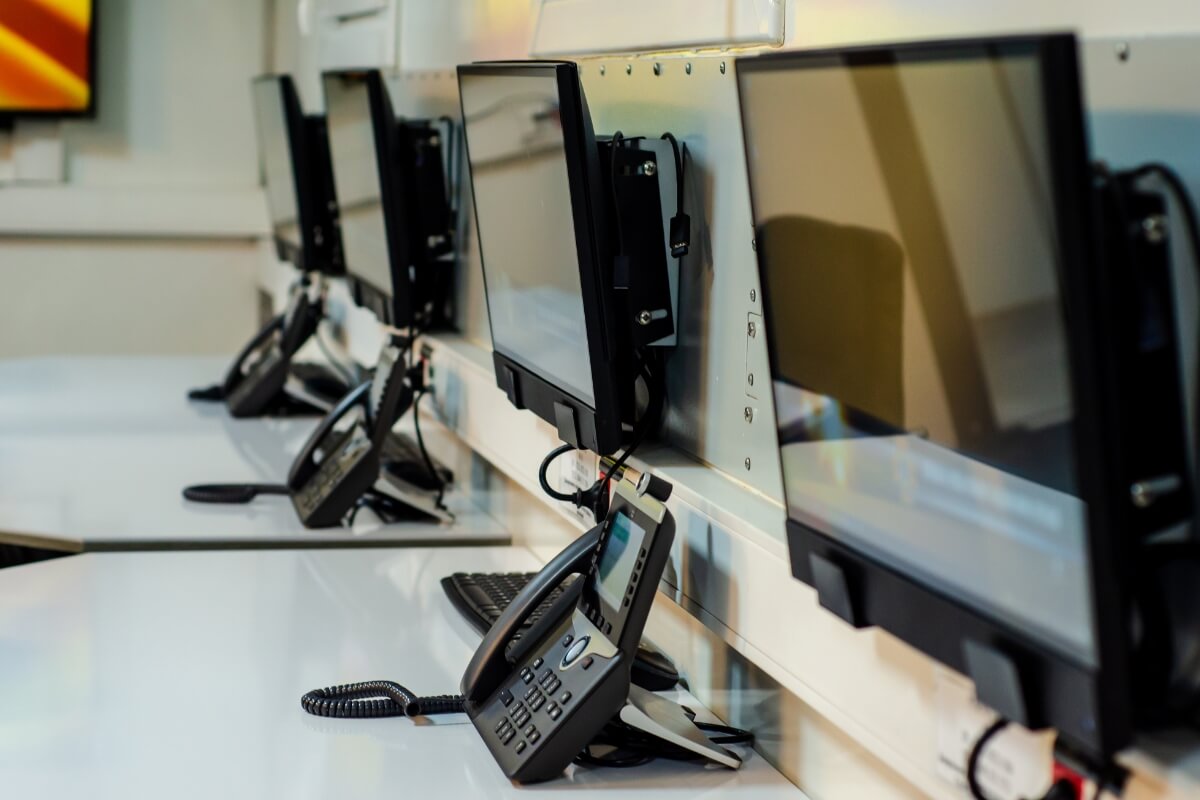
Outsourced technical support and help-desk call center services are IT functions that a third-party IT service provider handles for your business.
Let’s break down this definition, starting with “What is an outsourced IT provider?” It’s an external vendor that provides IT services for businesses of all sizes. It usually handles:
- Outsourced tech support. This covers specialized services for users of technology products (hardware or software). It focuses on assisting users with technical issues rather than helping them use the products. When you outsource technical support, your users gain access to technical experts and advanced resources, while you streamline your support operations.
- Outsourced help desk call center services. In addition to providing tech support, help desk services also include answering customer inquiries, processing requests, and addressing general concerns. Outsourcing this function allows you to tap into expert customer support specialists to help you win new customers and keep old ones.
Opting for outsourced technical support and help desk call center services is more cost-effective and more efficient for the following reasons:
- You don’t pay to recruit and manage an in-house team or to staff overnight and weekend shifts.
- One provider replaces two vendors or teams. You carry one set of management, tools, and contracts.
- You can scale the team up or down based on ticket volume instead of maintaining a fixed headcount.
- Ownership is clear.
- Tickets, reporting, and the knowledge base live in one system, speeding up resolution.
- Your own team is freed from routine tickets and can focus on core work.
Business process outsourcing (BPO) providers, such as Unity, also offer other front- and back-office outsourcing services. Examples include data entry, digital marketing, accounting, and finance. You can expand operations beyond technical support without having to onboard new vendors each time.
How a call center provides technical and help desk support
Support teams are handling more tickets with people who take longer to get up to speed. In HDI’s 2025 survey of tech support leaders, 34% of respondents reported rising ticket volumes, and the average organization handled 10,675 tickets a month.
New hires struggled to keep pace. Information overload (67%) and system complexity (43%) were the top barriers to proficiency, and 75% of organizations reported notable turnover in the past year.
A call center closes that gap. It supplies trained agents, tiered escalation, and coverage beyond office hours, so tickets don’t pile up while your own team catches up. That is one reason businesses rely more on front- and back-office outsourcing for customer service, sales, and IT support.
The following sections explain how outsourced technical support and help desk call center services work.
Technical support through a call center
Customers typically contact technical support specialists through a call center for help with troubleshooting and other fixes for their tech products.
Typically, a tech support call center offers different levels of support:
- Tier 0. An IT service provider offers self-service options. This support level does not require human intervention. Customers can fix technical issues themselves using troubleshooting manuals and resource guides.
- Tier 1. Specialists are available to handle common technical problems. These specialists are always ready to assist customers in fixing technical problems and resolving issues almost immediately.
- Tier 2. A team of tech support specialists addresses more complex technical problems. They need ample time to address problems and close tickets. They can go so far as to contact customers once issues are resolved.
- Tier 3. An in-house team usually handles issues escalated to them by low-level specialists due to complexity. This team has far more advanced technical know-how and skills. If no in-house team is available, a contracted service provider will establish a dedicated team to provide this level of support.
Help desk call center services
Help desk support does more than provide technical assistance. Specific services handled by an outsourced help desk provider include:
- Customer support. A help desk call center service ensures users get all the help they need. For example, a specialist assists a customer with installing and setting up software. Another example is assisting customers in updating and maintaining an app for the long term.
- Answering questions. Knowledgeable and trained specialists answer customers’ technology-related questions. They also help educate their customers.
- Processing requests. Like staff providing outsourced data entry services, help desk agents can also update records, process orders, or even send technicians on-site.
- Troubleshooting. Diagnosing technical problems is also part of help-desk activities. When a customer relationship management (CRM) tool fails to start due to a system error, a specialist resolves the issue for the customer.
- Ticket creation. A help desk doesn’t always resolve technical problems immediately. Specialists also open tickets to conduct thorough investigations. They close them only when the issues are resolved.
- Department escalation. When necessary, help desk specialists connect customers with the proper departments. For instance, they can refer customers with technical issues to your partner vendor for resolution.
- Complaint management. A third-party help desk logs each complaint as a ticket and acknowledges it right away. Business process outsourcing agents find the cause, fix what they can, and escalate the rest to the right tier or department. They follow up until the customer confirms the issue is resolved. Recurring complaints are reported back to your team so you can fix the root cause.
What to expect from the collaboration of technical support and help desk call center services

Because both functions overlap, many growing companies decide to combine them to achieve the following benefits:
1. Proper coordination
Outsourcing combined tech support and help desk services improves coordination. One service desk team owns the whole request. Meanwhile, agents who support both IT-related issues and account questions use the same ticketing system and knowledge base, so nothing bounces between vendors.
Customers also explain their problem once. Escalations move faster too, because every tier sees the same ticket history. This matters most for small businesses, which can’t afford slow handoffs.
2. 24/7 operation
Tech support and help desks are front-office tasks. Because they directly interact with customers, specialists must be ready to assist them. Outsourcing to a contact center ensures your 24/7 availability.
Unity Communications saw this with a U.S. IT company that won a large contract requiring 24/7 call handling, up from an eight-hour daily help desk. Qualified applicants for overnight shifts were scarce, so Unity built a Tier 1 team for entry-level IT issues and developed APIs to connect the two teams’ ticketing and reporting systems. The client now offers round-the-clock coverage, seven days a week, across three countries.
3. Fast response time
Dedicated agents and round-the-clock coverage mean a request doesn’t wait for your own team to start its workday. Each interaction begins sooner, so customers aren’t left wondering whether anyone received their ticket. A team focused on providing support can acknowledge requests right away and set clear expectations for resolution. That quick first reply shapes the customer experience. It shows people their problem is being handled.
4. Phone staff
Specialists work directly with users, troubleshooting or providing customer support. You need a robust workforce that provides technical assistance via phone services. A phone call lets an agent hear the problem, ask follow-up questions, and walk the caller through each fix in real time. Trained agents also log each call as a ticket and escalate hard cases to the right tier.
5. Technical expertise
Tech support and help desk services depend on specialized skills, and outsourcing gives you access to experts who have them. With help desk call center services, agents are trained on your products, tools, and common fixes. Users then get accurate answers the first time, rather than having to call back. Tiered teams route more complex problems to the right specialists, so your customers get the help they need without waiting on your in-house staff.
6. Technological integration
Outsourcing gives you access to the latest technology for digital transformation. In Deloitte’s Global Outsourcing Survey 2024, 83% of surveyed executives expected their outsourcing vendors to integrate AI capabilities into their service delivery. It also ensures stable phone and internet connections for your tech support and help desk. Unity Communications teams work inside the platforms clients already use, including Zendesk, Freshdesk, RingCentral, and Salesforce.
7. Issue resolution
Resolving issues is at the core of technical support and help-desk call center services. Proper team coordination within a single contact center helps streamline your workflows and processes.
One e-learning company faced about 700 tickets a day across phone, email, and webchat whenever it launched new courses. Unity Communications set up an offshore helpdesk team in the Philippines. After about a week of onboarding and training, the team handled 90% of user requests within its second week. It worked in Zendesk under a dedicated team leader, and the client saved up to 65% in labor costs.
8. Customer satisfaction (CSAT)
CSAT is one of the clearest indicators of how a tech support and help desk team is performing, alongside first response time and first-contact resolution. Outsourcing can make these easier to manage because a dedicated team can track them from day one and adjust as needed.
In one Unity Communications engagement, an e-commerce support team tracked average handle time, CSAT, and first call resolution from the start. After 90 days, it reached a 95% net satisfaction score.
9. Business scalability
Whether you outsource data entry, tech support, or help desk support, outsourcing offers scalability. A reliable third-party service provider optimizes your business operations, and it can add or remove agents as ticket volume changes. That means you can handle a product launch or a seasonal surge without hiring and training a full team, then scale back when demand settles. With flexible contracts, support costs stay in line with your capacity.