
Outsourcing can do more than reduce operating costs or expand your capacity. Reliable business process outsourcing (BPO) providers can participate in shared learning that drives mutual growth, strengthens alignment, and future-proofs your operations.
This article explores shared learning in outsourcing models, including its definition, benefits, and integration strategies. Read below to discover how to foster a culture of continuous improvement through BPO partnerships.
What is shared learning in BPO partnerships?

Shared learning in outsourcing models turns vendors into true collaborators. Instead of simply handing off tasks, you involve them in your processes, sharing insights, lessons learned, and solutions in real time. Knowledge exchange benefits both sides.
This approach elevates what BPO can do: deliver scalable, high-quality services. Vendors who deeply understand your goals and operations can respond faster, solve problems smarter, and better align with your standards.
Short feedback loops, shared documentation, and co-created training embed learning into daily work. Over time, this builds a stronger, more adaptive partnership that improves with each project.
Ultimately, shared learning turns outsourcing into a growing collaboration that improves with every challenge.
Why a learning-centered outsourcing model works
Embedding shared learning in outsourcing into your workflows has many advantages:
- Learning is built into your outsourcing strategy. Knowledge sharing becomes a deliberate part of working with your BPO partners, not an afterthought.
- Performance improves and compounds over time. As your partner learns more about your business, they deliver better results. They commit fewer errors and onboard people faster.
- It transforms your vendor into a proactive partner. When BPO providers contribute ideas, they help refine processes and drive innovation. Deloitte even found that companies with strong learning cultures are 92% more likely to innovate.
- Shared learning enhances cultural alignment. When your vendor understands your goals, standards, and working methods, they provide more tailored services and grow alongside your business.
With shared learning, vendors become true extensions of your team. They can help solve problems, uphold your standards, and fuel innovation. Meanwhile, internal teams gain fresh perspectives and sharpen their processes.
6 steps to embed shared learning in outsourcing models
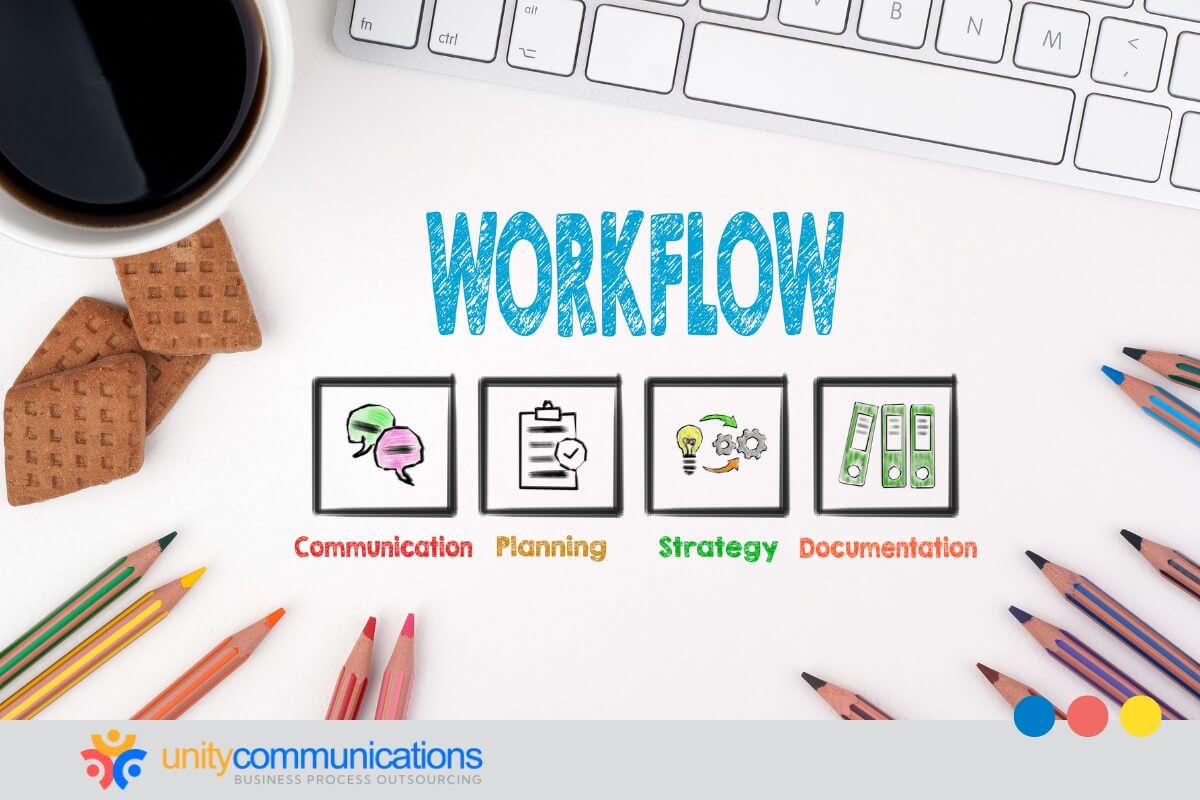
Integrating learning into your BPO setup means treating your vendor as a co-developer of talent and capability. Below are six steps to achieve this:
1. Align on development goals
Start by setting clear, mutual learning objectives. Think beyond immediate deliverables. What capabilities do you want your vendor to strengthen over time? Aligning on long-term development areas strengthens the growth foundation, whether it’s compliance accuracy, customer service depth, or technical support skills.
Involve your vendor in goal-setting conversations and document these objectives in service agreements and quarterly business reviews. Make them measurable to ensure they stay visible, trackable, and prioritized by both sides.
2. Structure knowledge exchange into workflows
Embed knowledge exchange into your workflow to reduce errors, adapt quickly, and foster innovation. Run regular retrospectives, rotate lead roles across projects, or assign shared documentation tasks. These create space for ideas, challenges, and lessons to surface naturally.
Even simple tools such as shared chat threads or a live wiki can create meaningful collaboration. Over time, these habits normalize cross-team transparency and turn every interaction into a learning opportunity.
3. Integrate upskilling into project execution
Another way to integrate shared learning in outsourcing models is not siloing training. Instead, include it in project cycles. Involve your vendor in early-stage work, such as research, testing, or prototyping. This exposure gives them critical context on your goals, culture, and processes. It also accelerates their ability to contribute meaningfully.
Live collaboration also strengthens working relationships and reduces handoff delays. The more your vendor learns through doing, the faster they meet your standards and expectations.
4. Establish continuous feedback loops
Feedback should be regular and mutual. It keeps both sides aligned, surfaces issues early, and drives continuous improvement.
Schedule regular check-ins to review progress, flag gaps, and reflect on what’s working. Use structured templates to capture insights and actions from your team and vendor. Encourage providers to share their perspectives to reveal effective but overlooked strategies.
These feedback loops keep learning relevant, practical, and responsive to business changes.
5. Enable real-time collaboration through tools
Digital tools help operationalize learning, especially in remote or multi-time-zone setups. Use learning management systems (LMS), Notion, Miro, ClickUp, and shared dashboards to centralize updates, manage progress, and support cross-functional collaboration.
Choose tools that both parties can access and contribute to in real time. They can help scale learning and align everyone on goals and responsibilities.
6. Document and preserve collective knowledge
Each project creates valuable insights. Capture them before they’re lost. Create a shared knowledge hub with standard operating procedures (SOPs), frequently asked questions (FAQs), key decisions, and lessons learned. Keep it organized, searchable, and regularly updated.
This repository becomes a long-term asset, reducing ramp-up time for new team members and ensuring continuity. It also reinforces a culture of shared responsibility for knowledge.
With the right processes, shared learning improves agility, builds trust, and enhances performance. They help both parties stay aligned through change, reduce knowledge loss, and continuously raise the delivery standard.
How to measure the impact of mutual learning

To determine whether shared learning in outsourcing models delivers value, you must measure its impact. Tracking outcomes can validate outsourcing returns. Data-driven insights can improve how you transfer, retain, and apply knowledge. Without clear metrics, even well-designed learning initiatives can lose momentum or fail to scale.
Here are key ways to measure learning impact in outsourcing:
- Track time-to-productivity for new vendor hires. Measure how quickly new BPO providers reach performance benchmarks. Faster ramp-up shows effective shared learning.
- Monitor error rates and rework trends. A consistent decline in repeated mistakes or rework indicates teams can correctly apply new knowledge.
- Measure support ticket resolution speed and quality. Improvements in handling time and accuracy reflect how vendor teams can better manage tasks post-training.
- Evaluate learning engagement levels. Track participation in training sessions, LMS activity, or collaborative workshops to gauge commitment and knowledge absorption.
- Assess customer satisfaction or quality scores. Rising customer satisfaction (CSAT), net promoter (NPS), and quality assurance (QA) scores after participating in learning programs show a clear link between training and better service quality.
- Collect qualitative feedback from both teams. Surveys and informal check-ins can uncover how learning has improved team clarity, communication, and confidence.
- Track the reuse of shared documentation and tools. High usage of SOPs, FAQs, and internal wikis indicates that knowledge is created and actively applied.
- Compare pre- and post-training performance metrics. Benchmark key KPIs before and after learning programs to see measurable gains in compliance, efficiency, or delivery quality.
Making outcomes visible and measurable transforms learning and development into a core driver of strategic outsourcing success. This deepens the partnership and ensures that every shared initiative delivers meaningful, measurable impact.
The bottom line
Turning your vendor into a learning partner takes intention, but the payoff is significant. You gain a more capable, invested team that grows alongside you. In return, your vendor becomes more aligned, agile, and strategic.
Don’t just outsource work. Find an effective learning partner. Let’s connect and explore how shared learning in outsourcing models can elevate performance, strengthen collaboration, and drive long-term success.