

Artificial intelligence (AI)-driven automation transforms business process outsourcing (BPO) by reducing manual workload while improving speed, consistency, and performance.
However, traditional AI models often struggle to adapt in real time and make decisions in dynamic environments. Trained on historical datasets and updated on a fixed schedule, their outputs degrade when customer behavior or workflows change.
Adaptive AI empowers outsourcing providers to enhance service delivery and offer personalized solutions by learning from live data, so workflows and decisions adjust in real time.
Read below to explore how this next-generation technology is changing the BPO industry and learn quick tips for its successful implementation.
What is adaptive AI?
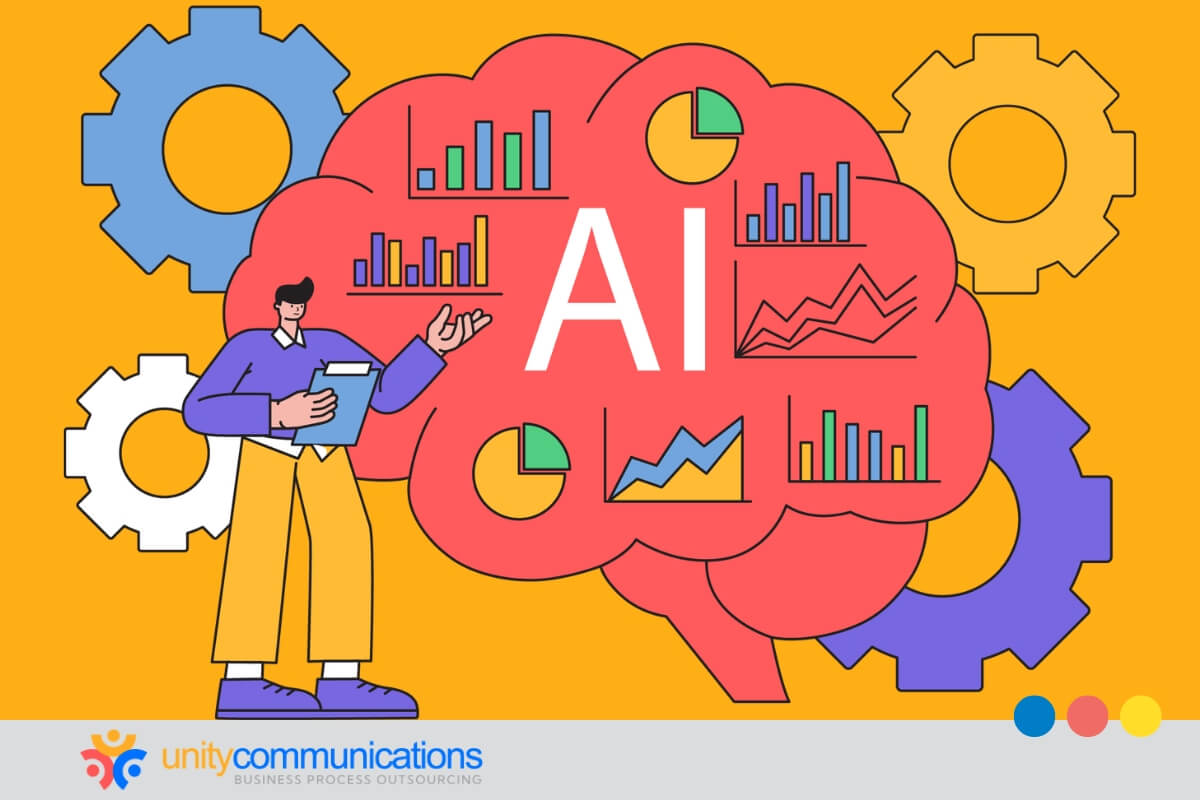
Adaptive AI is artificial intelligence that adapts using live data, updating its models in real time as conditions change.
Unlike traditional AI, which relies on static models and predefined rules, it evolves by analyzing new information and dynamically adjusting its algorithms. One real-world example is IBM watsonx Orchestrate, which uses agentic workflows. These AI agents interpret context, dynamically route tasks, and coordinate tools such as Salesforce, SAP, and Workday in response to real-time conditions.
Market.Us reports that the global adaptive AI market could achieve a compound annual growth rate (CAGR) of 41.8% from 2024 to 2033. Developments in reinforcement learning, online learning, and evolutionary AI algorithms help fuel its advancement.
These factors fuel adaptive AI development, allowing it to do the following:
- Process real-time data. AI excels at processing data streams as they arrive, enabling immediate responses to critical events. This capability is crucial in applications such as fraud detection, where split-second analysis can prevent financial losses.
- Enhance decision-making. By continuously refining its understanding of the environment, adaptive AI produces more accurate predictions and informed decisions. This leads to optimized resource allocation, improved risk management, and more effective strategic planning.
- Automate complex tasks. Adaptive AI systems can tackle tasks that are too complicated or unpredictable for traditional automation. From dynamic pricing strategies to personalized content recommendations, it handles complexity with remarkable agility.
- Custom interactions. Because it has the ability to learn from individual users, adaptive AI delivers highly personalized customer experiences. Customer service, e-commerce, and education providers can create solutions tailored to unique needs.
- Increased resilience. Adaptive AI can handle data anomalies and unexpected changes, remaining functional in volatile environments. In outsourcing environments, resilience translates to fewer workflow breakdowns, fewer escalations, and more stable performance.
Adaptive AI matters because it shifts automation from fixed rules to systems that keep improving as real-world conditions change.
How are adaptive AI tools transforming outsourcing?
To better understand how adaptive AI solutions enhance outsourcing practices, it’s best to first answer the question: What is BPO?
Business process outsourcing (BPO) involves delegating non-core operations to external providers. Companies often outsource to reduce costs, improve efficiency, and scale operations. These benefits make it a widespread practice. According to Statista, the global BPO market is expected to reach $491 billion by 2030.
With the advent of digitization, AI-powered outsourcing became revolutionary. It reduces human effort while increasing the use of AI and automation tools within diverse organizations. Deloitte’s 2024 Global Outsourcing Survey reports that 83% of surveyed executives are leveraging AI in outsourced services. Another 20% are already building strategies to manage AI-enabled workers and automation bots. Around 25% of executives said the technology lowered their vendor service costs or improved service quality.
While the use of AI in the BPO industry is becoming more common, adaptive AI takes outsourcing a step further. It introduces intelligent automation, real-time decision-making, and data-driven insights that enhance efficiency and scalability.
Let’s explore how exactly adaptive AI is transforming the outsourcing industry:
1. Enhance efficiency and cost savings
Imagine AI that automates data entry and learns to predict peak workload periods, proactively shifting staff and resources before bottlenecks occur. Outsourcing is moving beyond static task automation to a realm where AI continuously refines processes.
This cuts operating costs by anticipating and adapting to real-time demands. Here’s how:
- Reducing manual intervention. AI-powered automation eliminates repetitive tasks, freeing human agents to focus on higher-value work. For example, in data entry, adaptive AI can detect and correct inconsistencies, reducing the need for human review.
- Optimizing resource allocation. Adaptive AI goes beyond basic demand forecasting. It analyzes a wide range of variables, including seasonal trends, real-time market data, and social media sentiment, to predict resource needs more accurately.
- Improving turnaround times. Adaptive AI systems facilitate workflow automation by routing tasks and prioritizing them based on urgency and importance. It can also identify bottlenecks. For example, in an outsourced software development project, AI can analyze code repositories to identify potential bugs and performance issues.
2. Strengthen decision-making with data-driven insights
Adaptive AI for outsourcing transforms data into actionable, predictive intelligence. Instead of just analyzing past customer service trends, it forecasts emerging customer needs based on real-time social media sentiment and market shifts.
This feature of adaptive AI enables outsourcing providers to proactively advise clients, pivoting strategies before competitors react. Here’s how it can help:
- Predicting market trends. It can analyze news articles, social media posts, and industry reports using natural language processing (NLP) and sentiment analysis to detect rising keywords, shifts in tone, and abnormal activity patterns. These signal trends before they appear in traditional performance metrics.
- Optimizing workforce management. Adaptive AI systems can forecast ticket volume by channel and issue type, then adjust staffing plans, shift schedules, and skill-based routing in real time. It can also flag which agents need targeted coaching based on QA scores, resolution speed, and repeat-contact rates.
- Enhancing customer service decisions. Adaptive AI for outsourcing can recommend next-best actions during live interactions, such as when to escalate, offer a retention credit, or switch the customer to a specialist, based on sentiment, customer history, and predicted churn risk. It can also tailor responses to real-time context rather than generic scripts.
3. Increase responsiveness in dynamic environments
In an era where customer expectations and market conditions change rapidly, adaptive AI ensures outsourcing providers remain agile by:
- Providing real-time solutions. AI-driven chatbots and virtual assistants can handle a wide range of customer inquiries, from simple questions to complex troubleshooting tasks. They can also escalate complex issues to human agents when necessary.
- Detecting and mitigating risks. Adaptive AI can monitor operational data for anomalies and potential risks, such as security breaches, system failures, or compliance violations. It can also generate alerts and provide recommendations for mitigating these risks.
- Scaling operations dynamically. The technology enables outsourcing teams to adjust their infrastructure and staffing levels to meet fluctuating demand. For example, a BPO using AWS or Microsoft Azure can automatically add server capacity during contact spikes and scale down when demand drops.
These capabilities shift outsourcing from a cost-focused delivery model to a performance-driven partnership. Instead of relying on fixed workflows and periodic reporting, adaptive AI helps providers respond in real time, continuously optimize operations, and expedite decisions that protect service agreements and customer experience.
Best practices for implementing adaptive AI technology in BPO

As with any business practice and technological integration, using adaptive AI for outsourcing comes with challenges. These range from data privacy concerns and integration complexities to change management, AI algorithmic bias, and the need for ongoing maintenance.
Successfully implement adaptive AI in your BPO partnerships with these best practices:
- Start with a clear AI adoption strategy. Begin with a process audit of SLA breaches, high-cost workflows, repeat-contact rates, and exception-handling volume. Prioritize use cases where adaptive AI can influence real-time decisions, such as churn prediction. Define measurable targets (e.g., lower ticket backlog by 20%) before deployment.
- Choose the right AI tools and BPO partner. Evaluate AI solutions based on the depth of integration with systems such as SAP. Assess whether the solution supports real-time model updates, API extensibility, audit trails, and role-based access controls. Request case studies showing quantifiable SLA or cost improvements in comparable outsourcing environments.
- Look for vendors with a proven track record in AI-powered outsourcing solutions. Ask for at least two client references in your industry and require measurable results, such as SLA improvements or cost reductions. Require proof of production governance, including model monitoring, drift detection, and human oversight.
- Invest in workforce upskilling. Reduce employee resistance by providing comprehensive training on AI tools and workflows. Emphasize how AI can augment their roles and improve their productivity, rather than replace them. Focus on data analysis, AI monitoring, and human-AI collaboration.
- Ensure compliance and ethical AI use. Implement model governance protocols, including version control, bias testing, retraining thresholds, and human-in-the-loop (HITL) review for high-risk decisions. Align with industry regulations and document data lineage to support auditability in regulated industries.
- Monitor performance and continuously optimize. Beyond automation rates, measure SLA adherence, escalation frequency, cost per interaction, model accuracy, and drift indicators. Establish feedback loops between operations leaders, IT, and clients to recalibrate models as business conditions shift.
Adaptive AI for outsourcing drives real results only when backed by clear goals, strong governance, and active oversight in live operations.