
Artificial intelligence (AI) is reshaping how healthcare contact centers handle sensitive interactions while staying compliant with the Health Insurance Portability and Accountability Act of 1996 (HIPAA).
Interactive voice response (IVR) systems, combined with business process outsourcing (BPO), can efficiently manage call complaints, giving your team breathing room to focus on critical issues. HIPAA-compliant AI IVR healthcare standardizes responses, reduces errors, and enforces mandatory technical safeguards for ePHI encryption and system resilience.
Discover practical strategies and insights that can help your business stay ahead.
Why do HIPAA complaints start with phone calls?

IBM’s 2025 report shows that healthcare has remained the most expensive industry for data breaches for the last 14 years, despite a drop in average breach costs to $7.42 million.
Although high-profile server hacks make headlines, many HIPAA breaches originate from routine phone calls. Daily conversations expose risk far more quickly than rare system breaches, because they rely on human variables that patients notice immediately.
These risks surface as:
- Improvised answers without guardrails
- Rushed identity checks during call spikes
- Handoffs between departments
- Limited real-time updates for callers
- Gaps that frustrate patient self-service users
- Inconsistent after-hours call handling that forces repeat disclosure of sensitive details
- Verbal disclosure of sensitive information before identity is fully verified
- Lack of standardized escalation paths during complaints or urgent calls
This is where HIPAA-compliant AI IVR healthcare reframes calls into controlled interactions. It replaces human variability with standardized, policy-driven workflows that ensure every call stays within the minimum-necessary standard.
Where do traditional IVR and front-desk workflows pose compliance risks?
Traditional IVR systems and front-desk workflows are often complaint-prone. Rigid menus, manual identity checks, inconsistent handoffs, and after-hours coverage increase errors and frustrate patients. High call volumes amplify mistakes, exposing sensitive data and creating situations that trigger HIPAA complaints.
To put this in perspective, the market for IVR systems was valued at $5.23 billion in 2023 and could reach $8.99 billion by 2032. This reflects ongoing investment in voice technology to automate routine interactions and reduce operational strain.
HIPAA-compliant AI IVR replaces rigid menus and manual checks with secure, governed call flows that reduce errors and exposure of personal health information.
How HIPAA-compliant AI IVR healthcare ensures safe complaint handling
HIPAA-compliant AI IVR enforces safe complaint handling by limiting unnecessary exposure and embedding policy rules into call workflows from the start. Your team benefits from consistent guidance while safeguarding sensitive data.
Key mechanisms include:
- Mandatory encryption of data at rest and in transit, paired with IVR automation that enforces the minimum-necessary standard
- Structured prompts that prevent unscripted disclosures during complaint resolution
- Integration with patient self-service tools to reduce live handling errors
- Real-time updates for staff and patients on status changes
- Automated audit logging and monitoring
- Conspicuous AI transparency disclosures at the start of interactions
By embedding compliance into everyday call flows, AI IVR mitigates risk without slowing service or frustrating patients.
What healthcare call scenarios can AI IVR handle more safely?
Intelligent voice systems excel in high-risk patient interactions, where frequent calls and inconsistent handling often result in errors. Your team can rely on structured guidance for common call types and protect sensitive patient information.
Industry data shows that 44% of healthcare institutions use voice AI, and 80% plan to increase usage by 2026. This demonstrates that more medical organizations are adopting HIPAA-compliant AI IVR healthcare to mitigate compliance risks while improving patient experience.
Among its critical use cases are:
- Guided IVR automation for consistent information sharing
- Optimized call routing to reduce misdirected calls
- Enhanced patient self-service to minimize live handling errors
- Automated handling of treatment, payment, and operations (TPO) for sensitive substance use disorder (SUD) records (meeting the February 2026 alignment mandate)
- Standardized complaint intake before agent escalation
By intelligently managing these scenarios, AI IVR reduces risk and keeps patient interactions secure and compliant.
How can AI IVR verify identity without exposing sensitive data?
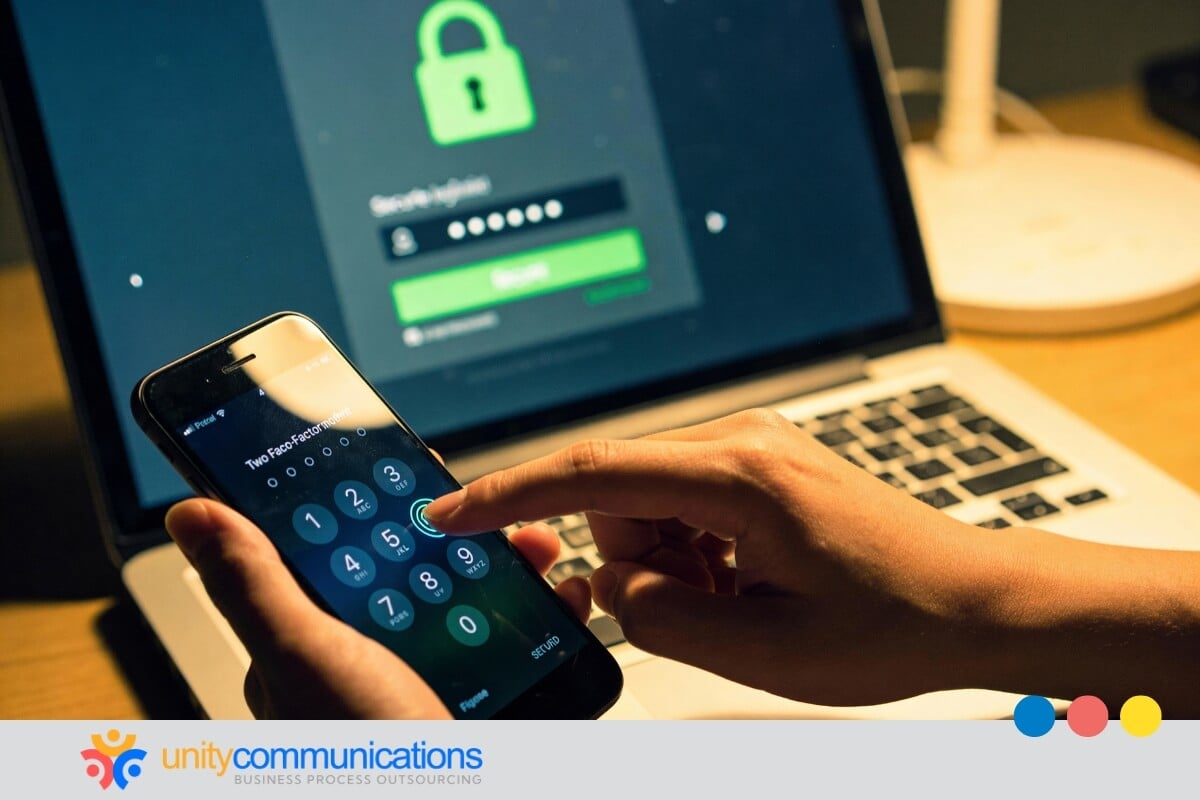
Frequent patient interactions often involve manual identity checks and inconsistent handling, increasing the risk of errors and complaints. HIPAA-compliant AI IVR mitigates these risks by verifying patient identity through secure, automated methods.
Examples include:
- Mandatory multi-factor authentication (MFA), integrated into step-based identity verification before any PHI is accessed or escalated
- Limited data prompts aligned to minimum-necessary access rules
- Session-bound authentication that expires after resolution
- Verification checkpoints before transfers or supervisor handoffs
- Restricted access triggers for sensitive complaint-related details
Automating identity verification through AI IVR reduces data exposure and ensures consistent, secure patient authentication at a critical entry point.
How AI IVR minimizes errors in complaint handling and call transfers
AI IVR reduces errors and meets 2026 resilience requirements by restoring complaint workflows within 72 hours of disruptions. This prevents re-disclosure, reduces escalation errors, and improves issue management. Structured call data keeps every interaction consistent.
Core features of AI IVR for secure handoffs include:
- Context-aware call summaries to prevent repeated questions
- Secure sharing of patient details during handoffs
- Real-time notifications for agents to stay informed
- Automated logging to create defensible records
- AI IVR integration with Genesys Cloud to maintain continuity across queues, agents, and transfers
AI IVR ensures patient information travels securely between agents and maintains audit-ready records. With correct integration, your team can manage complex calls efficiently while maintaining HIPAA compliance.
Can AI IVR logs make call handling audit-ready and defensible?
AI IVR logs make call handling audit-ready and defensible by capturing structured records, timestamps, and summaries for every interaction. You gain proof of what was said, how data moved, and when actions occurred, while improving complaint handling for patient inquiries.
These structured-call records position HIPAA-compliant AI IVR healthcare as an audit and risk management asset, while supporting secure patient authentication during regulated interactions.
Meanwhile, market data shows that AI IVR manages calls while producing structured logs that protect information. Automated documentation tools reduced clinical note errors by 29% and improved electronic health record (EHR) search time by 55% in 2025.
In practice, machine-generated records tied to IVR activity give you audit trails, reduce post-incident disputes, and strengthen HIPAA compliance during reviews.
From an operational standpoint, key advantages include:
- Structured logs tied to policies and access controls
- Detailed summaries limiting re-disclosure during investigations
- Time-stamped handoff records clarifying accountability
This readiness protects patient trust, strengthens complaint handling, and reinforces operational credibility.
How can patient experience align with compliance using AI IVR?
Patient experience can align with compliance through AI IVR. This technology delivers predictable, clear, and safe interactions while speeding up resolution times. Your team can manage complaints efficiently without risking sensitive data, proving that compliance need not slow patient care.
Structured guidance from HIPAA-compliant AI IVR in healthcare helps your staff handle inquiries consistently while securely authenticating patients at critical points. Automated workflows minimize repeated questioning, building patient confidence in data handling.
As such, your team experiences benefits including:
- Clear IVR automation prompts that guide patients efficiently
- Intelligent call routing to the correct department without delays
- Personalized interactions while limiting unnecessary PHI exposure
- Immediate updates for staff to respond with accuracy
- Reduced wait times through predictable, consistent complaint handling
By integrating compliance with convenience, AI IVR strengthens patient trust and supports a positive experience without sacrificing HIPAA compliance.
When does AI IVR become a strategic compliance asset in healthcare?
AI IVR becomes a strategic compliance asset in healthcare when it goes beyond automation to actively support governance, enforce scalable compliance controls, and manage complaint handling while providing safe patient access. Your team benefits from structured workflows that make daily operations more defensible under regulatory review.
HIPAA-compliant AI IVR healthcare maximizes this capability. It standardizes interactions, monitors adherence to policy, and tracks every critical step in a patient call.
This delivers several clear benefits, including:
- Consistent handling of sensitive inquiries to protect patient data
- Real-time visibility into call activity for compliance oversight
- Scalable controls that adapt as your patient volume grows
- Audit-ready logs that simplify regulatory reporting
AI IVR delivers measurable compliance gains and turns complaint calls into secure interactions.
How can AI IVR keep HIPAA-compliant handling with BPO companies?
To understand what BPO is and how outsourcing works, you must know where risk enters—at call handoffs, manual identity checks, inconsistent escalations, and repeated data disclosure.
Smart voice systems enforce compliance in outsourced calls by standardizing safeguards before agent handoff. In particular, HIPAA-compliant AI IVR healthcare filters risk and reduces variability when calls move to third-party teams.
It also features:
- Automation that restricts sensitive prompts by call type
- Role-based access rules that limit what third-party agents can hear or request
- Complaint-handling workflows that capture issues consistently before escalation
- Patient self-service options that resolve routine needs without agent access
- Tokenized data handoffs that prevent full record exposure and access
- Script enforcement that removes improvisation from sensitive conversations
- 24-hour incident reporting following discovery to meet HIPAA’s latest notification requirements
- Call segmentation that separates administrative tasks from clinical discussions
- Automated sentiment detection to flag complaints and escalate safely
With strategic AI adoption in outsourcing, AI IVR turns third-party operations into a compliance extension rather than a liability. It protects PHI while preserving the BPO advantages of scale, cost control, and extended coverage.
The bottom line
Effective handling of healthcare compliance complaints using intelligent voice systems depends on strategy. When you combine HIPAA-compliant AI IVR healthcare, outsourcing, and experienced, empathetic professionals, you manage risk, consistency, and trust at scale.
Harness these capabilities and resources to strengthen compliance, elevate patient confidence, and achieve sustainable growth. Connect with us today for a free consultation.
Frequently asked questions (FAQs)
Here are more questions that you might ask about BPO providers, HIPAA compliance, and AI IVR:
How do I select the ideal BPO partner for HIPAA-compliant handling with AI IVR?
Assess healthcare experience, HIPAA training depth, AI IVR integration capability, and governance maturity. Prioritize service providers combining HIPAA-compliant AI IVR healthcare with escalation protocols and empathy coaching.
How long does it take to implement AI IVR for regulated healthcare complaints?
AI IVR deployment can start within weeks, provided that the mandatory 2026 asset inventory and network data mapping are completed during the setup phase. Other factors that can affect the timeline include call volume, integrations, and compliance reviews. Phased rollouts let your business deliver value while validating compliance-handling safeguards.
What costs should I expect when scaling AI IVR and outsourcing together?
Costs reflect call complexity, compliance oversight, and BPO scope. When aligned, AI IVR and outsourcing reduce repeat calls, agent load, and complaint fallout, improving efficiency and profitability.