

Finding it difficult to turn data overload into timely, confident decisions? Artificial intelligence (AI) is changing how small and medium-sized businesses (SMBs) approach business intelligence (BI), moving from static dashboards to proactive insights.
AI agents for analytics, paired with strategic business process outsourcing (BPO), help you separate signal from noise and focus on what drives performance. This article reviews leading platforms, real-world use cases, and outsourcing considerations to help you identify the right fit for your operational goals.
What are AI agents for analytics?
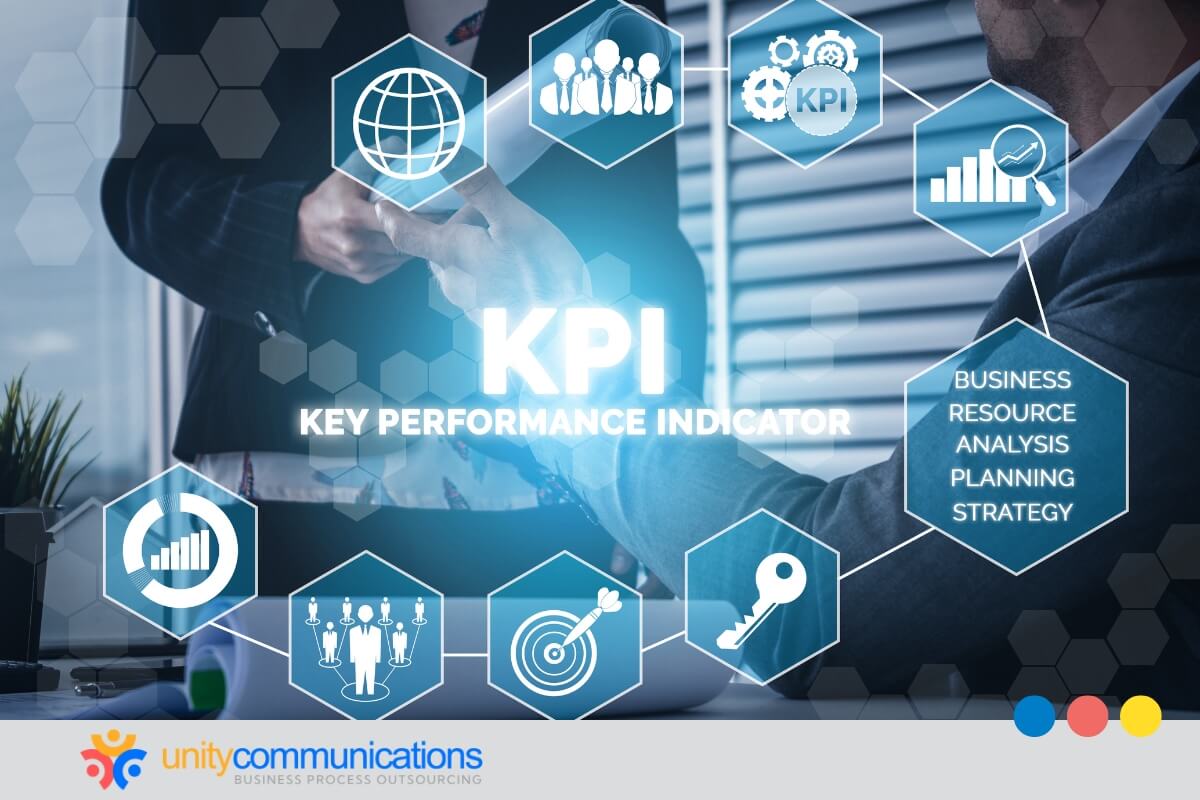
AI agents for analytics interpret natural-language questions, run multistep analyses, and automatically deliver context-aware insights.
AI-powered analytics tools shift your lean team from manual reporting to autonomous insights and automated workflows. Understanding what an AI agent is involves seeing how it interprets queries, performs multistep analysis, and delivers actionable insights.
For many organizations, this shift is practical. About 60% of organizations use or are exploring generative AI in at least one department, and BI teams are increasingly among them.
Unlike traditional dashboards, AI agents for analytics can offer:
- Context-aware recommendations based on historical patterns
- Automated root-cause analysis and anomaly detection
- Integrated forecasting and scenario modeling
- Continuous monitoring tied to key performance indicators (KPIs)
With these tools, your team can shorten reporting cycles, improve forecast accuracy, and prioritize higher-value initiatives. The next step is understanding which platforms stand out in the market.
AI agents for BI and analytics that every data team should know
Some analytics platforms go beyond reporting by offering AI agents. These tools help BI teams use governed data, automate analyses, and deliver actionable insights quickly. Discover the five AI-powered analytics assistants that data teams can use to accelerate insights.
1. Tellius AI agents
Tellius offers a native agentic analytics platform that enables AI agents to plan, execute, and interpret multistep workflows. It includes a no-code workflow builder and an agent library that let teams analyze data without writing code.
Enterprise and BI team use cases
Data and BI teams can use Tellius to automate root-cause analysis, anomaly detection, cohort comparisons, and forecasting directly from live data sources. By connecting to enterprise data warehouses via a unified semantic layer, the platform lets teams ask business questions and receive governed data answers, speeding decision-making and reducing reliance on spreadsheets.
How it supports decision‑making and analytics workflows
By turning manual analytics that once took days into rapid, automated processes, Tellius AI agents help data teams quickly see what changed, why, and what action to take next. Its natural language interface lets business users ask questions in plain language and iterate on insights in real time, making this AI agent for business intelligence a practical tool for accelerating decision-making across teams.
Unique differentiators vs. other AI agents
Unlike basic chat assistants, Tellius combines a semantic layer, conversational analytics, and customizable agentic flows that chain multiple analytical steps together without manual intervention. Its governance, audit capabilities, and explainable outputs built on governed data make it suitable for growing enterprises that need to trust the outputs of an agentic analytics platform.
Realistic examples or scenarios
For example, a retail analyst might ask, “Which underperforming products impact revenue most this quarter?” Tellius will query the relevant data source, run cohort comparisons, detect anomalies, and suggest next steps, all in minutes rather than hours, without needing to touch SQL or build a new dashboard from scratch.
2. Microsoft Copilot and Fabric data agents
How it supports decision-making and analytics workflows
Unique differentiators vs. other AI agents
Realistic examples or scenarios
A supply chain team deploys an autonomous Fabric data agent connected to their inventory lakehouse. Without human intervention, the agent detects a sudden drop in regional fulfillment speeds, queries the warehouse database to isolate the bottleneck (a delayed shipping corridor), runs a predictive model on inventory depletion, and automatically emails a narrative summary with visual charts to the regional logistics manager.
3. ThoughtSpot AI agents
ThoughtSpot provides an autonomous, multi-agent analytics ecosystem that converts natural language into deterministic data visualizations. Rather than relying solely on raw text-to-SQL generation, its core reasoning engine maps user questions to a pre-defined semantic layer to ensure precise, governed answers.
Enterprise and BI team use cases
BI teams deploy the platform to scale true self-service analytics without creating localized data silos or ticket backlogs. Data engineers use specialized companion agents to automate complex data preparation. Business users leverage it to perform rapid anomaly detection, multi-dimensional cohort tracking, and cross-source analysis directly on live cloud data lakes.
How it supports decision‑making and analytics workflows
Users can dig into unexpected business trends by asking plain-language follow-up questions. The system retains the mathematical context across questions, so teams do not have to rebuild their queries from scratch.
Unique differentiators vs. other AI agents
Realistic examples or scenarios
Users can dig into unexpected business trends by asking plain-language follow-up questions. The system retains the mathematical context across questions.
4. DataRobot AI agents
The DataRobot Agent Workforce Platform is an enterprise environment built for AI agents across data analytics, predictive machine learning, and generative AI, all governed under a single platform. It moves past a basic text-to-chart BI tool by building, deploying, and governing production-grade autonomous agents alongside predictive models.
Enterprise and BI team use cases
Enterprise data science and advanced analytics teams use DataRobot to scale automated predictive modeling across the organization. Common deployments include lifetime value modeling, risk scoring, and real-time fraud detection, standardized through consistent MLOps practices. Data teams use its agentic architecture to automate model retraining, manage deployment pipelines, and continuously monitor data health.
How it supports decision‑making and analytics workflows
The platform speeds up decision cycles by automating data preparation and feature engineering, the stages that typically stall analytics projects. It links these operations into agent pipelines that route audited predictive insights to business applications, cutting the manual oversight these systems once required.
Unique differentiators vs. other AI agents
The platform combines predictive modeling, generative AI orchestration, and governance controls into one cross-cloud execution environment, co-engineered with NVIDIA. DataRobot embeds continuous, real-time testing frameworks directly into its agent definitions, a step beyond standard BI assistants that skip statistical validation. This system catches hallucinations and flags unsafe agent behavior in real time. It also logs reasoning traces so compliance teams can audit decisions after the fact.
Realistic examples or scenarios
A global retail enterprise deploys a fleet of DataRobot agents to run its supply chain. One agent monitors warehouse inventory and builds parallel demand forecasting models using external economic indicators.
When a regional anomaly appears, a companion agent evaluates the competing forecasts and selects the most reliable one. It then updates the dashboards operations teams already rely on and triggers an automated procurement request to rebalance stock. This is what it looks like when a system can deploy multi-step processes without a human having to run each stage by hand.
5. IBM Watson AI agents
IBM watsonx Orchestrate is an enterprise-grade agentic control plane, built to support AI agents for data analytics alongside broader business automation. Organizations deploy AI agents to connect large language models directly to ERP, CRM, and supply chain systems, capabilities that go well beyond what a simple analytics chatbot can do. These agents run multistep workflows and share context across systems, coordinating work end-to-end.
Enterprise and BI team use cases
Data and operations teams use watsonx agents to automate multi-system work across finance, HR, and compliance. Teams configure background agents that track cross-department operations and manage invoice reconciliation. The same agents can run predictive risk checks on their own, reducing the need for manual data extraction. This simplifies data delivery for BI architects. Business leaders can pull real-time answers from systems by asking questions in natural language, without a technical intermediary.
How it supports decision‑making and analytics workflows
The platform uses fine-tuned foundation models, including IBM Granite, to route tasks to the right tool and reason across multiple turns of a conversation. It maintains an audit trail for each workflow, letting teams delegate background tasks such as supplier onboarding or compliance checks without losing visibility or needing step-by-step prompts.
Unique differentiators vs. other AI agents
The platform centers on the Agentic Control Plane, which monitors and traces every agent across the organization and applies governance policies, whether those agents were built natively in watsonx Orchestrate or on third-party frameworks such as LangChain or LangGraph. It also connects agents built in-house, sourced from open frameworks, or pulled from a prebuilt catalog. Enterprises aren’t locked into a single software stack. That combination of centralized governance and framework flexibility suits regulated, hybrid-cloud enterprise environments.
Realistic examples or scenarios
A corporate procurement division deployed a watsonx Procurement Agent connected to its ERP and supply chain logistics systems. The agent monitors incoming global shipping data on its own. If it detects a supplier delay, it queries risk-management databases to identify alternative vendors and then drafts an impact summary for the logistics manager. It updates the master execution dashboard and stages an operational notification, closing the loop without a human having to run each step by hand.
How do AI data agents improve business intelligence and decision-making?
Building on these platforms, AI agents for analytics improve team decision-making by automating analysis, surfacing context, and accelerating insight delivery. You gain clearer direction by reducing manual reporting and focusing on interpretation.
For SMBs, this shift is measurable. About 28% of small businesses already use AI-powered analytics for marketing, helping teams spot high-performing campaigns and adjust spend quickly. Even smaller teams can reach faster conclusions when routine data work runs automatically in the background.
With an agentic analytics platform, your team can:
- Automate recurring KPI tracking and performance summaries
- Detect anomalies and root causes without manual spreadsheet reviews
- Connect data from sales, finance, and operations for unified insight
- Generate narrative reports that support executive discussions
- Trigger alerts tied to revenue, churn, or margin thresholds
Instead of compiling data, you interpret results and align strategy. Decisions move from reactive to proactive, improving productivity and collaboration.
What should you consider before adopting AI agent tools and platforms?
Before adopting AI agents for analytics, your team should assess readiness, integration, and operational fit to ensure seamless, maximum value. Strategic alignment and practical implementation planning are key to a smooth transition.
Many organizations are still piloting these tools. According to McKinsey, about 62% of respondents are experimenting with AI agents, including analytics. This highlights that workflow compatibility, governance, and adoption practices remain critical considerations before full deployment.
With AI agents for analytics, you can evaluate factors such as:
- Integration with existing dashboards, reporting systems, and BI tools
- Data governance and compliance policies for sensitive information
- Security protocols and role-based access to analytical outputs
- Scalability for increasing data volume and team usage
- Training and adoption support for business users and analysts
Taking a structured approach helps your SMB move from experimentation to routine use. Your team can focus on efficiently extracting insights and improving outcomes.
What trends are shaping AI-driven data analysis?
Advances in agentic intelligence, generative insights, and workflow automation let teams act faster while reducing repetitive manual tasks.
Decision workflows are increasingly influenced by real-time data pipelines and integrated cloud environments. According to the State of AI+BI Analytics Global 2025 Report, nearly one in four organizations expect to give 30% or more of their workforce direct access to AI-powered analytics in the year, signaling broader adoption beyond specialist teams.
With AI agents for analytics, you can capitalize on these trends by:
- Automating routine data aggregation and KPI tracking
- Generating narrative insights from structured and unstructured datasets
- Connecting cloud and on-premises sources for unified decision-making
- Supporting scenario modeling and predictive analysis in real time
- Delivering contextual alerts tied to operational thresholds
By monitoring these trends, your team can adopt AI-driven workflows that accelerate insight delivery and allow them to focus on strategic interpretation rather than manual data handling.
How outsourcing agentic analytics and agentic AI supports SMB data teams
Outsourcing AI agent operations lets your data team accelerate analytics and cut internal workload. A specialized partner brings faster deployment and more structured workflows than most in-house teams can build on their own.
Third-party specialists combine technical services and workflow management to run AI agents on your behalf, with built-in compliance support. Your team can focus on interpreting insights while these partners handle the agentic work. If you’re new to this model, what BPO is covers how that division of labor works.
An experienced BPO partner brings technical expertise and ready AI pipelines to the table, along with data integration frameworks that connect to your existing systems. They manage the agents day-to-day and continuously monitor performance, adjusting processes as needed to keep insights flowing cost-effectively. For a closer look at how that oversight plays out, see how outsourcing works.
Strategic AI adoption in outsourcing allows you to reap the following benefits:
- Rapid deployment of AI agents for analytics across multiple data sources
- Expert setup and configuration of agentic workflows for recurring KPI tracking
- Automated anomaly detection, forecasting, and reporting are managed externally
- Governance and role-based access policies are handled by the BPO team
- Seamless integration with cloud-based and on-premises systems for higher data accuracy and workflow reliability
Through AI and BPO, your small team can manage complex data pipelines efficiently. Partnering with skilled third-party professionals gives your company reliable insights, faster decision-making, and expanded analytics capabilities without increasing headcount or operational overhead.