

In therapy and mental health settings, every call matters as much as every session. A patient often reaches out during a vulnerable moment, and a slow or missed response can be the difference between starting care and giving up on it altogether.
Human staff can’t realistically cover every call, especially after hours or during high-volume periods, and a missed call or a full voicemail box costs more than a booking. An AI receptionist for therapy practices can address these problems. It can handle routine scheduling and intake work without losing the warmth patients expect from medical practices.
This guide breaks down how an AI receptionist for therapy clinics works, why HIPAA compliance matters for behavioral health data, and what mental health practices should look for before adopting AI tools for their front desks.
What is an AI receptionist for therapy clinics?
An AI receptionist for therapy clinics is HIPAA-compliant software that automates appointment scheduling, call handling, and screen intake.
Unlike traditional answering services, an AI medical receptionist can:
- Answer calls. It picks up on the first ring, even overnight or when every line’s tied up, so calls never sit in a voicemail queue.
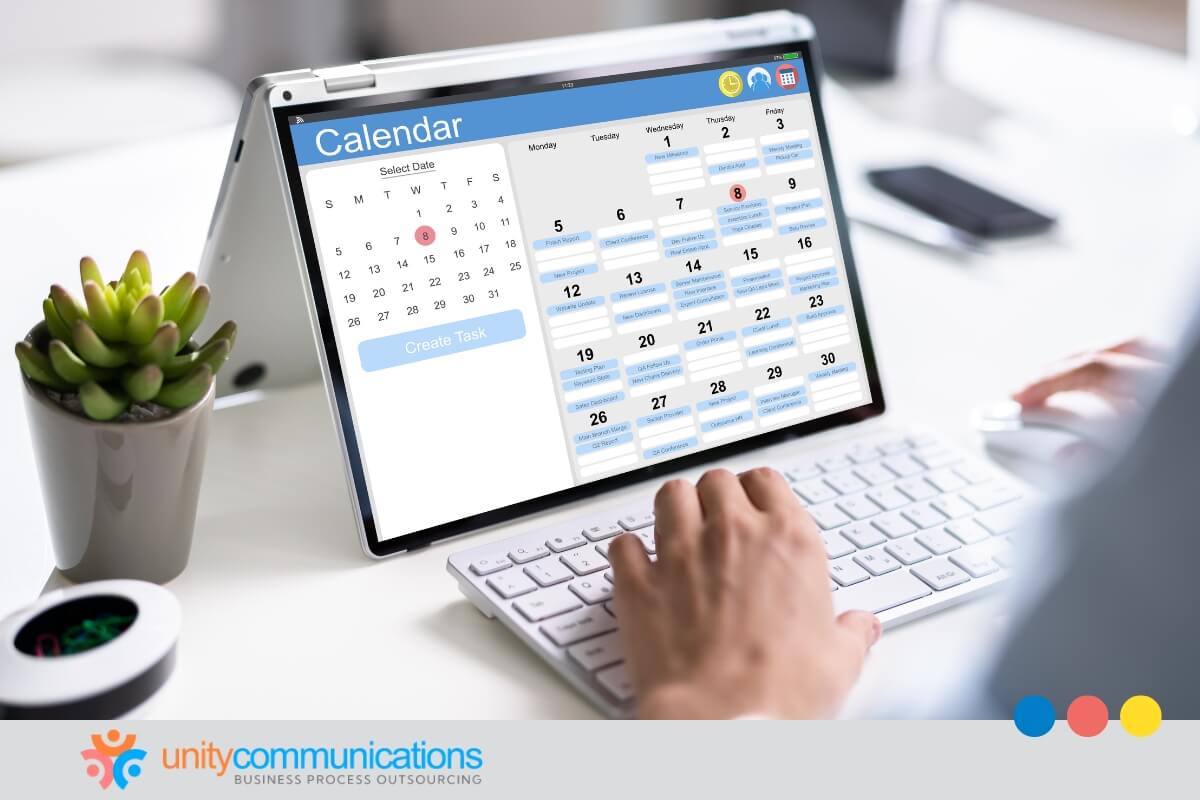
- Book sessions. A virtual front desk can schedule, reschedule, or cancel appointments directly on the therapist’s live calendar, with no double-booking or manual entry required.
- Handle frequently asked questions. AI can answer calls about hours, location, accepted insurance, and session fees without pulling staff off other work.
- Screen calls. Automated AI can collect caller details in a conversational manner, flag language that suggests a crisis, and route the call to a human clinician immediately.
Even the best AI receptionist cannot replace a therapist or a front-desk staffer handling a sensitive conversation. It’s built to absorb the repetitive scheduling and screening work so the humans on staff are free for the calls that actually need them.
Why is an AI receptionist for therapists important?
Therapy practices thrive on trust, consistency, and accessibility. But these strengths can be hard to sustain amid rising patient demand. Administrative workloads consume hours that therapists could otherwise dedicate to direct care.
In a 2024 survey of 125 private practice therapists, about 20% reported spending 10 to 14 hours per week on administrative tasks in addition to direct client hours. Roughly 10% reported 15 or more hours of admin work per week.
Dedicated administrative support is often minimal or absent in private practice settings. When asked what single change would most improve their schedules, 35% of therapists chose less admin time, while 36% picked fewer clients.
For therapists already working at capacity, administrative overhead is a structural problem that competes directly with patient care time.
What artificial intelligence (AI) means for therapists
An AI receptionist for therapy clinics can handle scheduling and intake tasks without sacrificing the warmth of human communication.
Consider what happens on a Sunday night when a new patient, referred by their primary care doctor after a difficult week, finally works up the courage to call a therapy practice. It’s 9:00 p.m., and they get voicemail.
A 2025 BMJ Open study of Australian adolescents found that longer waits between first contact and first appointment were associated with higher psychological distress. Over two-thirds said their sadness or worry got worse during the wait. Most still showed up. Among those who didn’t, a long wait was the top reason they gave.
A practice that responds slowly adds weight to an already difficult moment, and it’s why a smaller group of prospective clients never makes it to the first session at all.
This kind of automation addresses that specific failure point. It isn’t replacing front desk staff. It’s covering the hours, the simultaneous call volume, and the administrative repetition that staff shouldn’t have to handle in the first place.
In short, AI virtual receptionists matter because they scale compassion. They give every patient a voice at any hour while giving clinicians back the time to listen deeply.
How an AI receptionist for therapy clinics streamlines scheduling and care
This kind of tool currently ranks among the top healthcare trends for its ability to enhance every part of patient interactions. From booking to follow-up, this intelligent digital assistant automates administrative tasks, reduces human error, and maintains continuity of care.
The following sections explore how it streamlines operations, strengthens patient trust, and boosts overall performance.
1. Manages after-hours calls with 24/7 call handling
Traditional front desks might close at the end of the day, but therapy patients often reach out during quiet hours, when stress or anxiety peaks. Having an AI front desk available ensures that help and information are always just one call away.
Besides preventing lost leads, the system can juggle multiple conversations at once, something no human receptionist can do. Whether it’s five patients calling simultaneously or a mix of phone and chat requests, it handles the call routing smoothly.
To illustrate its operational value, suppose a practice with four therapists receives 60–80 appointment-related calls per week. Roughly 30% of those come outside business hours. Of patients who reach voicemail, an estimated 60% don’t leave a message, so that missed call simply disappears.
This system can answer calls and handle those after-hours contacts in real time: booking, rescheduling, answering FAQs, and sending confirmation texts. For a four-therapist practice, phone-answering coverage can recover 15–20 appointments per month that would otherwise go unbooked.
Unlike a basic automated phone tree that only routes digits to a voicemail box, this AI phone-answering service can actually hold a conversation and finish the booking. With this 24/7 accessibility, a practice can improve patient management and boost new client volume without staff burnout.
2. Collects patient data upfront through automated intake screening
When a patient calls, an AI virtual medical receptionist collects their demographic information and conducts an intake screening. Using natural language processing (NLP), it can detect keywords such as “panic attacks,” “postpartum,” or “court-ordered” and route the intake to the appropriate person or department for manual review.
This matters because misrouted intakes are among the most common causes of patient dropout in the first few weeks. A potential client calling about a relationship conflict who gets scheduled with a trauma specialist might not return. A system trained on practice-specific intake logic reduces that mismatch before the first appointment is even confirmed.
It acts as a smart pre-screening assistant. Instead of staff spending 10–15 minutes per caller on insurance verification or the reason for the visit, it gathers this information conversationally, verifies insurance where possible, and stores everything automatically in the practice’s database. That creates a frictionless experience that feels more like a guided chat than a form-filling exercise.
It can also:
- Understand the reasons for a visit, preferred time slots, and specialty or therapy type needed
- Adjust follow-up questions based on prior answers
- Detect sensitive language and alert staff to a potential crisis call
- Send intake summaries directly to EHR systems or therapist dashboards
This process streamlines preparation and enhances personalization. It also helps prevent administrative errors for every new client.
3. Provides inclusive support through a multi-language feature
A well-designed platform can converse in multiple languages, detect nuances in speech, and offer alternative communication modes.
The stakes of language access are higher in mental health than in almost any other clinical context. Non-English-speaking individuals have significantly lower odds of receiving needed mental health services than English-speaking counterparts, with disparities even more pronounced among specific ethnic communities.
According to Diplomatic Courier, the inability to communicate effectively in a preferred language could lead to problems, including misunderstandings, limited access to appropriate care, and misdiagnoses.
With this kind of setup:
- Patients can book or ask questions in their native language.
- Those with hearing impairments can use chat interfaces instead of voice calls.
- The system interacts with patients using their preferred names, pronouns, and communication methods.
Practices can also partner with a business process outsourcing (BPO) provider to combine multilingual AI with human receptionists. This allows a therapy practice to provide consistent, culturally aware communication across time zones and patient demographics.
Handling intake in a patient’s native language reduces friction and preserves the accuracy of information used for clinical decisions.
4. Improves revenue and patient adherence through automated reminders
Missed appointments can disrupt therapy progress and revenue. A well-built system helps fix this by sending automated appointment reminders, confirmations, and follow-ups, one of the simplest ways to reduce no-shows.
- It can send a personalized text or call that says, “Hi, Anna, just a reminder about your session tomorrow at 10 a.m. Reply YES to confirm or 2 to reschedule.” This two-way texting keeps attendance rates high while reducing the need for manual calls.
- If a no-show occurs, it automatically sends a rebooking message and offers to fill the slot with a waitlisted patient. The system also tracks long-term attendance patterns to predict the risk of drop-off.
- The platform can send follow-up care prompts. After a session ends, it triggers an automated outreach sequence, whether a check-in text the following day, a resource reminder midweek, or a preparation prompt before the next appointment.
More advanced implementations reference prior appointment context from the EHR. Instead of a generic reminder, the message might note the treatment type or last visit date. This still requires patient authorization and careful limits on what clinical detail gets included.
The clinical value of this feature is closing the gap between sessions. Therapy dropout often happens through gradual disengagement. A timely reminder after a difficult session signals that the practice is still paying attention and encourages the patient to return.
The one caveat with these reminders is that they need deliberate design. A text or call that feels fully automated undermines the therapeutic relationship it’s meant to support.
5. Escalates to humans
The best automation platforms know when to step aside. A thoughtful setup performs warm handoffs, seamlessly transferring patients to human staff when needed.
The system shares call summaries and administrative history so the patient doesn’t have to repeat basic information. Clinical session notes remain outside the system.
For practices that outsource parts of their administrative or patient support operations, understanding how outsourcing works helps build a smooth hybrid model. By combining in-house therapists with an outsourced virtual receptionist team, the system can intelligently route calls, deciding whether to escalate to internal staff or external agents based on context and urgency.
This safety net ensures patients always receive the right kind of help: efficient, empathetic, and immediate.
Is an AI receptionist HIPAA-compliant for therapy practices?
It can be, if the practice implements it correctly. That means encryption, role-based access controls, audit logs, and a signed BAA.
HIPAA compliance isn’t a single feature. It’s a standard the entire platform has to meet. A HIPAA-compliant AI receptionist encrypts voice, text, and stored data in transit and at rest. It also limits who can view protected health information through access controls and keeps a detailed audit trail of every message and scheduling change.
The clearest sign a vendor takes compliance seriously is a signed business associate agreement (BAA) before any PHI changes hands. Sharing patient data with a vendor that hasn’t signed one is already a HIPAA violation, not just a risk. Both the practice and the vendor can face penalties.
For behavioral health specifically, this standard matters more than in most other specialties. The information disclosed in a single intake call, such as a diagnosis, a crisis, or a substance use history, can carry consequences for a patient far beyond the practice walls.