
While more businesses invest in artificial intelligence (AI), most systems are reactive. They wait for a customer to complain before opening a ticket or for churn to happen before attempting retention. By the time the signal is clear enough to act on, the cost of acting has already increased.
Proactive AI agents exist to close that gap. They anticipate needs, respond to signals, and take action before issues escalate or opportunities disappear.
This article explores this emerging model. It explains its mechanism, its differences from reactive systems, and the importance of human oversight in managing risks. Read below to learn more!
What are proactive AI agents?
Proactive agents are more than smarter automation. They operate ahead of demand rather than waiting for explicit instructions. They also exhibit the following characteristics:
- Autonomous decision-making empowers agents to take action within predefined rules, reducing the need for constant human supervision.
- Continuous learning and enterprise integration help agents adapt to changing environments, improving effectiveness over time.
- Human-in-the-loop (HITL) controls maintain oversight and trust, ensuring responsible deployment without compromising efficiency.
These systems sense, analyze, and act across operations, reducing delays and capturing opportunities before they become critical. Their value lies in independence, foresight, and reliability.
To demonstrate, a proactive agent monitoring a customer support queue detects that ticket volume is climbing faster than usual at 9:47 a.m. Without waiting for a manager to notice, it cross-references staffing schedules, identifies a coverage gap in the next hour, and automatically alerts available agents to log in earlier.
The system addresses the problem before the queue backs up, before customers wait longer than expected, and before a supervisor has to intervene. No one issues a prompt. No rule said “act at 9:47 a.m.” The agent read the signal, interpreted the context, and initiated a response.
How proactive AI agents differ from reactive systems
While reactive tools wait for explicit input, proactive agents operate with intent, anticipating outcomes and acting before issues arise. Comparing the two across key operational factors highlights why proactive systems deliver measurable advantages.
Initiation of action
Proactive agents act based on patterns, predictions, and context rather than waiting for explicit commands. This early intervention allows them to prevent issues before they escalate. Reactive systems respond only after events occur, limiting their ability to influence outcomes.
Use of context and data
Proactive agents simultaneously interpret multiple data sources, combining behavioral data, historical trends, and system performance to inform decisions. Reactive systems typically rely on isolated triggers, responding to single inputs without understanding broader context or downstream impacts.
Timing of decisions
Decision timing sets proactive agents apart. Actions occur before escalation, enabling risk mitigation and opportunity capture. Reactive systems respond after conditions have occurred, often resulting in higher costs or operational disruption.
System awareness and monitoring
Proactive AI continuously observes its environment, even without explicit requests, allowing it to detect subtle early signals. Meanwhile, reactive systems remain dormant until activated, missing opportunities for preventative action.
Goal orientation and outcomes
Proactive agents focus on long-term outcomes such as optimization, prevention, and efficiency gains. Reactive systems primarily address immediate inputs, resolving symptoms rather than influencing future states.
The bottom line is that not all AI agents marketed as proactive meet the same standard. A useful way to evaluate them is against three conditions:
- The agent must act without being prompted.
- It must base that action on interpreted signals rather than fixed schedules.
- It must operate within a feedback loop that improves its judgment over time.
An agent that meets only one or two of these conditions is better described as automated than proactive. This distinction matters when selecting systems, setting expectations, and measuring outcomes.
Real-time signals and event-driven triggers that enable proactive action
According to a Microsoft report, global AI adoption rose from 15.1% to 16.3% by the end of 2025, a sign that more organizations are committing to AI-driven operations.
But adoption alone does not guarantee impact. As deployments scale, the gap between AI systems that merely process inputs and those that act ahead of events becomes more consequential.
Real-time signals are what determine which side of that gap your organization falls on. Without them, proactive agents cannot function as designed. Instead, they become a mere faster version of the reactive tools they were meant to replace.
Proactive behavior depends on awareness of current conditions. Real-time signals feed AI agents with continuous insights, allowing them to detect changes the instant they occur. Event-driven architectures then convert these signals into immediate, meaningful actions.
Continuous signal ingestion
A continuous signal flow allows agents to monitor applications, user behavior, and infrastructure in real time to capture emerging patterns. For example, an AI agent monitoring website behavior can detect a spike in checkout abandonment and trigger a performance check before revenue declines.
Event-driven triggers
These triggers replace rigid schedules or manual workflows, acting whenever conditions are met. For instance, a customer submitting a cancellation request can activate a retention workflow immediately rather than waiting for a daily batch process.
Multi-source signal correlation
A multiple source improves decision relevance by combining behavioral, operational, and environmental data. A spike in support tickets following a recent software deployment can trigger an automated rollback.
Low-latency processing
It ensures actions occur before the negative impact is felt. For example, fraud detection agents can block suspicious transactions within milliseconds, preventing financial loss.
Threshold-based and anomaly-based triggers
These signals provide flexible detection beyond static rules. An unusual application programming interface (API) request can trigger automated protective measures. These include rate limiting, temporary access suspension, or an immediate security alert routed to the relevant team.
Using predictive intelligence to anticipate user needs
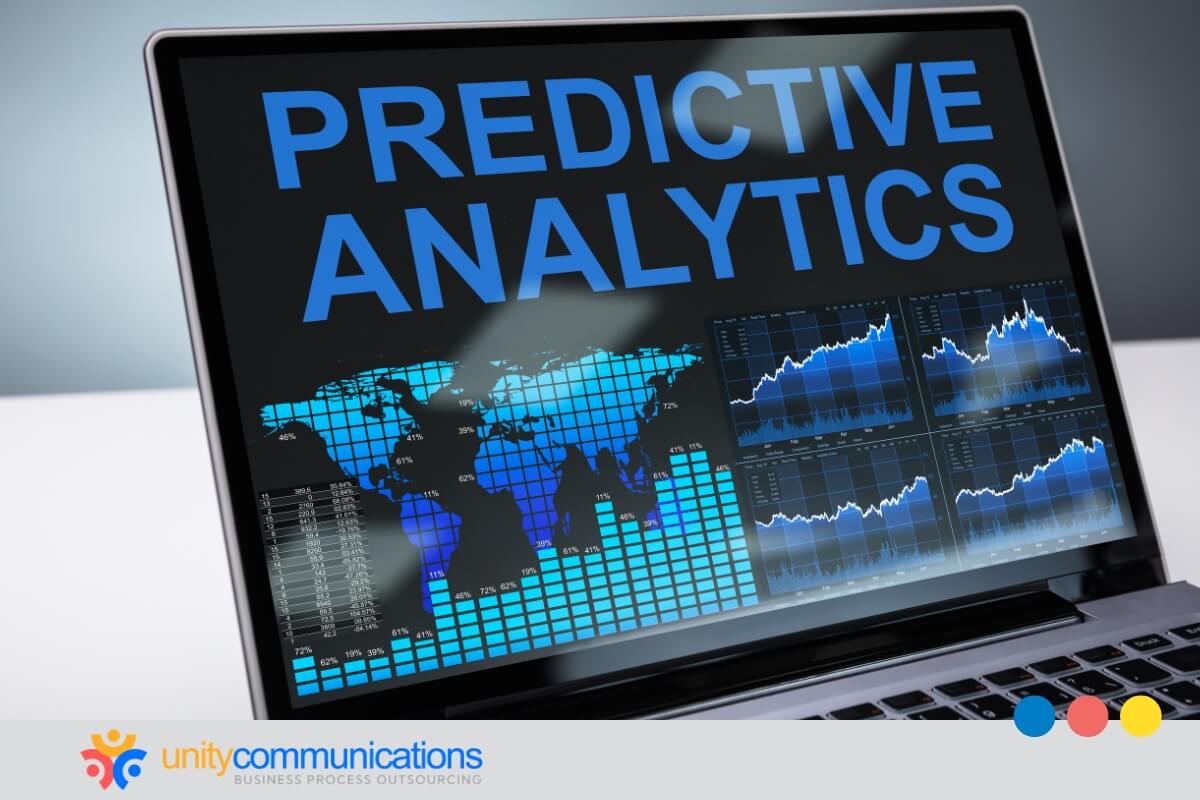
Predictive analytics is a measurable operational advantage across industries where delays and service gaps carry direct client consequences. Its benefit extends to proactive agents, helping them identify likely events and patterns so interventions happen before demand becomes explicit.
Behavioral modeling
Behavioral modeling identifies patterns preceding user actions or system changes, allowing interventions before problems arise. An e-commerce AI detects that a user repeatedly abandons their cart and triggers a personalized discount offer to encourage completion.
Forecasting techniques
Various strategies help estimate future demand, risk, or intent, guiding decisions that would otherwise require human judgment. For example, a supply chain AI predicts a spike in product demand during the holiday season and recommends increased inventory in advance.
Contextual predictions
These techniques consider timing, environment, and historical outcomes, improving accuracy and relevance. For instance, a travel booking AI adjusts recommendations based on past customer preferences, local events, and seasonal travel trends.
Risk scoring
Risk scoring prioritizes which predictions require immediate action, ensuring resources focus on the most critical opportunities. A cybersecurity AI assigns higher priority to login attempts from unusual locations, automatically triggering multi-factor authentication.
Continuous validation
Regular validation helps refine models over time, ensuring predictions remain aligned with real-world outcomes. For example, a marketing AI compares predicted campaign engagement to actual results and adjusts targeting criteria for future campaigns.
With predictive analytics, a proactive AI agent turns anticipation into faster, more responsive outcomes.
Autonomous decision-making and self-initiated actions
Proactivity requires acting without waiting for approval. Autonomous decision-making allows agents to move from insight to execution instantly while operating within defined boundaries to prevent errors.
Policy-based decision frameworks
These rules guide agent behavior within approved limits, preventing unintended actions. For example, a refund management agent can automatically approve small transactions while flagging larger amounts for review.
Action initiation
The AI acts automatically once confidence thresholds are met, reserving human intervention for exceptions. A high churn likelihood can trigger personalized retention offers immediately.
Prioritization logic
The AI agent first executes high-impact actions. For instance, an operations agent might prioritize resolving a system outage affecting thousands over minor performance issues.
Escalation mechanisms
An AI agent routes complex or high-risk decisions to humans, maintaining accountability. In the case of unusual financial transactions, a voice AI agent might escalate the call to a compliance officer.
Outcome monitoring
AI measures the impact of actions and informs continuous improvement. An AI agent evaluates whether automated outreach reduced churn and adjusts future strategies accordingly.
Autonomy transforms AI agents from advisers into operational enablers. The system does not just recommend the next best action, but takes it, tracks it, and improves on it.
Continuous learning that improves agent behavior over time
Proactive AI agents improve with experience. Continuous learning allows them to adapt as conditions, user behavior, and operational environments evolve.
Feedback-driven learning
This incorporates results from past actions, reinforcing effective strategies. A customer support AI can learn which automated responses successfully resolved tickets and prioritize those solutions in future interactions.
Model retraining
Model retraining keeps agents accurate as data patterns shift, preventing performance degradation. For instance, a demand forecasting AI updated its predictive models midyear as summer purchasing trends gave way to holiday buying patterns. In the process, inventory levels stayed aligned with actual consumer behavior.
Adaptive thresholds
AI adjusts sensitivity based on historical accuracy to reduce unnecessary actions over time. A network monitoring agent adjusts alert thresholds automatically based on historical false positives to avoid excessive notifications.
Cross-domain learning
This involves insights from one area to improve performance elsewhere. For example, patterns learned in e-commerce customer behavior can inform proactive recommendations in a subscription-based platform.
Performance monitoring
It identifies gaps between predictions and outcomes, guiding focused improvements. A marketing AI tracks how well predicted campaign engagement matched actual results and fine-tunes future targeting strategies accordingly.
Continuous learning after AI agent implementation keeps proactive agents effective in dynamic environments.
Enterprise data integration that powers proactive execution
Access to integrated enterprise data is critical for proactivity. AI agents require connectivity across systems to act meaningfully, and fragmented data limits both insight and action.
API-driven integration
API-driven integration allows AI agents to connect directly with enterprise platforms such as enterprise resource planning (ERP), customer relationship management (CRM), and financial systems.
Agents move beyond analysis and actively execute tasks such as updating records, triggering workflows, or initiating transactions. Their actions occur in real time without manual intervention or system switching.
Data normalization
Data normalization standardizes information across disparate systems, eliminating inconsistencies in formats, labels, and values. AI agents interpret data accurately regardless of its source. This reliable interpretation increases confidence in decision-making and reduces the risk of errors arising from conflicting inputs.
Permission-based controls
Permission-based controls restrict AI agent access to only the data and actions required for their role, protecting sensitive information while still enabling agents to perform meaningful work. Strong access controls support compliance, reduce security risks, and maintain trust across the organization.
Workflow orchestration
Workflow orchestration links AI-generated insights directly to predefined execution paths. Instead of stopping at recommendations, agents can automatically trigger follow-on tasks across systems. This ensures smooth operational flow and faster realization of business outcomes.
Enterprise integration
Enterprise integration enables AI agents to operate with a full operational context rather than isolated data points. With unified access, agents can make informed decisions that align with business objectives, converting proactive intelligence into measurable, real-world impact.
Enterprise integration transforms proactive intelligence into tangible business outcomes. When agents operate with full visibility across systems, the gap between identifying an opportunity and acting on it disappears.
Human-in-the-loop (HITL) controls that build trust and accountability
According to a 2025 McKinsey report, 88% of organizations used AI in at least one function, but only 7% have achieved enterprise-wide adoption.
One consistent transition barrier is confidence in how AI makes decisions and who remains accountable when systems go wrong. HITL controls address this challenge directly, keeping proactive systems transparent and auditable without slowing down operations.
Approval checkpoints
Approval checkpoints ensure critical actions receive human validation before execution. This is especially important for high-risk decisions such as large financial transfers or contract approvals. The process balances automation speed with appropriate oversight and control.
Explainability features
Explainability tools allow AI agents to communicate the reasoning behind their actions or recommendations. This transparency helps users understand how conclusions were reached and builds confidence in the system.
Audit trails for compliance and accountability
Audit trails capture every decision, trigger, and outcome generated by the AI agent. These records provide traceability for compliance reviews, investigations, and performance assessments.
Override mechanisms
Override capabilities allow humans to intervene when business conditions change unexpectedly. Users can pause, modify, or reverse agent actions in real time so AI remains aligned with shifting priorities and operational realities.
Role-based access
Role-based access defines who can monitor, adjust, or govern AI agent behavior. Limiting sensitive controls to authorized personnel reduces risk and prevents misuse.
With human oversight, proactive AI agents operate responsibly and reliably. Clear ownership and accountability strengthen trust in these systems.
Despite its benefits, implementing HITL effectively is more difficult than it appears. You must determine which decisions require human review, how to route them without creating bottlenecks, who holds accountability across shifting teams, and how to maintain consistency as AI systems scale.
To avoid building that internal capacity from scratch, you can consider hybrid business process outsourcing (BPO). This model embeds human judgment directly into AI-driven workflows to build accountability into the process.
For growing businesses learning how outsourcing works in practice, this approach promotes responsible AI deployment without the additional overhead.
Business use cases made possible by proactive agents
The value of intelligent virtual agents becomes most apparent when applied to use cases that can benefit from timing and foresight.
Customer support
In customer support, the workload shifts from issue resolution to prevention, addressing problems before customers notice them. For example, an AI agent for customer service can detect when a user repeatedly encounters login errors and automatically trigger a troubleshooting guide or contact support before the customer escalates the issue.
Sales and marketing
This sector benefits from anticipatory engagement, especially in e-commerce call centers, where timing directly affects conversion. For example, an AI agent can identify customers who browse high-value products multiple times and automatically trigger personalized offers or reminders, helping agents engage when intent is strongest.
Business operations
Operations improve through early risk detection, reducing downtime and inefficiencies. For example, manufacturing AI monitors equipment vibrations and temperature trends, predicting machine failures and scheduling maintenance before production halts.
Finance
A financial company gains early warnings for anomalies and compliance risks, enabling timely intervention. An AI agent flags unusual invoice patterns or unexpected transactions in real time, allowing finance teams to investigate before losses occur.
Workforce management
Workforce management leverages demand forecasting and workload balancing to allocate resources before demand peaks. For instance, an AI system predicts peak call center hours and automatically schedules additional staff or adjusts shifts to meet anticipated demand.
Technology and IT
In tech-related businesses, AI accelerates innovation while streamlining daily operations. Proactive AI agents can monitor code repositories, detect bugs, or flag security vulnerabilities before they escalate.
Proactive AI moves every major business function from damage control to deliberate, forward-looking execution.