

Sales teams are under more pressure than ever to hit quota with leaner headcount. The good news: Sales AI agents have matured fast, and 2026 is shaping up to be the year they move from experiment to standard tooling.
Meanwhile, business process outsourcing (BPO) provides you with experienced and specialized human support to scale operations.
This guide covers what an AI sales agent actually does, the different types available, which platforms lead the pack this year, and how pairing AI with an experienced BPO team can extend your results.
What is a sales AI agent?

A sales AI agent is a tool that assists or acts autonomously across your sales process, handling repetitive work so your team can focus on revenue-generating conversations. Unlike other AI sales tools, an AI agent in this category:
- Operates continuously, handling follow-ups, prospect scoring, and appointment scheduling without fatigue
- Personalizes communications for individual leads to improve engagement
- Provides real-time insights and recommendations that inform decisions
- Reduces manual errors by automating repetitive sales tasks
- Integrates with CRM systems, centralizing data and keeping records consistent
- Supports coaching and onboarding for new and existing reps
This sales-specific definition builds on a broader concept. For a wider look at how autonomous systems operate across business functions beyond sales, see What Is an AI Agent? Why It Matters for Business Leaders.
How sales AI agents work
Most platforms combine a few core mechanics: the AI agent pulls signals from your CRM and outreach history, applies prospect scoring to rank leads, then triggers an action, a follow-up email, a sales call reminder, a routing decision, without waiting on a sales rep to initiate it. The agent learns from outcomes over time, so its recommendations get sharper the longer it runs against real pipeline data. The time savings add up fast: Gartner found that AI tools save sellers an average of 4.8 hours per week, based on a 2026 survey of chief sales officers and senior revenue executives.
Types of sales AI agents
Not every AI agent does the same job. Broadly, they fall into three categories:
- Prospecting and outreach agents that identify and engage qualified leads without manual follow-up
- Coaching and insight agents that give reps real-time guidance, feedback, and analytics on performance
- Workflow and CRM agents that centralize data, handle scoring and routing, schedule meetings, and maintain personalization at scale
Different types of sales agents by function
Within those three categories, you’ll also see agents built for narrower jobs: appointment setters, quote and pricing assistants, onboarding coaches, and forecasting tools. Matching the type of AI agent to the gap in your sales process matters more than picking the platform with the longest feature list. If you want the fuller taxonomy these sales-specific categories are drawn from, 7 Types of AI Agents Shaping Business Outsourcing in 2026 breaks down the underlying models in more depth.
Benefits of sales AI agents for sales teams
The benefits of a sales AI agent show up most clearly in the hours it gives back to a sales team. Sales reps spend less time on data entry and follow-up logistics and more time on the sales calls that actually move deals forward. Other benefits include:
- Consistent lead engagement with no gaps in response time
- Fewer manual errors in data entry and pipeline updates
- Faster onboarding for new reps through guided playbooks
- Better forecasting accuracy from continuously updated data
- Lower cost per lead handled compared to manual outreach alone
Used well, this kind of tool can help sales teams shorten the sales cycle by keeping every lead moving instead of sitting untouched in a queue.
Top sales AI agent platforms of 2026
This category has broadened well past basic chatbots, and the results show up on the revenue line: 83% of sales teams using AI have reported significant year-over-year revenue growth. Here are the platforms worth evaluating this year:
HubSpot Sales Hub
HubSpot Sales Hub blends CRM and AI capabilities for broad customer acquisition and pipeline oversight. It’s built for companies that want one platform handling marketing, service, and revenue data instead of stitching several tools together.
Outreach
Outreach excels at automated sequences and multi-touch campaigns for organizations that need structured cadence management across email, phone, and social touches. It’s a strong fit for outbound-heavy teams with defined playbooks, since the platform is built around enforcing a consistent cadence rather than leaving timing to individual judgment.
Cognism
Cognism specializes in B2B contact and intent data, enriching outbound qualification and targeting for ideal customer profiles. Its core value is data quality: verified phone numbers and emails, plus intent signals that flag accounts actively researching a category before they’ve filled out a form.
Gong AI
Gong AI focuses on conversation intelligence, analyzing calls and emails to improve coaching and forecast accuracy. It records and transcribes customer conversations, then surfaces patterns, like which talk tracks correlate with closed deals or which deals show risk language from the buyer, so managers can coach on specific moments instead of vague feedback.
Clari
Clari offers advanced forecasting and pipeline analytics to help teams prioritize deals using real-time signals. Revenue leaders use it to get an early read on which deals are drifting off track, based on engagement patterns and stage velocity, rather than waiting for a rep’s gut-feel update in a forecast call.
Apollo
Apollo combines a prospect database with multi-channel engagement and scoring at a price point that suits mid-market teams. It’s often the first serious platform a growing company adopts, since it covers prospecting, outreach sequencing, and basic engagement scoring in a single subscription rather than requiring three separate tools.
Salesforce Einstein
Salesforce Einstein integrates directly with CRM operations, applying AI to predictive scoring and automated task assignment. Its biggest advantage is that it lives inside a system most reps already touch every day, so there’s no separate login or workflow to adopt.
Seismic
Seismic emphasizes content intelligence, helping teams deliver personalized messaging at scale. It’s built for organizations where marketing produces a large volume of collateral and reps need help finding, customizing, and tracking which pieces actually influence a deal.
InsideSales/XANT.AI
InsideSales, now XANT.AI, uses engagement insights to optimize call timing, sequencing, and pipeline conversion. Its differentiator is a large historical dataset on when and how outreach actually gets answered, which it uses to recommend the best time to call or email a given contact rather than leaving timing to guesswork.
Zoho CRM Plus
Zoho CRM Plus applies AI to predict activity, score leads, and automate routine administrative work. It bundles CRM, marketing, and support tools under one subscription, which appeals to smaller companies that want AI features without paying enterprise software prices.
People.AI
People.AI captures sales rep activity and surfaces coaching recommendations to improve revenue efficiency. It automatically logs emails, calls, and meetings against the right CRM records, removing one of the biggest sources of incomplete pipeline data, reps forgetting to log their own activity.
Conversica
Conversica specializes in AI assistants that autonomously follow up on inbound leads, cutting manual workload. Rather than augmenting a rep’s outreach, it acts as a full conversational layer that emails or texts leads directly, asking qualifying questions and scheduling a meeting once interest is confirmed.
How to evaluate sales AI agent tools
Before committing to any single sales AI agent for your business, work through a short checklist rather than picking on brand recognition alone:
- Shortlist two or three platforms based on your top priority, prospecting volume, coaching depth, or CRM fit
- Run a paid pilot against real pipeline data before signing an annual contract
- Treat every AI tool as a pilot before a company-wide rollout
- Compare pricing tiers and setup complexity, since these vary widely across the list
- Check analytics depth against what your team actually needs, not just what the demo shows
- Match the fit to your team’s size and existing tech stack rather than the platform with the most features
How sales teams use sales AI agents today
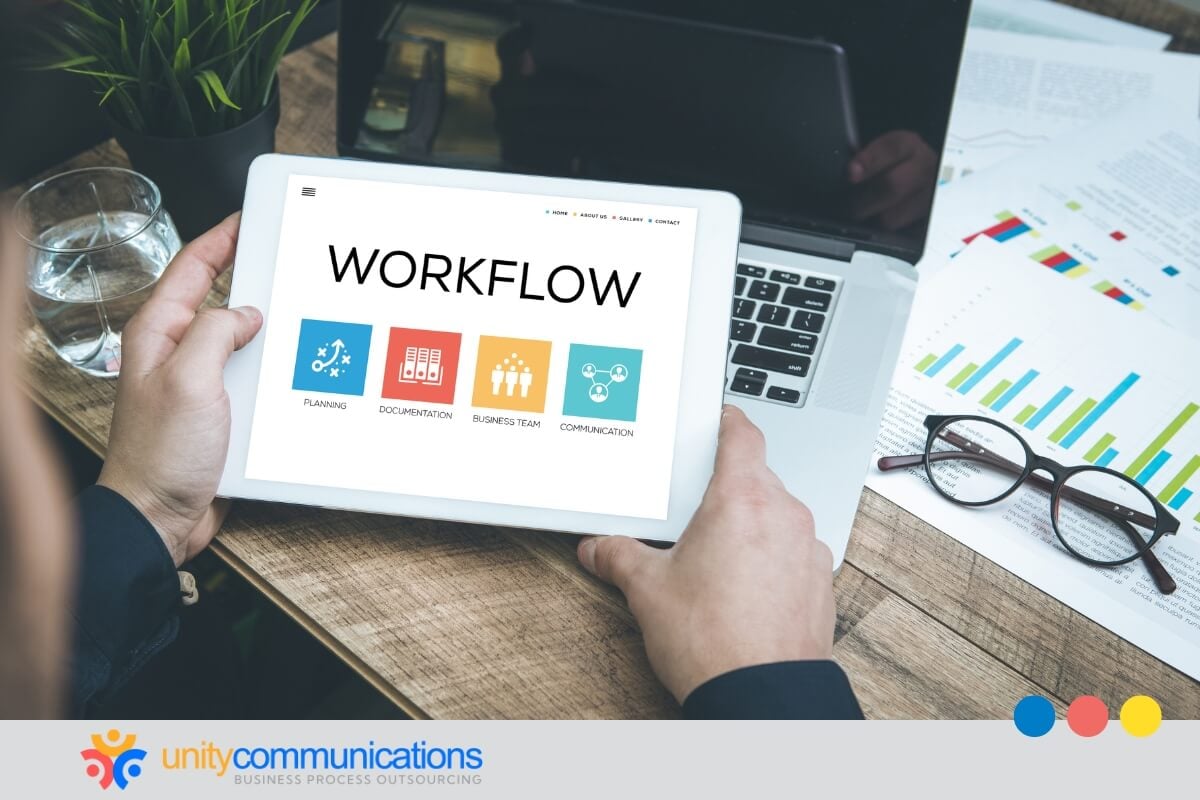
Adoption is no longer a question mark. 81% of sales teams are either experimenting with or have fully implemented AI, up from roughly half just two years earlier. Sales teams use sales AI agents to handle follow-ups, prospect scoring, and appointment scheduling, freeing reps for the sales conversations that need a human touch. This shift toward AI-powered sales support is now standard practice across most SMB teams, not just large enterprises.
Here’s where that shows up day to day:
- Analyzing account and engagement data to flag which leads are ready for outreach
- Keeping CRM records and pipeline stages updated without manual entry
- Handling the back-and-forth of scheduling a demo or call
- Coaching new reps through their first calls with real-time guidance
- Triaging inbound leads before a rep ever sees them
- Feeding real-time signals into forecasting instead of relying on stage guesses alone
Most of these agents still work best paired with a person. They handle the repetitive first few touches, but reps stay in charge of the actual relationship and the judgment calls only a person can make.
What sales leaders should know before adopting AI
Decision-makers evaluating a sales AI agent should expect a ramp-up period. According to Google Cloud’s 2026 ROI of AI study, 52% of executives report their organization has deployed AI agents in production, and 39% have already launched more than 10, showing this has moved from pilot to standard practice at scale. Leaders should set a realistic timeline, assign clear ownership for monitoring output quality, and plan for gradual expansion rather than a full rollout on day one.
Before signing off on a rollout, here’s what leadership teams should get clear on first.
Know what you’re actually evaluating
- AI sales agents in 2026 look meaningfully different from the scripted chatbots of a few years back, most can now qualify a lead end to end.
- There isn’t one category to shop for. The types of AI sales agents span prospecting, coaching, and forecasting, and knowing the different types of AI sales tools narrows the search fast.
- Common AI sales agents include prospecting bots, coaching assistants, and forecasting tools, each solving a different bottleneck.
- Autonomous agents make more decisions than earlier tools, and autonomous AI in this category can now escalate a deal to a person on its own.
- Early AI chatbots only answered FAQs; today’s conversational AI can qualify a lead through a full conversation.
- A revenue AI platform like Gong is a revenue AI built around call and email data, one example of how far a single tool can stretch across the funnel.
- Vendors building AI for sales are racing to add autonomy, and the most powerful AI in the category now handles scoring, messaging, and scheduling together.
- As the underlying AI technology keeps improving, companies leveraging AI well are seeing the clearest results.
Know why teams are adopting this now
- Companies are turning to AI sales agents because manual follow-up no longer scales at their pace of growth.
- The benefits of AI sales agents show up quickly, and the benefits of an AI sales rollout compound as adoption widens across a team.
- Leaders investing in AI sales agents this year are prioritizing a few quick wins over an ambitious full-stack rollout.
- For many teams, this is what the future of sales looks like: fewer manual touches and faster response times.
- New sales reps ramp up faster with an agent coaching their first calls, and modern sales teams increasingly treat that coaching as standard onboarding.
- Sales professionals report spending more time in live sales conversations and less on admin work.
Dashboards tie agent activity directly to sales performance, so managers can see the impact in weeks, not quarters.
Set expectations for the rollout itself
- Sales enablement should own training and messaging alignment from day one, not bolt it on later.
- This sits inside a broader wave of sales automation, an extension of the pipeline rather than a replacement for the reps running it.
- Treat the platform as a tool for sales, not a strategy on its own. Automate sales tasks like data entry first, then let agents automate follow-up sequences once the basics hold up.
- Most sales agent software plugs directly into the CRM a team already runs, and the broader category of sales software keeps expanding around it.
- The goal is to support sales teams, not replace the judgment calls only a person can make. Human sales reps still own the relationship, and a single sales representative can now cover more territory than before.
- Sales operations should own CRM hygiene, since the agent is only as good as the sales data feeding it, and someone should analyze sales and customer data weekly during the ramp-up.
- A sales agent helps most by triaging inbound leads before a rep ever sees them, and it can create sales opportunities faster once scoring updates the moment a prospect engages.
- On the leadership side, sales forecasting benefits from the same signals, and reps get a clearer read on the sales pipeline without manual updates.
- Routine sales activities, logging calls, updating fields, no longer eat into selling time, and leaders can adjust sales strategies based on which signals the agent flags as predictive of a close.
Evaluate the market with a clear head
- Every list of the 10 best ai sales agents looks a little different depending on who wrote it, and the best ai sales agent tools or best ai sales agents available today will likely look dated within a year.
- Reading a roundup of top ai sales platforms is a fine starting point, but teams that find the best fit usually start with one workflow before expanding.
- The right ai sales agent for your team comes down to picking the option that fixes your specific bottleneck, not the flashiest demo.
- Before adopting anything, use ai sales agents on a narrow pilot first, and see how ai sales agents work on your own pipeline, not just in a vendor’s demo.
- That’s also where a sales assistant model differs from a fully autonomous one: some ai sales agents use light automation only, while others handle the whole sequence end to end.
- Today, ai sales agents are used mostly for prospecting and follow-up, but ai sales agents are generally expanding into coaching, and across SMBs and enterprises alike, ai sales agents are becoming a standard line item in the tech stack.
- Agents now touch multiple parts of the sales process, not just the top of funnel, and that shift is changing the way sales teams operate throughout the sales cycle.
Leaders who prepare this way tend to see steadier results than those who skip straight to a company-wide rollout.
How BPO teams and sales AI agents work together

A BPO provider’s human specialists can work alongside an AI agent to help sales teams scale operations, maintain service quality, and manage higher lead volume without losing engagement quality. Understanding how outsourcing works helps you assign responsibilities and set expectations for this hybrid model.
Best practices for combining human sales expertise with a sales AI agent include:
- Integrate the sales AI agent with third-party platforms to coordinate tasks and reporting
- Assign reps to high-touch interactions while the agent manages routine follow-ups
- Use lead scoring to guide prospecting and outreach priorities
- Set clear protocols for data entry, pipeline updates, and CRM reporting
- Track performance metrics and feedback loops to maintain quality standards
- Expand the agent’s responsibilities gradually as trust in the system builds
- Schedule regular syncs between in-house, outsourced, and automated workflows
- Use analytics to identify trends and optimize third-party performance
Agents handle the repetitive volume so human sales specialists can focus on judgment calls that close deals. The category is growing fast enough to justify the investment: the global AI agents market is projected to climb from $7.92 billion in 2025 to $236 billion by 2034.