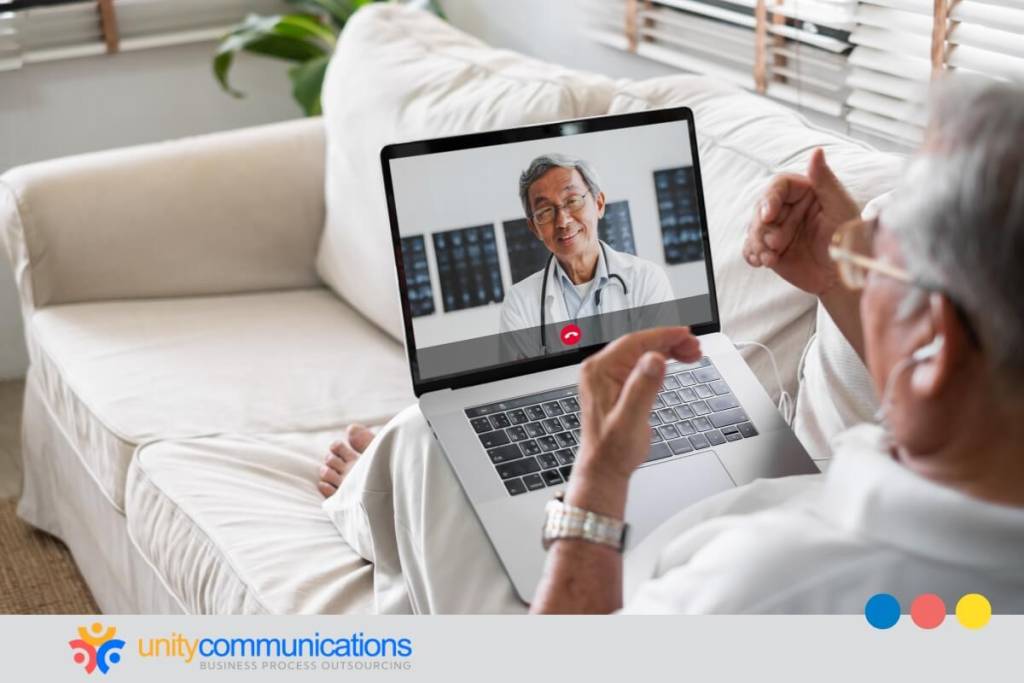


Dermatology practices manage a steady mix of medical and aesthetic treatments, and each visit adds scheduling and documentation work. A cosmetic consultation and a skin cancer screening call for different time slots and different paperwork.
Virtual medical assistants in dermatology help practices manage their daily workload. They handle administrative duties remotely, so the physician and in-house team can stay focused on patient care. Their tasks include appointment reminders and record updates, which keep the front desk clear for patients in the building.
This guide explains what VMAs do and what to look for when you hire one.
How outsourcing supplies virtual medical assistants in dermatology clinics

Virtual medical assistants in dermatology (VMAs) are administrative professionals often sourced through business process outsourcing (BPO), but what is BPO? It is the practice of contracting specific business tasks to third-party providers, which can improve efficiency and reduce costs.
In healthcare BPO services, vendors assign VMAs to outsourced work. These tasks might include:
- Scheduling and managing virtual appointments between patients and healthcare providers
- Sending appointment reminders and follow-up messages, and responding to routine patient inquiries
- Updating and maintaining electronic health records (EHRs) to help keep files accurate and compliant
- Guiding patients and staff through telemedicine platform issues
- Managing billing and insurance claims processing, including eligibility checks before visits
- Sending patient education materials, such as aftercare instructions approved by the clinical team
VMAs can fit within BPO in telemedicine and wider healthcare operations. Telehealth use grew rapidly after 2020, and dermatology adapted to it, as some skin concerns can be evaluated via photos or video. Through outsourcing, practices can free more staff time for patient care while a trained team manages the administrative side.
Suppose a clinic is considering a virtual assistant for Phoenix healthcare. It can assign administrative duties to a BPO company that supplies a trained VMA after checking the provider’s training and privacy practices.
Below is a closer look at what virtual medical assistants in dermatology can offer a practice.
Virtual medical assistants in dermatology support the daily workflow
Skin cancer is one reason patients seek dermatology care. The American Academy of Dermatology’s skin cancer statistics page cites an American Cancer Society projection of 234,680 new melanoma cases in the United States in 2026, including 122,680 noninvasive and 112,000 invasive cases.
Busy dermatology offices balance cosmetic consultations with medical treatments, and each type of appointment often requires its own time slot. VMAs can organize the schedule to make better use of each exam room and help limit patient wait times.
Their workflow tasks might cover the following:
- Balancing the schedule between medical visits and aesthetic procedures
- Setting up automated appointment reminders that can reduce no-shows for scheduled and follow-up visits
- Handling rescheduling and cancellations quickly to fill open slots
- Coordinating scheduling between treatment stages, such as a biopsy and the follow-up visit to review results
- Updating administrative patient records, such as contact and insurance details, after each visit.
Fewer no-shows can help patients stay on track with ongoing treatment plans. By outsourcing administrative tasks in healthcare to skilled VMAs, practices can redirect staff time to patient care and service quality.
VMAs in dermatology support patient interactions
Virtual medical assistants in dermatology can help organize patient histories and treatment notes, making them easier for dermatologists to access during visits. They can also prepare for each appointment in advance, ensuring the right information and forms are ready when the patient arrives.
These are ways VMAs support patient interactions:
- Preparing treatment and symptom notes and prior photos ahead of a consultation
- Entering patient information as directed by the practice and keeping those records current
- Arranging follow-up appointments while the clinical team updates care plans
- Responding to routine patient inquiries and routing clinical questions, including medication refill requests, to the physician
Understanding how outsourcing works helps practices weigh the value VMAs might add during patient interactions.
Dermatology virtual medical assistants support record accuracy
Accurate records help track treatment progress or trends over time. Virtual medical assistants can also manage administrative documents and clinical images using dermatology software configured by the practice to comply with healthcare privacy regulations.
Here is how virtual medical assistants in dermatology support accuracy in this healthcare process in BPO:
- Organizing photos of skin conditions so the dermatologist can compare changes between visits
- Tracking follow-up visits and updating patient histories as the clinical team directs
- Following federal HIPAA privacy regulations to help keep patient medical records confidential and secure
- Reviewing records on a set schedule to streamline auditing
Careful record-keeping can support continuity of care and patient trust.
What do virtual medical assistants in dermatology handle?

Virtual medical assistants in dermatology handle front- and back-office tasks off-site, freeing in-office staff to spend more time with patients.
In healthcare BPO, a VMA works for a dermatology practice in a remote location, securely connecting to the practice’s EHR and phone system. Most of the role is administrative. Daily work covers scheduling appointments, verifying insurance coverage, preparing intake forms, and following up on unpaid claims.
The assistant also keeps patient files organized. That can include uploading lesion photos and filing lab and pathology results as they arrive, so the dermatologist can review them at the next visit. The dermatologist reviews and interprets the results.
VMAs do not perform hands-on clinical work. Taking vital signs or assisting with a procedure stays with on-site staff. When a patient asks a clinical question, the VMA routes it to a licensed medical professional on the care team.
Some practices also use virtual medical assistance for after-hours coverage. A VMA can answer portal messages and sort routine calls so the right person follows up by morning. Urgent clinical concerns should follow the practice’s own escalation protocol. The exact scope depends on state rules and the practice’s own policies.
In-house vs. virtual medical assistants in dermatology
Both roles support the same dermatologist, but they differ in how their daily work is typically split between administrative and clinical duties.
In-office dermatology assistants handle clinical duties that require them to be in the exam room. Typical duties for an on-site medical assistant might include:
- Taking blood pressure and recording the patient’s medical history and allergy information before the exam
- Preparing instruments and assisting the dermatologist during a biopsy or excision
- Following infection control protocols
- Applying a dressing and reviewing the dermatologist’s wound care instructions after a procedure
- Helping administer topical treatments or injections when state law allows
- Providing basic first aid if a patient feels faint after a procedure.
Some assistants also support skin exams by photographing moles for monitoring over time, when the practice’s protocols include it.
Virtual medical assistants in dermatology take the administrative side of that same workload. While the on-site assistant is on duty in the exam room, the VMA can handle administrative work such as confirming the next day’s schedule and submitting prior authorizations. This split lets each person focus on one type of duty at a time.
Medical assistants provide value in both settings. The right mix depends on patient volume and the proportion of the workload that is paperwork.
What qualifications do virtual medical assistants in dermatology need?
Many dermatology VMAs complete a certificate or associate degree program, but some employers prefer or require CMA or RMA certification in addition.
Candidates often complete a postsecondary program that takes one to two years, though some learn through on-the-job training. Coursework often covers medical terminology and pharmacology. Many programs include an externship, which gives students hands-on experience in a real-world clinical setting under the supervision of experienced staff.
Certification is voluntary in most states, though some employers ask for it. Two common credentials are:
- Certified Medical Assistant (CMA)
- Registered Medical Assistant (RMA)
Certification requirements often include graduating from an accredited program and passing a credentialing test. VMAs who want to make this a long-term career should keep their credentials active through recertification, which might involve continuing education courses.
Some states add their own rules, such as requiring a license or additional training before an assistant can perform certain tasks, including administering injections.
For virtual medical assistants in dermatology, employers might weigh EHR experience and knowledge of dermatology billing codes more heavily than education requirements, since the work is administrative. Some VMAs come from a medical assisting background, while others specialize in billing.
Either way, anyone pursuing this role should expect HIPAA and software training before working with patient data. Their qualifications should also align with state rules.
Selecting virtual medical assistants in dermatology

A well-matched hire can help a dermatology practice manage complex scheduling and maintain accurate patient records. Choosing the right virtual assistant starts with a clear list of the role’s requirements.
Key factors to check when vetting a VMA include:
- Experience in dermatology or another specialty, with familiarity with common conditions and treatments
- Proficiency with dermatology EHR and practice management software
- Clear, empathetic communication with patients by phone and chat
- Attention to detail in handling records and scheduling
- Willingness to take responsibility for administrative work while supporting clinical staff within the scope of the role
A VMA who meets these criteria can add useful administrative expertise and give dermatologists more time with patients.
In-house vs. VMA in dermatology cost comparison
Labor cost is one reason practices consider VMAs. The Bureau of Labor Statistics profile for medical assistants lists a median annual wage of $45,690 as of May 2025. BLS figures project 13% job growth from 2025 to 2035, which is much faster than the average for all occupations.
That outlook suggests competition for trained assistants might stay strong. A full-time in-house hire also adds benefits and payroll taxes on top of base pay.
Some outsourcing providers let a practice pay for the hours it needs, depending on the contract. Some practices keep one or two in-house assistants for clinical work and assign scheduling and billing duties to a VMA team. Technological advances in EHR and telehealth tools have made this hybrid staffing model easier to adopt.
Before signing, compare the total cost of a new in-house hire with the VMA provider’s rate. Also confirm that the provider signs a business associate agreement (BAA) and handles HIPAA training and data security.