
While it might seem like AI for customer engagement could eliminate the human touch from customer interactions, it’s actually a significant advantage for creating stronger connections. Human interaction is still essential, but customers expect you to understand their needs and respond quickly and accurately, which AI excels at.
AI can help identify patterns, anticipate needs, and support human agents in delivering exceptional service. It can also manage routine inquiries across multiple channels.
In this guide, you’ll learn the proven ways AI is transforming customer experiences.
1. Anticipate customer needs with predictive analytics
Predictive analytics is one of the most significant ways AI enhances customer engagement. Instead of waiting for customers to tell you what they want, AI models analyze historical behavior, purchase patterns, and real-time signals to forecast needs.
You can use predictive insights to recommend replenishment items just as a customer is about to run out, or a subscription service can identify when a user is at risk of canceling and intervene with a tailored offer. These proactive touches enhance satisfaction and strengthen loyalty by showing customers that your brand truly understands them.
Research shows that 63% of companies using predictive analytics reported an increase in customer satisfaction, and 80% believe predictive analytics is essential for delivering personalized experiences. Predictive tools also reduce churn by up to 25% and improve conversion rates when properly deployed.
When AI turns raw data into foresight, you can deliver the right message, at the right time, on the right channel. This sets the foundation for deeper, more meaningful engagement.
2. Deploy with AI-powered agents across every channel
Before, conversational AI was limited to a single channel. However, you can now deploy AI-powered agents across chat, email, SMS, and even voice to provide seamless, round-the-clock support. These AI tools for customer engagement enable customers to connect with your brand in a way that suits them best, whenever and however they prefer.
An AI chatbot for customer service can instantly resolve common questions such as order tracking or appointment scheduling, while AI voice agents step in to handle natural, spoken interactions. Together, they serve as your first line of response, and they free human reps for more complex issues that require empathy, negotiation, or deeper product knowledge.
Additionally, conversational agents can retrieve customer data from customer relationship management (CRM) systems, suggest personalized offers in the moment, and even initiate proactive check-ins. They also seamlessly hand off conversations to human agents along with complete context, so customers don’t have to repeat themselves.
The result is faster response times, lower costs, and higher satisfaction. It even keeps a consistent brand voice across every channel.
3. Use AI for customer engagement and sentiment detection
Sentiment analysis is one valuable application for AI. Instead of relying on post-call surveys or delayed feedback, the technology can interpret emotions as they emerge to detect frustration, urgency, or satisfaction at the moment. This way, you can respond proactively rather than reactively.
AI voice agents can detect tonal changes, long pauses, or abrupt shifts in language that suggest rising tension. When the system detects these signals, it can automatically transfer the conversation to a human agent with the right skills to de-escalate the situation. Conversely, AI can flag negative phrasing or keywords and prioritize those cases for faster response in text-based channels.
Immediate awareness prevents customers from feeling stuck in impersonal interactions. Instead, they experience speed from automation and human empathy for sensitivity. Some systems also equip supervisors with a dashboard that highlights at-risk conversations, so they can provide real-time coaching and intervene to protect your reputation.
Sentiment detection, paired with intelligent routing, prevents costly escalations, preserves customer trust, and creates a feedback loop that enhances both AI and human performance.
4. Drive proactive outreach through predictive signals
AI for customer engagement uses predictive signals to trigger timely and relevant communications before issues escalate or opportunities are missed. The signals can come from customer behavior on your site, such as browsing patterns and cart abandonment, usage anomalies, account status, or lifecycle events such as subscription renewals or promotions.
If one abandons their cart, your AI can trigger a personalized reminder with a discount code. Alternatively, when predictive analytics show that a user is likely to cancel due to declining logins or decreased activity, the system can send a retention offer, such as a free trial extension or a discount on the next billing cycle.
Moreover, if the AI identifies unusual spending behavior that might indicate churn risk, it can trigger a proactive call or message to discuss account benefits before the customer disengages.
Over 83% of customers say they want businesses to proactively contact them to provide support or service. Proactive outreach reduces the volume of reactive customer service requests and strengthens loyalty and retention. When customers feel cared for by anticipating their needs, they are more likely to continue engaging.
5. Deliver hyper-personalized recommendations and offers

Personalization has always been the goal in customer engagement, but AI has taken it to a new level. Its models analyze behavioral patterns, browsing history, and contextual signals to customize experiences, rather than relying on broad demographics, such as age or geography.
AI for customer engagement shines at creating tailored and interactions. Think of a streaming service that suggests movies based on what you watched last week, at the time of day you typically stream, the genres you skip, and the devices you use.
Another example is an online retailer that dynamically adjusts promotions, offering a personalized discount on accessories for a product already in your cart or highlighting complementary items based on your past purchases.
Hyper-personalized touches aren’t limited to sales. AI can also design loyalty rewards, tailor onboarding journeys, or modify messaging to better resonate with the buyer. As a result, customers feel understood and valued and are more likely to return.
Shifting from simple demographics into behavior-driven personalization strengthens emotional connections, turning first-time buyers into loyal customers.
6. Orchestrate seamless journeys with next-best actions
It’s rare for customers to interact with you through a single channel or in a straight line. They might start on a website, shift to a mobile app, ask questions over chat, and later call for support. Orchestrating these touchpoints into a seamless, connected journey is where AI for customer engagement can be beneficial.
During journey orchestration, AI analyzes context and behavior in real time to recommend the next-best action. This could mean:
- Playing a tutorial video after a product purchase
- Offering live chat when a customer lingers on a pricing page
- Sending a personalized reminder before a subscription renewal
- Adapting the step to the customer’s intent instead of using generic workflows
With this approach, AI-driven insights enable you to respond proactively rather than reactively. The technology suggests the most effective resolution path, escalation option, or upsell opportunity based on the customer’s current journey.
A unified cross-channel interaction and right next-step prediction offer a seamless, intuitive, and effortless experience. The outcome is solidified loyalty and reduced friction at each stage of the relationship.
7. Boost human agents with intelligent AI assistance
Human reps are still important for empathy-driven interaction. Consumers still appreciate human reassurance when emotions run high, when financial or medical concerns are at stake, or when decisions carry significant consequences. What’s changing is how AI enhances the performance of those agents behind the scenes.
With AI for customer engagement, frontline staff no longer must dig through lengthy manuals or toggle between multiple systems while a customer waits. Instead, intelligent assistance tools work in real time. They:
- Listen to the conversation.
- Pull up relevant knowledge snippets.
- Suggest responses based on similar cases.
After a call or chat, AI can generate auto-summaries and update CRM records instantly, reducing repetitive documentation tasks that often lead to burnout.
Many companies are adopting a hybrid business process outsourcing (BPO) approach where providers offer both skilled live agents and advanced AI capabilities. In this setup, you can access the BPO provider’s AI stack, pre-trained tools such as AI voice agents, and round-the-clock human support.
Integrating technology and people is a practical example of how outsourcing works today. Unlike traditional BPO, where efficiency alone was the goal, hybrid models emphasize collaboration between AI and humans. Real-time AI insights empower human agents, while AI systems learn continuously from human feedback.
8. Enhance knowledge management to expedite resolutions
Customer service often falters due to scattered information. AI for customer engagement turns knowledge management into a living, intelligent resource.
AI continuously analyzes past interactions, identifies common issues, and updates knowledge bases with the most effective solutions to prevent static frequently asked questions (FAQs). When new questions arise, the system instantly shows the most relevant article, snippet, or troubleshooting step. Agents can avoid time-consuming searching, and customers receive the data they need.
AI-powered knowledge management also enables dynamic self-service. Customers get quick access to accurate answers through chatbots, voice assistants, or online help centers. As new patterns emerge, the system learns and adapts, ensuring content stays fresh and relevant.
By centralizing insights and making them instantly accessible, AI shortens resolution times, improves accuracy, and ensures a consistent experience across every channel.
9. Scale content generation, translation, and localization
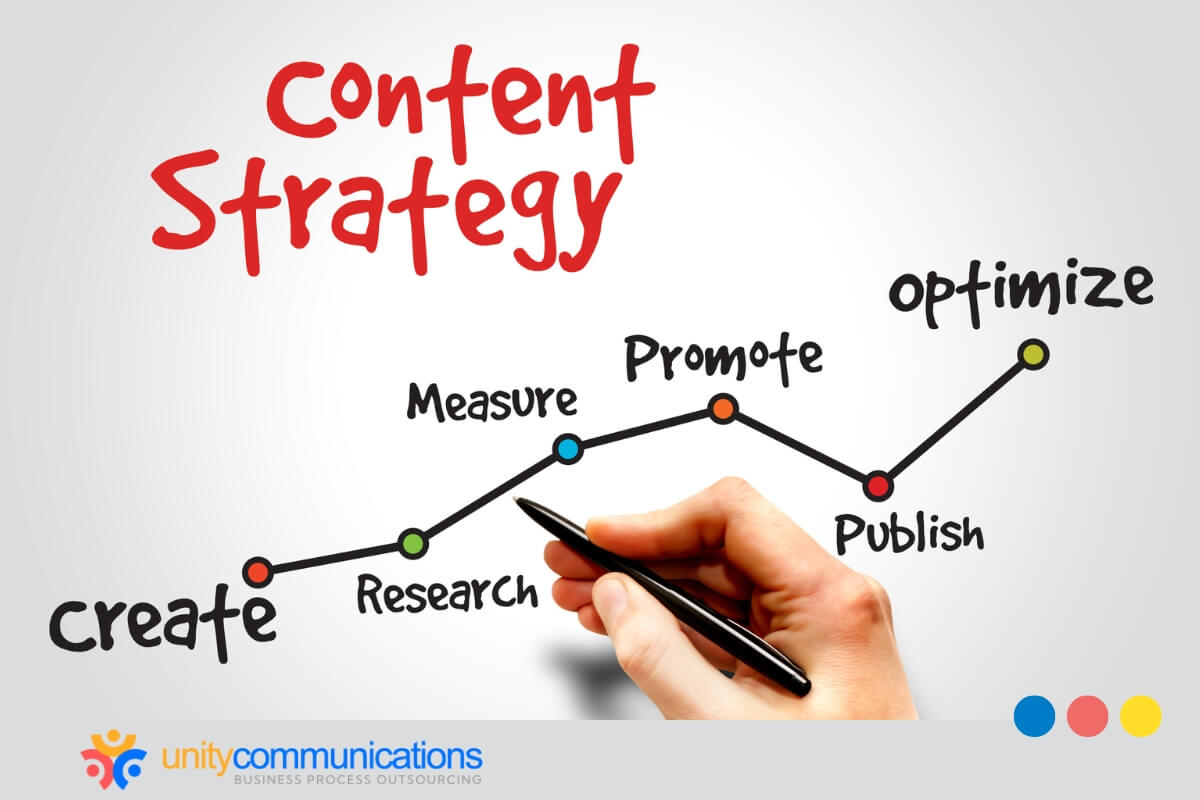
Creating and maintaining content across multiple markets and channels is a resource-intensive process. AI for customer engagement helps you scale your content strategies without compromising on quality or consistency.
- AI can generate pre-made replies, FAQs, and dynamic responses to common inquiries.
- Instead of agents manually drafting repetitive messages, AI ensures customers receive clear, accurate information instantly.
- AI can also auto-summarize complex policies into plain language or adjust the tone of a response to match the context.
The ability to adapt content for global audiences is just as crucial. AI-powered translation avoids converting words verbatim. It considers the account’s cultural nuances, idiomatic expressions, and even industry-specific terminology.
For example, an AI-translated product tutorial can sound just as natural in Spanish or French as it does in English and still maintain the same clarity and intent.
Automation and localization create a scalable system for global communication. With these improvements, you can expand into new markets faster, deliver consistent brand messaging worldwide, and make each customer feel understood in their own language.
10. Optimize engagement with automated A/B testing
Traditional A/B testing can be slow and resource-heavy. Marketers design variations, run campaigns for weeks, and wait for sufficient data to draw conclusions. By the time results arrive, customer preferences might have already changed. AI for customer engagement enhances the game, expediting experimentation and making it more dynamic.
- AI can automatically create multiple test variations of subject lines, ad copy, call-to-action buttons, or even entire page layouts.
- Instead of relying on a fixed two-version test, machine learning models can run multivariate tests at scale, comparing dozens of options simultaneously.
- AI monitors performance in real time and reallocates traffic to the best-performing versions as results emerge.
For example, your promotional email has several headline variations. AI can instantly analyze open rates and click-through behavior to determine which resonates with different audiences. You don’t have to complete the campaign to gather data. You can pivot midstream to maximize the email’s impact.
Additionally, automated optimization is also applicable to customer service workflows. Chatbots can experiment with phrasing, tone, or the order of suggested responses to determine which approach increases resolution rates and customer satisfaction scores. Over time, the system “learns” the most effective patterns and applies them across all channels.
11. Build trust through explainable and responsible AI
As amazing as AI for customer engagement can be, its effectiveness depends on trust. Customers want faster, smarter, and more personalized interactions, but not at the expense of privacy, fairness, or transparency. That’s why you must prioritize explainable and responsible AI practices.
On the ethical side, explainability means that you can understand and validate the AI’s decisions. If the system denies a loan application, flags customer interaction, or recommends a specific action, you must understand the reason. Without this visibility, bias can creep into algorithms, leading to unfair outcomes or reputational risk.
Responsible governance entails establishing clear rules of engagement, regularly auditing AI outputs, and implementing safeguards to protect customer data. From the customer’s point of view, transparency is just as vital. Disclosing when they’re interacting with an AI system, regardless of whether it’s a chatbot, recommendation engine, or voice assistant, helps set expectations.
Customers can embrace automation when they understand how you utilize information and recognize that humans are available for escalation. This builds confidence that AI is working alongside humans to improve service quality, rather than replacing the human touch completely.
The bottom line
AI for customer engagement provides advanced capabilities, including predictive insights, hyper-personalized recommendations, faster resolutions, and proactive outreach.
However, AI doesn’t replace people. The human touch is vital for injecting empathy, solving complex problems, and building trust. The real opportunity lies in combining AI with human strengths to create seamless experiences without losing your authenticity.
This balance comes to life through hybrid BPO. By accessing both live agents and AI-powered solutions within a single ecosystem, you can deliver fast and smart human interactions.
Wonder how AI can level up your customer engagement? Let’s connect to discuss a solution.