

If a business process outsourcing (BPO) partner runs your contact center, call center artificial intelligence (AI) raises a question that goes beyond features and vendors: Who is accountable when the AI works and when it doesn’t?
This article answers that directly. It covers what call center AI actually is, how AI agent solutions function within an outsourced operation, where they fall short in practice, and what it takes to deliver real results.
What is call center AI, and how does it work in outsourced support?
Call center AI is the set of technologies that automate, assist, or analyze customer interactions across voice, chat, email, and messaging channels.
That includes routing calls to the right agent, running virtual agents that resolve simple requests without a human, giving live agents real-time guidance during a call, transcribing and scoring conversations for compliance and quality, and forecasting staffing needs.
In an outsourced environment, the technology itself doesn’t change much. What changes is who controls it and who is held accountable for the outcome. When a BPO runs the operation, the AI stack, the data it touches, and the resulting reports all sit within a vendor relationship rather than under direct internal IT and operations control.
That shifts three questions clients often don’t think through until something goes wrong:
- Who decides which BPO call center AI tools get deployed and when?
- Who owns and can access the underlying customer data?
- Who is contractually responsible when the AI underperforms or creates a compliance issue?
Call center AI can work extremely well in an outsourced model. It just requires a governance structure that most vendor-written content skips entirely, because vendors are optimizing for a sale, not for an operating relationship that runs for years.
The core AI components in a call center
Before getting into governance, it helps to clarify what AI actually means in a call center. The term is used loosely, and much of what’s marketed as AI is closer to scripted automation. Here’s how artificial intelligence fits into call centers:
Intelligent routing
Traditional call routing routes a customer to the next available agent or to the first agent in the queue. Intelligent routing uses data about the customer (history, intent, value, sentiment) and the agent (skill, performance, current load) to match the two more precisely, reducing transfers and shortening handle time.
This is one reason automation now ranks so highly in customer service (CS) strategy. HubSpot found that 84% of customer relationship management (CRM) leaders view AI as a key resource for engaging with customers. Done poorly, though, intelligent routing just adds complexity to a routing problem the center never actually solved.
Virtual agents and chatbots
They handle defined, repeatable requests such as password resets, order status inquiries, appointment scheduling, and basic billing questions. But rules-based bots follow a decision tree and break the moment a customer phrases something unexpectedly. Genuinely intelligent systems built on large language models (LLMs) can understand intent across a wider range of phrasing and hand off cleanly when a request falls outside their scope.
Agent-assist tools
These sit alongside a live agent during a call or chat. They surface relevant knowledge base articles, suggest next-best actions, flag compliance requirements in regulated conversations, and summarize the interaction afterward. Human agents don’t spend a lot of time on after-call work.
In the process, AI empowers call center jobs and delivers the most reliable returns. Humans still make the final decision, while the AI reduces search time and error rates rather than replacing judgment.
That efficiency adds up over time. For example, when one bank introduced an AI-driven virtual assistant to suggest the next-best question for agents, it saw a 6% reduction in average handle time and lower training requirements.
Speech analytics and sentiment detection
These tools analyze call and chat transcripts at scale to identify trends:
- Rising frustration with a particular issue type
- Missed compliance language
- Agents who consistently drive better outcomes
They provide visibility that would be impossible to achieve with manual call sampling, which typically covers only a tiny fraction of the total volume.
Automated quality monitoring
Instead of a QA team manually scoring 2–5% of calls, AI-based quality monitoring can score 100% of interactions against a defined rubric and flag outliers for human review. This turns quality management into a full audit instead of a sampling exercise. The results show up in how customer experience (CX) leaders view overall interaction quality.
Zendesk’s CX Trends survey found that 87% of CX leaders say AI is significantly improving the quality of customer interactions, the broader shift that full-coverage monitoring is part of.
Predictive workforce management
AI-driven forecasting tools analyze incoming volume, seasonality, and agent behavior patterns to build staffing plans that are more accurate than those based on historical averages alone. This directly affects service levels, costs, and agent burnout, since both understaffing and overstaffing cause real operational damage.
None of these components functions in isolation. A center that deploys a virtual agent without an agent-assist layer behind it, or a routing engine without quality data feeding it, tends to see only a fraction of the benefits that a properly integrated deployment produces.
How does call center AI work when a BPO runs the operation?

In outsourcing, AI accountability shifts from technology to contract: who owns decisions, data, and results when a BPO runs it.
Who owns the technology decisions
In an internal operation, the client’s own IT and CX leadership choose the AI tools, set the roadmap, and control the rollout pace. In an outsourced model, those decisions typically rest with the BPO, either because it owns the platform stack or because it operates within a client’s existing systems on the client’s behalf. Regardless, the client needs to know, before signing, whether they are choosing the AI tools or approving someone else’s choices.
Who owns the data
Call center AI runs on customer data, including transcripts, sentiment scores, CRM records, and call metadata. In an outsourced arrangement, that data usually lives inside the BPO’s systems, at least in part.
Clients need clear answers to specific questions:
- Where is this data stored? Who can access it?
- What happens to it if the contract ends?
- Is it used to train models that could benefit other clients of the same BPO?
A serious BPO partner will have direct, specific answers to each of those questions rather than general assurances.
How results get measured and reported
If a BPO deploys a virtual agent and reports only a containment rate, that number can look excellent. At the same time, customer experience deteriorates because containment counts every call the bot didn’t transfer to a human, including calls where the customer simply gave up.
A client should require reporting that connects AI performance to outcomes that matter. These include customer satisfaction (CSAT), first contact resolution, escalation rate, and complaint volume, not just automation volume.
Unity Communications operates this way by design. Clients get a named answer for who approves each AI deployment. They know where interaction data lives and what happens to it at contract end. Reporting ties back to CSAT, first contact resolution, and escalation rate on a fixed cadence. That replaces a single containment number pulled together before a renewal conversation.
Honest failure modes: What happens when AI is poorly implemented
Most of what is published about call center AI focuses on success stories. The failure modes of call center AI implementation are just as instructive, and arguably more useful. Business leaders actually need them to plan AI implementation properly.
Bot abandonment
When a virtual agent can’t understand a request or gets stuck in a loop, customers hang up or switch to another channel. Abandonment at the bot stage is rarely reported in the same way as call center abandonment. It can go unnoticed in a healthy or “green” dashboard.
Over-automation
Not every interaction should be automated. Complaints, cancellations, and anything involving frustration or financial stakes generally need human support. Centers that automate these categories tend to see a spike in complaints and social escalation, along with churn that doesn’t show up until a quarter or two later.
Compliance exposure in regulated industries
In healthcare and financial services, AI tools that transcribe, summarize, or route calls touch protected data and regulated disclosures. Skipping a required disclosure or storing protected health information in the wrong place creates real regulatory risk. This is as much a governance failure as a technology one. It usually traces back to a deployment that no one reviewed against the compliance framework before launch.
The real cost of a failed deployment
The direct costs are usually technology spend and integration hours. The higher cost is almost always due to customer trust and agent trust. Agents who watched an AI rollout create more work, not less, become resistant to the next one. Customers who had a bad bot experience are harder to win back to digital channels, pushing more volume back into the highest-cost channel: live voice.
Unity’s own deployments are built around these three failure modes. Virtual agents route to a human once confidence drops below a set threshold. Unity checks that threshold continuously, instead of counting failed attempts before handoff.
Automation stops short of complaints, cancellations, and anything with financial stakes by design. Compliance review runs before a tool touches a regulated conversation. That catches a missed disclosure before launch, rather than after a client flags it. Each rule traces back to a deployment in which the alternative failed first.
AI call center readiness assessment: Is your operation actually ready?
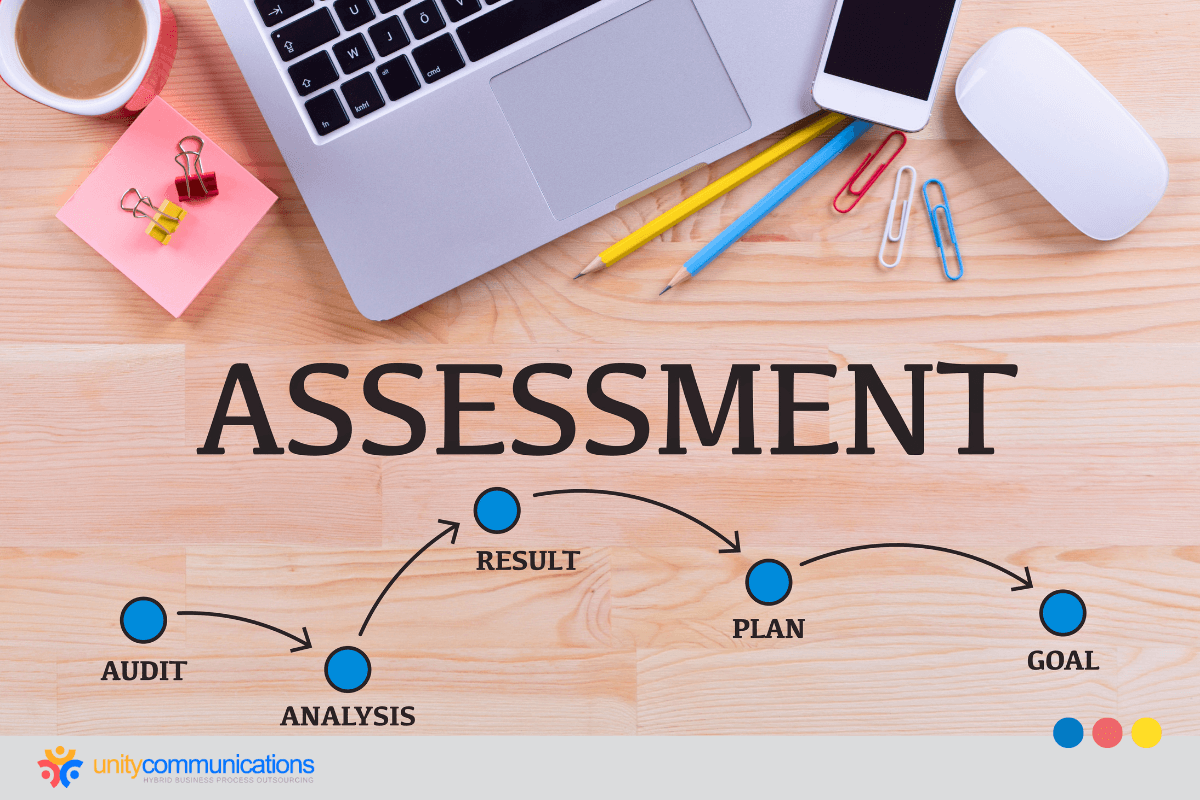
Four factors determine whether an operation is actually ready before any vendor or partner enters the conversation.
Data quality and availability
AI performance is bound by the quality of the data it’s trained and operated on. A center with fragmented CRM records, inconsistent call tagging, or no historical transcript library will get weak results from even a strong AI platform, because nothing reliable is underneath it.
Integration complexity
AI tools need to connect to telephony systems, CRM, knowledge bases, and ticketing platforms. The harder those systems are to integrate, whether due to legacy infrastructure or fragmented ownership across departments, the longer and more expensive the deployment becomes, and the more likely it is to stall before delivering value.
Agent change management
Agents who feel threatened or undermined by AI tools will find ways to work around them. Successful deployments treat agents as the primary users of assist tools and involve them in testing and feedback before full rollout, rather than announcing a new tool and expecting adoption.
Volume thresholds
AI has fixed costs, such as licensing, integration, and ongoing tuning. Below a certain call or ticket volume, those fixed costs outweigh the labor savings, and a simpler process improvement will deliver a better return than an AI deployment.
Centers handling fewer than a few thousand contacts a month in a given interaction type rarely see AI pay for itself quickly, but that threshold shifts with cost per contact and complexity.
A leader who can assess these factors honestly is in a much stronger position to evaluate a BPO partner’s AI claims. They know what a realistic rollout timeline and return actually look like for their own operation.
What good looks like: Metrics and governance in an outsourced AI deployment
A well-run call center AI deployment produces measurable outcomes and visibility into how those outcomes were achieved. On the metrics side, clients should expect reporting that goes beyond containment and automation rates to include:
- CSAT movement by interaction type
- First contact resolution rate
- Average handle time change (and whether it reflects genuine efficiency or just faster, lower-quality resolutions)
- Escalation and complaint rate
Any one of these numbers in isolation can be misleading. Together, they show whether a faster interaction is also a better one, or just a shorter one that pushes the same problem downstream into a complaint or a repeat contact.
On the AI governance side, clients should expect and request:
- A clear statement of who owns each AI-related decision, and a defined process for approving new AI deployments or changes to existing ones
- Data-handling terms that specify storage location, access rights, and what happens to data at contract end
- Regular reporting cadence, with the ability to audit underlying interaction samples
- A documented AI-human escalation path for every automated interaction type, so no customer is ever fully boxed into a bot with no way out
- Compliance review of AI tools against the client’s specific regulatory obligations, not a generic assurance that the platform is “compliant”
A BPO team that has already embedded AI into its contact center will have the answers you need to make smart decisions.