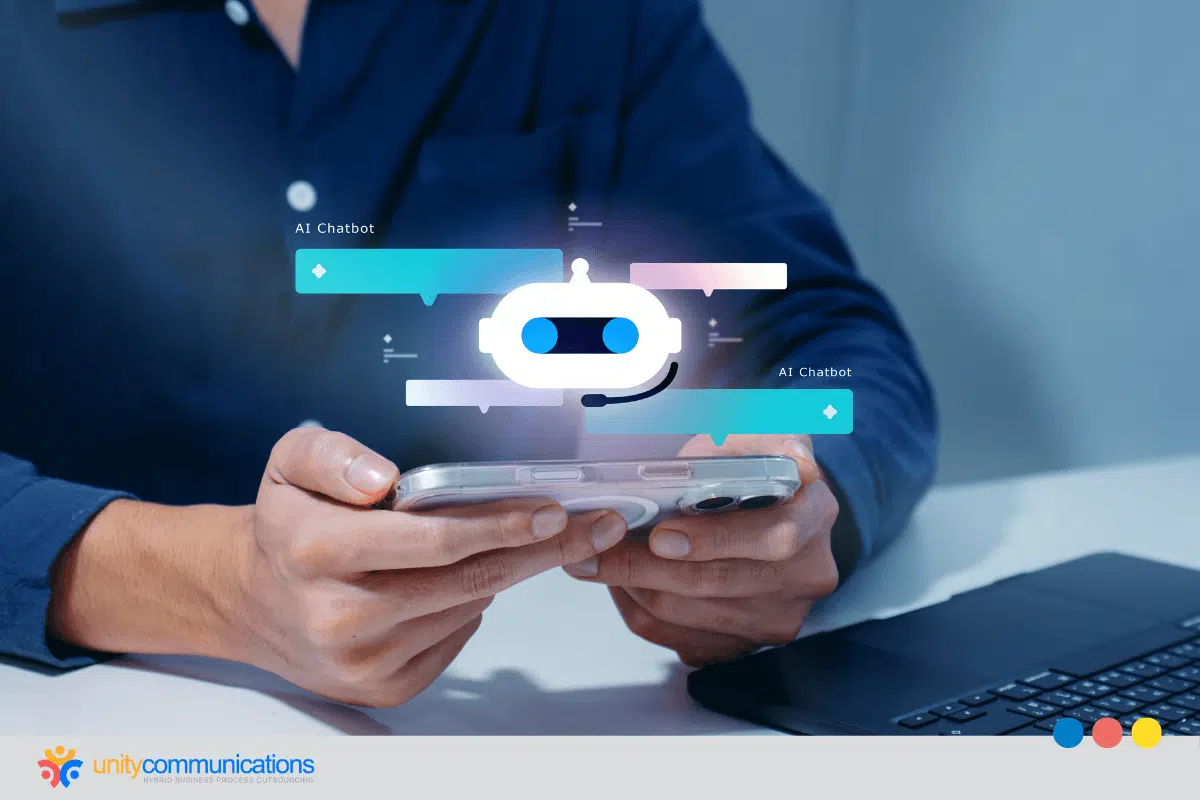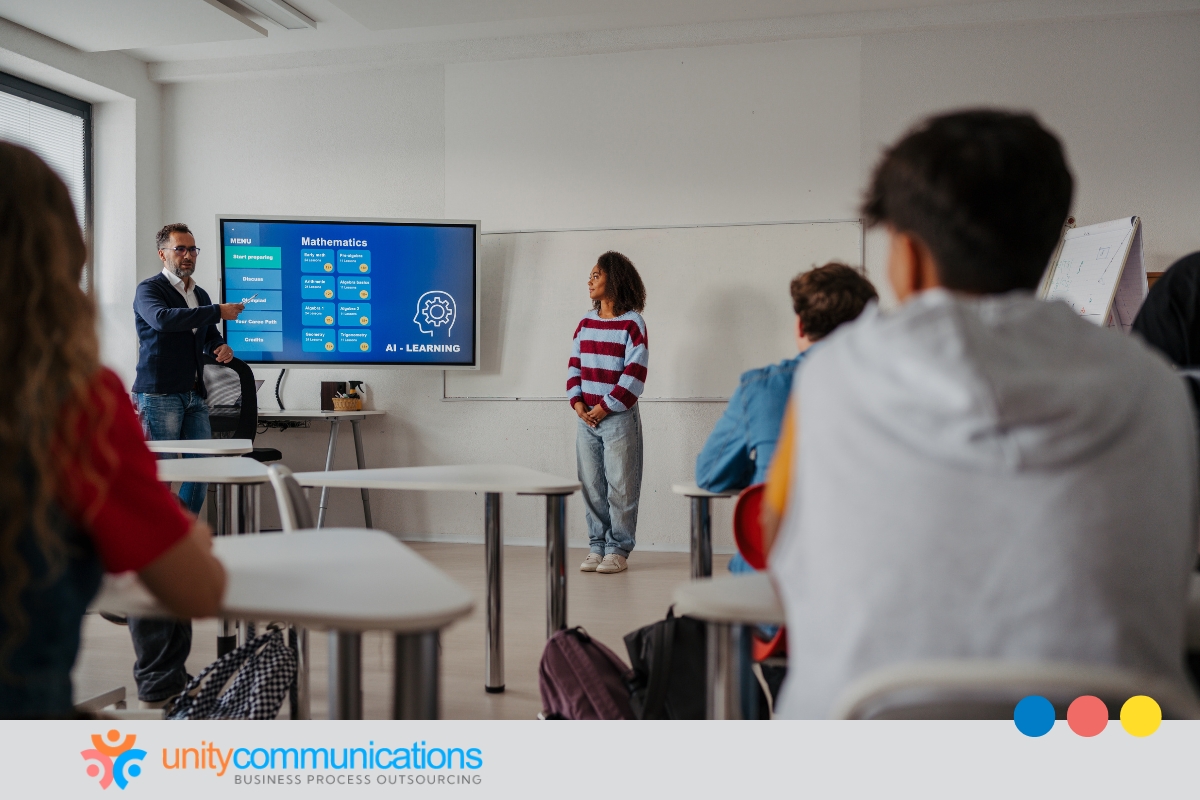


Growing data shows that more educational institutions are investing in artificial intelligence (AI) to relieve teachers of administrative tasks and increase student engagement.
Unlike static software, these AI agents in education autonomously handle lessons, administration, and real-time guidance. They analyze data, adapt to individual needs, and initiate action before problems escalate.
When paired with business process outsourcing (BPO), the AI-human model creates a functional division of labor. AI handles the volume, while expert human teams oversee quality and complex decision-making.
To learn more about the benefits of this technology, explore 10 use cases where AI delivers measurable impact.
Why does agentic AI matter in education today?

AI agents matter in education because they autonomously handle tasks, support staff in real time, and meet rising demands with limited resources.
To grasp their value, you first need to know what an AI agent is. It is a software system that perceives its environment, makes decisions, and takes action autonomously to complete tasks and achieve defined goals.
In education, AI agents act independently or alongside your team to deliver personalized learning, assist teachers, and automate processes, improving efficiency and productivity. Unlike traditional learning platforms, they sharpen insights, streamline processes, and improve the well-being of students and staff.
These industry benefits have increased the tech’s adoption over the years. According to Grand View Research, the global AI in education market could reach $11.4 billion in 2026 and $57.2 billion in 2033.
Educational institutions use AI agents in many ways, from personalizing lessons to monitoring student outcomes.
What are the 10 use cases for AI agents in education?
The 10 use cases span collaboration, lesson planning, advising, grading, admissions, retention, scheduling, careers, well-being, and ethics.
Each use case offers measurable impact, driving better outcomes for your institution and learners.
1. Boost collaboration and student success
As AI in education continues to evolve, collaborative learning tools make group work, peer feedback, and remote engagement more effective for students. Educational AI agents enhance these environments by:
- Analyzing group activity patterns to surface participation gaps and prompt quieter contributors
- Recommending peer groupings based on complementary skill levels and learning progress
- Flagging off-track discussions and suggesting refocusing prompts to keep teams aligned
This is one of the clearest use cases for AI agents in higher ed and K-12 settings alike, as it shows how autonomous AI agents can support a learner without waiting for staff to manually catch every signal.
For example, if a student consistently contributes less during group work, an AI agent can trigger an alert that prompts the teacher to intervene, or it can proactively nudge the student with a targeted question before disengagement becomes a pattern. This kind of real-time response differentiates agentic AI from static classroom software. The agent adapts in real time and acts on what it observes.
One study found that AI-enabled lectures were associated with 18% higher student engagement scores than traditional formats, indicating measurable gains in interaction and motivation. As educational institutions leverage AI across the student journey, these systems help streamline collaboration, engage students more consistently, and support better outcomes for every learner in the room.
2. Support teachers with lesson planning and content creation
AI-powered copilots help teachers automate lesson plans, generate quizzes, and produce coursework aligned to curriculum standards. With routine drafting handled by the agent, staff can focus on mentorship and personalized support rather than repetitive prep work.
These platforms also:
- Provide content suggestions aligned with learning objectives and standards
- Track learner performance to guide instructional adjustments
- Reduce workload tied to rubric creation and study guides so teachers can coach more effectively
Platforms like MagicSchool AI illustrate what this looks like in practice. Teachers input their subject, grade level, and learning objectives. Then, the tool applies large language models to generate standards-aligned lesson plans and formative assessments in minutes. This kind of automation gives educators back scalable, real-world time savings without sacrificing the personalization each classroom needs.
As this corner of AI technology matures, it’s changing how much of the instructional workload sits on any one teacher’s desk, freeing them to spend more of the day on direct student needs rather than document creation.
3. Guide learners in academic advising and course planning
AI agents in education help students plan degree paths and meet graduation requirements efficiently. They offer insights into the student’s academic progress and provide personalized course recommendations aligned with degree milestones and career goals.
They can also:
- Send alerts for prerequisites, deadlines, and scheduling conflicts
- Identify at-risk students early through performance patterns and engagement signals
- Customize academic roadmaps that adjust to changing student needs and course availability.
For example, if a sophomore misses a prerequisite registration deadline, the AI agent automatically flags the conflict and recalculates the impact on their graduation timeline. It then presents two or three adjusted course sequences for the student and adviser to review before the next enrollment window closes.
By leveraging these AI agents, you can proactively intervene with at-risk students and help your institution maintain higher retention rates while optimizing academic planning.
4. Streamline grading, feedback, and assessments with educational AI agents
Intelligent grading systems help reduce manual assessment work and provide faster, more consistent feedback. By analyzing objective and subjective assignments, these tools give your students actionable insights that enhance learning outcomes and help teachers focus on teaching and mentorship.
They offer the following capabilities:
- Automated grading for multiple-choice, short-answer, and essay assignments
- Real-time feedback highlighting strengths and areas for improvement
- Predictive modeling to flag students needing targeted support and intervention
- Personalized recommendations for follow-up exercises or remediation
- Comprehensive dashboards summarizing class performance for efficient oversight
- Adaptive analytics for identifying trends and learning gaps
Using these systems lets your team reduce administrative workload, respond promptly to student needs, and provide timely, data-driven guidance that supports engagement and academic progress.
5. Improve admissions and student onboarding
AI agents in education streamline enrollment and admissions, helping your team manage applications efficiently while guiding students through onboarding. By automating repetitive tasks, they reduce administrative delays and provide a smoother experience for new enrollees.
These solutions support enrollment through:
- Automated document verification for faster application processing
- Step-by-step onboarding guidance for course registration, student identification card distribution, and orientation
- Personalized notifications about deadlines, requirements, and missing information
- Intelligent routing of inquiries to appropriate departments or advisers
- Tracking and reporting dashboards to monitor applicant progress and staff workload
Applying these systems lets your team focus on engagement rather than paperwork. Students benefit from clear guidance and a seamless start to their academic journey, improving satisfaction and retention from the first interaction.
6. Boost retention rate
Keeping students engaged during a lesson is one challenge. Keeping them enrolled through to graduation is another.
AI agents in education help you identify disengaged students before performance declines. By monitoring participation, attendance patterns, assignment submissions, and learning behavior, these systems surface early risk signals, allowing your team to act quickly and strategically.
They provide:
- Automated nudges for missed classes, overdue tasks, or low activity levels
- Personalized reminders tied to individual academic goals and milestones
- Behavioral analytics that flag sudden drops in participation or motivation
- Targeted outreach prompts for advisers and support staff
- Engagement dashboards that prioritize high-risk students for timely follow-up
Suppose a previously active student stops submitting assignments and misses two consecutive classes. Within 24 hours of detecting the missed classes, the AI agent alerts the adviser and sends the student a personalized check-in message.
These capabilities enable your team to intervene with precision while students receive proactive, structured support. They strengthen motivation, improve persistence, and lift retention rates within your institution.
7. Optimize administration with AI scheduling and resource use
Autonomous academic operations systems help you streamline scheduling, staff assignments, and resource allocation. By analyzing historical usage data and enrollment forecasts, these tools reduce timetable conflicts and improve operational efficiency within your institution.
They enhance administration through:
- Predictive classroom scheduling based on course demand and capacity
- Automated room assignments aligned with equipment and lab requirements
- Staff workload balancing using availability and teaching hours data
- Real-time conflict detection for overlapping classes or double bookings
- Utilization analytics that highlight underused spaces and peak periods
When deployed effectively, these AI solutions can reduce friction in day-to-day administration. You gain clearer visibility into room, lab, and faculty utilization and support data-driven planning that improves institutional performance and cost control.
8. Prepare students for careers with AI-powered guidance
Career readiness has become a pressing institutional concern. According to the U.S. Chamber of Commerce and College Board’s New Hire Readiness Report 2025, 84% of hiring managers say most high school students are not prepared to enter the workforce.
AI agents in education help close that gap by giving institutions the tools to connect each student’s academic progress directly to the competencies employers are actively hiring for. They provide:
- Real-time skills mapping aligned to industry hiring data and salary benchmarks
- Personalized project, internship, and certification recommendations tied to grade-point average (GPA) trends
- Gap analysis linking course outcomes to in-demand competencies and emerging professional skills
- Career pathway simulations based on student interests and academic records
- Portfolio tracking that aligns coursework with employer expectations
AI agents support career advisers by providing the intelligence to act on the right information for the right student at the right time.
9. Provide meaningful student support and well-being monitoring
Supporting student wellness requires timely insights into stress, workload, and engagement patterns. AI agents in education help you identify challenges early, enabling proactive support that complements academic guidance and strengthens overall well-being.
They improve student support through:
- Mood and stress tracking via surveys, interaction patterns, and learning activity
- Alerts for sudden changes in participation or assignment completion
- Automated referrals to counseling, mentoring, or peer-support resources
- Workload analysis to balance course demands and reduce burnout
- Customized notifications with coping strategies, mindfulness exercises, or time-management tips
Implementing these systems can help your team respond quickly to at-risk students and provide structured assistance. Students benefit from personalized guidance, greater resilience, and healthier academic experiences, which reinforce retention and foster an engaging institutional environment.
10. Embed ethics and security
Maintaining transparency and privacy is crucial as AI becomes integral to education. According to a report published on the FTC website, a breach at an educational technology provider exposed the personal data of more than 10 million students.
These risks increase the importance of responsible AI policies and careful oversight. AI agents in education can help your institution align innovation with strict data governance. They support ethical practices through:
- Policy analysis to identify gaps in data handling and student protections
- Access controls and role-based permissions for sensitive student information
- Automated compliance reporting for internal audits and regulatory requirements
- Bias detection in predictive models to safeguard equitable outcomes
For example, a data access request falls outside a student’s approved permissions. The system automatically denies it and logs the attempt. It then alerts the compliance team, creating an auditable trail without requiring manual oversight at every step.
With these solutions in place, your team can uphold student rights, protect data, and advance institutional integrity while responsibly leveraging AI.
How to leverage BPO to access AI in education
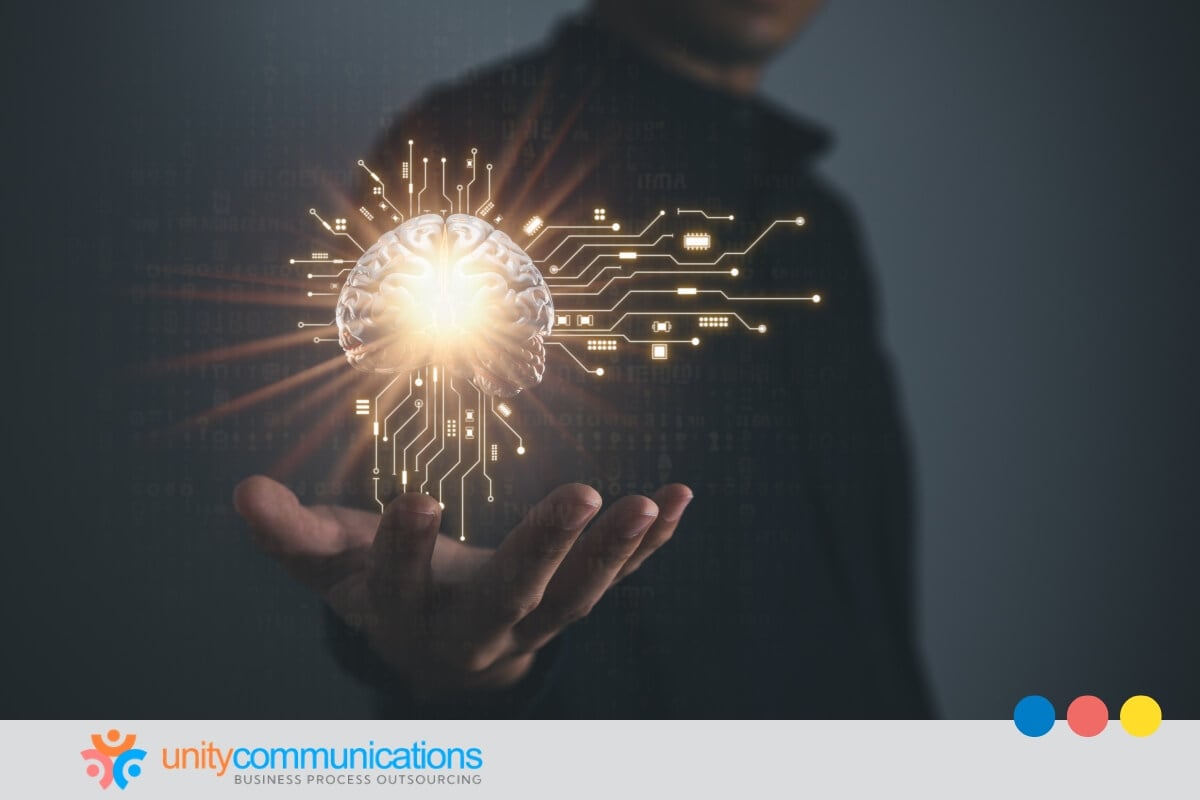
AI agents can process data, automate workflows, and surface insights. But they cannot exercise judgment, navigate sensitive conversations, or take accountability for institutional decisions.
OECD research on AI adoption in schools notes that even though any single teacher can misjudge a student’s situation, running that same judgment through an AI system at scale changes how much confidence an institution places in the output. A wrong call now affects far more students at once.
A BPO partner fills the gap. To understand how, let’s define BPO. BPO is a business strategy in which you delegate specific functions to external providers. In the context of AI in education, here’s how outsourcing works:
- A BPO partner takes ownership of defined tasks, such as AI-assisted grading review, student support monitoring, or compliance reporting, so your internal team is not stretched across both teaching and administration.
- They provide trained human reviewers who interpret AI outputs, catch errors, and escalate edge cases that automated systems cannot resolve.
- They manage the day-to-day monitoring of AI performance, flagging when a model produces inconsistent or potentially biased results before it affects students.
- The BPO team handles data governance tasks, including audit trails, access logs, and regulatory reporting, to enhance your compliance as AI tools scale.
Most importantly, BPO companies can act as a human in the loop (HITL). When AI and BPO collaborate, technology handles the scale and speed while people handle the judgment and accountability. This gives your institution the efficiency of automation without losing the human oversight that students, staff, and regulators require.