


Customers want fast, human-like answers. They do not want to sit through a long IVR menu, repeat their account number three times, or get transferred twice before anyone understands why they called. Old-style IVR was built for a slower era of support, and it shows every time a caller gets stuck in menu trees that do not match how people actually speak.
IVR modernization replaces outdated IVR systems with AI-driven voice technology that understands natural language, resolves routine requests independently, and hands off complex cases to a live agent. This shifts how a call center and its contact center platform think about voice interactions, from the first greeting to the final resolution.
This guide walks through the full IVR modernization process, from auditing your current setup to selecting an AI voice platform, designing conversational flows, and proving the return on investment with real numbers.
What is IVR modernization?
At its core, IVR modernization means moving away from rigid, button-based prompts and toward an AI voice agent that can hold a real conversation.
Traditional interactive voice response systems ask callers to “press 1 for billing, press 2 for support.” An AI-driven voice system asks, “What can I help you with today?” and lets the caller answer in their own words.
Modern IVR AI can understand full sentences, recall context from earlier in the call, and take action rather than just read back a menu. The ability to understand intent rather than force a menu choice differentiates a modern AI voice agent from a classic IVR built on rigid, unchanging scripts.
IVR modernization typically combines three technical layers:
- Speech recognition to convert what the caller says into text
- Natural language processing (NLP) to figure out what they actually want
- Backend integration so the AI agent can take action, not just talk
Some deployments add voice biometrics for secure authentication, replacing PINs and security questions with a caller’s own voice.
How do you improve the workflow with a modern IVR system?
Audit your current IVR, automate high-volume calls, choose a strong AI platform, design conversational flows, and build clear handoff rules.
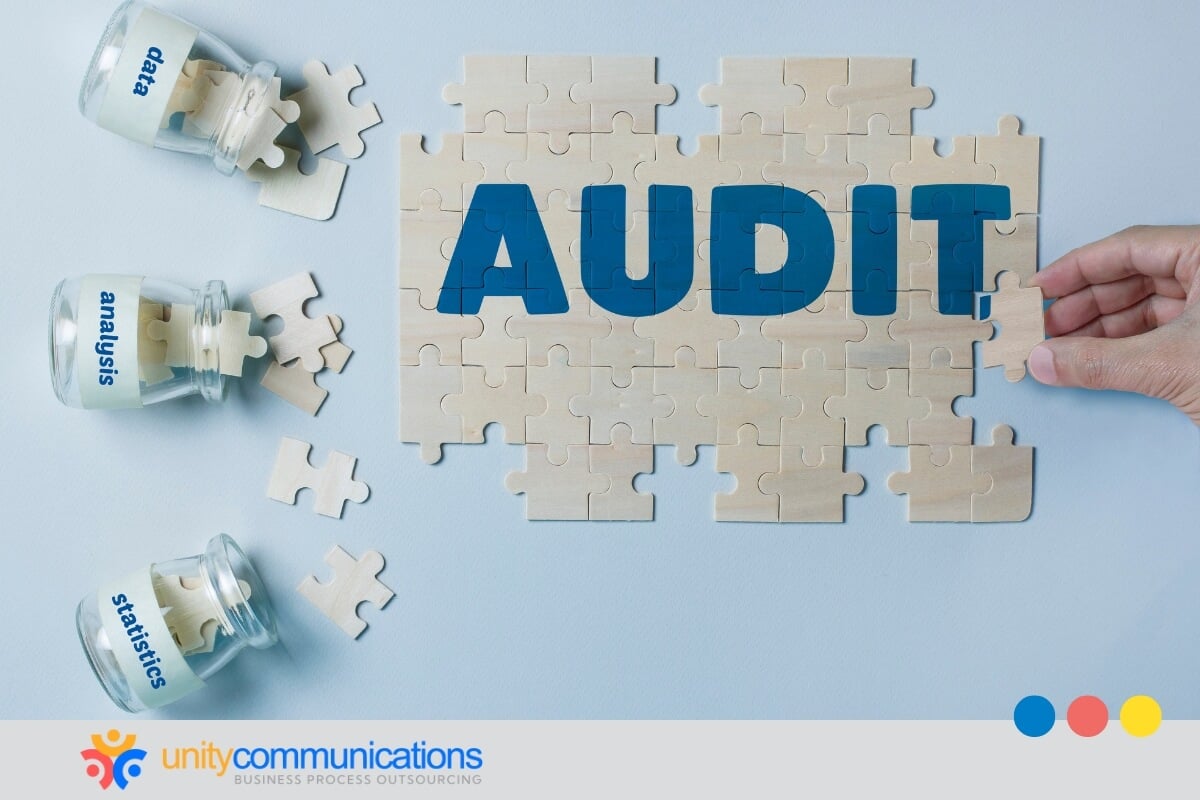
1. Audit your current IVR and find where it fails
The first step in any IVR modernization project is figuring out exactly where your IVR fails. Before you touch a single workflow, map the entire caller journey through your existing phone system. Document every menu, every branch, and every routing rule, then lay that map over real call data.
This audit reveals where callers hang up, which menu options trigger a transfer to a live agent, and which times of day or issue types drive the highest abandonment. Zendesk’s CX Trends Report found that 60% of consumers report being frequently transferred to another agent or department on phone calls. That repeated bouncing is a common failure point in legacy IVR menus.
Compare AI-driven automation with manual or part-time dispatcher models, which remain common in change-order and scheduling workflows. Many teams rely on staff to manually log updates by phone, an approach limited by headcount and human error. This kind of audit shows where AI captures updates and executes actions faster than a manual process. Unity’s guide to friction-free IVR automation walks through how.
Finally, look past the technical metrics. Use surveys, call recordings, and speech analytics to understand the emotional weight of a call. An IVR can hit every routing target and still leave customers annoyed, an issue that your modern IVR should resolve.
2. Define the use cases worth automating first
Once you know where the old system breaks down, the next step in IVR modernization is deciding what to automate first. You do not need to replace every workflow at once. Focus on high-volume, repetitive requests that consume time but require little human judgment.
Common examples include:
- Balance checks and account lookups
- Appointment scheduling and rescheduling
- Password and PIN resets
- Order status and delivery updates
- Bill payments and transaction confirmations
These requests follow predictable patterns, which makes them ideal candidates for self-service. Anything involving strong emotion, a dispute, or a judgment call is a poor first target, freeing agents to focus on complex, high-value conversations instead. Those calls still belong with a human, and a well-designed AI system should recognize that instantly and route the caller to the right person instead of trying to force a resolution it cannot deliver.
Set clear success criteria before you launch anything. Shorter handle time, fewer transfers, higher first-contact resolution, and improved csat scores for calls are all reasonable benchmarks. Without them, you will not know whether your IVR modernization actually worked or just moved the friction somewhere else.
3. Choose the right AI voice platform
Selecting the right AI voice platform is one of the most consequential decisions in the entire IVR modernization process. The market is full of vendors claiming to offer the perfect AI voice agent, but capabilities vary enormously. You want strong language understanding, generative AI for handling open-ended questions, and the ability to actually execute tasks, not just talk about them.
DataHorizzon Research sizing data shows the global market for IVR technology has grown sharply in recent years and is on track to roughly triple in value by the early 2030s, underscoring how quickly businesses are investing in AI-powered voice technology. For a broader look at where AI voice fits inside a support strategy, read our “11 Powerful Ways AI IVR Is Transforming Customer Support and Efficiency.”
When evaluating AI voice platforms, look for:
- Natural, human-like voice recognition that handles accents and background noise
- The ability to update records, process payments, or route tickets without human intervention
- Continuous learning so the system improves as it handles more calls
- Scalability to support enterprise call volumes as your business grows
A future-proof platform keeps your investment relevant for years, rather than becoming obsolete after a single product cycle. This is also where voice quality matters more than people expect. A voice agent that sounds robotic or lags mid-sentence undermines trust even if the underlying AI capabilities are strong.
4. Design conversational flows for the contact center

Good conversational IVR design makes IVR modernization feel effortless instead of gimmicky. Map your most common customer journeys, identify the key intents behind each, and build fallback paths to a live agent whenever the AI agent cannot resolve the issue.
Ditch the old menu tree entirely. Instead of “press 1, press 2,” ask direct, open questions, such as “Are you calling about billing, a delivery, or something else?” This single change improves recognition accuracy and removes the frustration of not fitting neatly into a preset option.
Shifting from rigid, button-based prompts to conversational, speech-enabled voice systems can meaningfully improve satisfaction scores compared to continuously using keypad menus. That difference alone justifies the redesign work for most call center operations.
Every flow should anticipate variation in how people phrase requests. Two customers asking to reschedule an appointment might phrase it in ten different ways. A modern voice agent needs to recognize all of them as the same intent. Continuous learning from live calls helps improve the call flow over time.
5. Know when to route callers to a human agent
A clear transfer or handoff strategy is non-negotiable in IVR modernization. When a caller is frustrated, dealing with a billing dispute, or asking about an emotionally sensitive topic, force a fast transfer rather than another round of clarifying questions.
Build clear escalation rules. Repeated failed intent matches, negative sentiment, or an explicit request for a person should all trigger immediate routing to the best available live agent. A caller who has to repeat information they already gave the AI agent will leave the call more frustrated, so ensure the context transfers to the caller.
When the transfer works well, agents can focus on the interactions that actually need human judgment: negotiation, empathy, and problem-solving. Everything else—the balance checks, the scheduling, the FAQs—stays with the voice agent.
6. Integrate IVR with voice AI across your systems
An AI voice assistant is only as useful as the systems it can reach. Connecting your IVR to a capable voice AI layer means linking it to your telephony platform, CRM, and ticketing tools so the system can act on what it hears, not just respond to it.
Map every touchpoint:
- Telephony: Real-time access to call routing, queuing, and voice channels
- CRM: Customer history, preferences, and account data that personalize the conversation
- Ticketing and support tools: Automated logging so all call details are captured
- Backend systems: The databases that actually process appointments, payments, and order updates
Leading vendors agree that a strong IVR does more than simply route calls. It also needs to support intelligent self-service, smooth escalation to human agents, and clear data visibility—a standard reflected across the industry’s top providers, as covered in our “Top IVR Companies Businesses Trust in 2026.”
Before going live, run integration tests that simulate real scenarios. Confirm that a change made through the AI voice agent syncs immediately to the CRM and triggers any workflow a human agent will need to see. Delayed syncs and misrouted calls are two of the fastest ways to undo the trust you just built with a better voice experience.
7. Start small, then scale across the enterprise
IVR modernization works best as a phased rollout. Start with a pilot focused on your highest-volume, lowest-complexity call types. This lets you validate accuracy and gather real feedback without disrupting your entire customer base.
As the pilot proves itself, expand coverage to more complex tasks, such as multi-step problem resolution or sensitive account changes. Track abandonment, transfer rates, average handle time, and satisfaction at every stage to catch problems before they scale with you.
For a large enterprise managing calls across multiple time zones, this phased approach also reduces the risk of a bad launch affecting every region at once. Bring internal teams and an outsourcing partner into the rollout together. Their operational experience helps refine AI agent behavior more quickly and prevents the common pitfalls of scaling too fast.
8. Measure IVR performance and prove ROI

You cannot manage what you do not measure. Track these metrics from day one:
- Call abandonment rate. A lower rate signals that the AI voice agent is resolving calls efficiently.
- Transfer rate to live agents. High transfer rates point to flows or fallback logic that need work.
- Average handle time (AHT). Shorter AHT without a drop in accuracy is a clear win.
- First-contact resolution (FCR). This shows whether callers actually get what they need on the first try.
Combine these operational numbers with customer satisfaction data. As customer expectations grow, a technically efficient system that still frustrates callers is not a success. Post-call surveys and CSAT scores tell you whether the experience actually feels better, not just faster.
9. Partner with a hybrid BPO for IVR replacement
Planning to replace IVRs with AI on your own is possible, but a hybrid BPO partner can significantly shorten the timeline and reduce risk. A reputable partner brings hands-on experience deploying IVR agents, aligning AI integration with proven best practices, and scaling support across CRM, telephony, and ticketing platforms at once.
Outsourcing can go well beyond call handling. Partners can design conversational flows, train models on live call data, monitor quality, and continuously refine the system so it keeps sounding like your brand rather than a generic bot. You can also outsource call monitoring, model refinement, and reporting so your internal team can focus on strategy instead of day-to-day maintenance.
With their support, IVR modernization moves from a one-time project to an ongoing capability. As call patterns shift, seasonal volume spikes, and new products or policies are introduced, the flows and models need continuous tuning. A hybrid team can handle that upkeep while your business continues to grow.