Customers notice a significant difference between businesses that use artificial intelligence (AI) in their customer service and those that don’t. That’s because we operate in an environment where speed, efficiency, and customer experience define competitive advantages.
Thus, many businesses turn to business process outsourcing (BPO) to gain access to AI-powered virtual assistants.
But how do AI virtual receptionists work? This article breaks down the two key benefits of employing this emerging technology: significant efficiency and cost savings.
How does an AI virtual receptionist work?
AI-powered virtual assistants are intelligent software solutions designed to replicate and enhance human tasks. They work similarly to AI virtual receptionists.
Unlike outdated interactive voice response (IVR) systems, such as “Press 1 for sales” systems, today’s assistants use natural language processing (NLP). This allows them to understand intent, respond conversationally, and route calls intelligently.
So, how do AI virtual receptionists work? They don’t just answer phones. They engage with customers in a way that feels natural, fast, and highly personalized.
These assistants are often deployed through cloud-based platforms, making them flexible and easy to integrate with existing business tools and systems. They can answer common questions, capture leads, schedule meetings, and escalate complex questions to human staff when necessary.
The result is a hybrid reception model that maximizes efficiency while preserving the human touch where it matters most. The capabilities of an AI-powered virtual assistant can include the following:
- Natural language understanding (NLU): Recognizes caller intent, accents, and phrasing
- Multi-channel engagement: Works across phone, chat, and sometimes even SMS
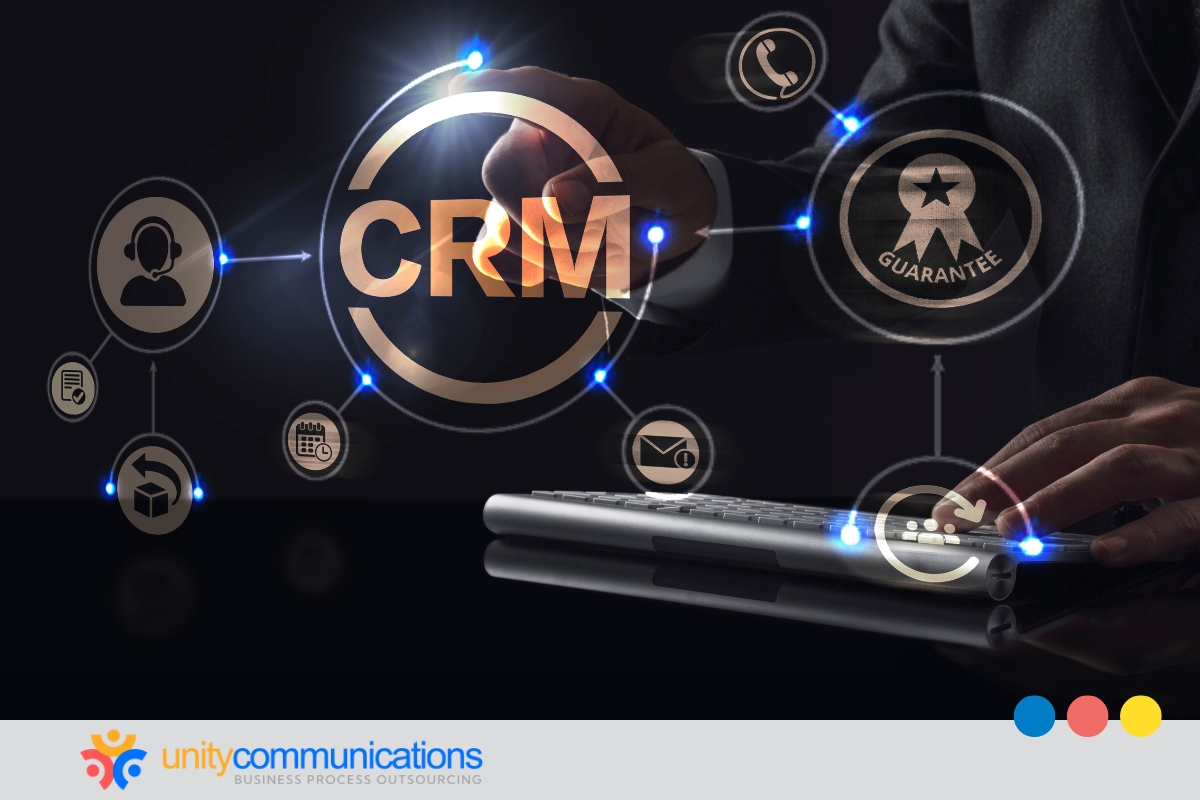
- Customer relationship management (CRM) and calendar integration: Book appointments or logs leads automatically
- Contextual memory: Remembers recent interactions for smoother conversations
- Escalation protocols: Transfers calls to humans when compliance or complexity demands it
By combining these functions, AI-powered virtual assistants are rapidly emerging as the frontline of customer engagement work.
Usually, you gain access to this tool through outsourcing. But what is it?
Outsourcing is the practice of delegating business functions to a third-party team or organization. In the past, this would often entail contracting human receptionists or call center agents. Today, outsourcing has evolved to include AI-powered virtual assistants.
By partnering with a BPO provider, you can quickly deploy these tools without the need for a significant upfront investment. That’s how outsourcing works.
The efficiency gains of AI-powered virtual assistants in practice
The real value of these AI agents is in their efficiency to manage calls that helps:
- Reduce wasted time
- Prevent miscommunication
- Eliminate repetitive manual work
- Ensure no opportunity slips through the cracks
When customers receive prompt and accurate service, they’re more likely to stay engaged. Employees can also devote more time to focus on higher-value tasks that drive growth. This explains why 80% of companies plan to increase their customer experience (CX) investments, including those in AI.
How do AI virtual receptionists work in terms of efficiency? Here are a few examples:
1. Instant response times
Customers have shorter attention spans. A delay of even 15–30 seconds in answering a call can feel like an eternity, especially if the caller is already frustrated or shopping around.
AI-powered virtual assistants greet callers immediately. This speed reduces abandonment rates and conveys professionalism and attentiveness from the first interaction.
2. System integrations
AI-powered virtual assistants can integrate into your core business systems. Examples include CRMs, calendars, and helpdesks.
Instead of simply relaying information, they act, handling the following tasks:
- Booking appointments
- Updating customer records
- Logging support tickets in real time
- Processing orders
- Capturing and qualifying leads
- Synchronizing data
This automation reduces errors that often occur with manual data entry. Over time, these small efficiency gains accumulate, reducing administrative overhead and enhancing service delivery.
3. Smarter routing
Equally important is how these systems reduce friction inside the business. When AI can resolve common requests on the first call, it frees staff from repetitive tasks and enables them to focus on higher-value work.
Smarter routing ensures that when customers do need human help, they reach the right person the first time, avoiding wasted minutes and customer frustration.
4. First-call resolution (FCR)
Customers expect quick answers, so how do AI virtual receptionists work to meet this expectation? They resolve common issues on the first attempt.
AI-powered virtual assistants can instantly handle common tasks such as:
- Check business hours for callers who need quick information.
- Schedule appointments directly into staff calendars.
- Reset passwords or guide customers through simple account recovery steps.
- Provide directions or location details for offices, stores, or service centers.
- Answer frequently asked questions (FAQs) about pricing, services, or product availability.
- Confirm or cancel reservations and appointments without human involvement.
- Process basic orders or reorders for frequently purchased products.
- Send reminders or confirmations via email or SMS.
- Capture customer contact information and update CRM records.
- Escalate sensitive issues to the correct department when necessary.
Every time the AI resolves a query without escalation, it reduces the workload on your human staff. That means fewer hours spent answering repetitive questions and more resources devoted to high-value interactions. Over time, this creates a leaner, more efficient operation with lower labor costs.
5. 24/7 coverage
Unlike human staff, AI-powered virtual assistants don’t clock out of work at 5 p.m. or require overtime pay for night and weekend shifts.
They’re available around the clock, answering calls when customers need assistance most. They can work in the early mornings, late at night, and during holidays. This constant availability strengthens customer relationships and ensures every question receives an answer.
As a business, this setup means you can avoid hiring staff for late-night shifts or temporary workers to cover peak seasons. Instead, the AI handles the baseline load, while humans manage the escalations.
Cost savings compared to traditional models

Efficiency only tells half of the story. With the way AI virtual receptionists work, they also improve your bottom line.
1. Reduced labor costs
Hiring full-time receptionists in the U.S. can cost over $50,000 per year in salary, excluding benefits and training. Meanwhile, an AI-powered virtual assistant has lower ongoing costs and allows you to eliminate benefits and salary expenses.
You can then redirect the money you saved on labor toward growth initiatives, such as marketing, product development, and customer success programs.
2. Predictable pricing
Human labor costs often fluctuate due to overtime hours, holiday pay, and the need for temporary staffing during peak seasons. At the same time, outsourcing can be equally unpredictable, with per-minute rates that climb as call volumes rise.
AI-powered virtual assistants offer different models, which are:
- Flat subscription fees. Pay a fixed monthly fee, regardless of the number of calls the system handles. This is particularly beneficial if you experience high or unpredictable call volumes, as it allows you to avoid penalties for spikes in activity. Whether the tool manages 500 calls or 5,000, the cost remains the same.
- Scalable usage-based pricing. Get charged per minute, per call, or per transaction. This usage-based model is helpful if you have lower or seasonal call volumes. Pay for what you consume to keep costs efficient and flexible.
These models make budgeting far simpler, since you know your monthly spending. Predictable pricing provides financial clarity and removes the anxiety of surprise bills.
3. Lower overtime
One of the biggest financial drains of human staffing is overtime pay. If you want to offer extended hours, you might have to pay premium wages for nights, weekends, or holidays. These costs are unavoidable when relying solely on people.
So, how do AI-powered virtual receptionists work to solve this? They provide 24/7 coverage without additional charges. Whether it’s answering a late-night call or managing holiday traffic, the AI agent is always available. This allows you to expand their service hours without increasing their payroll.
4. Fewer missed leads
Missed calls translate directly into lost opportunities. A single unanswered inquiry could mean a lost sale, a missed appointment, or a frustrated customer who chooses a competitor instead.
These missed leads result in thousands of lost revenues every year. In fact, bad customer service can cost your business up to $3.7 trillion.
With AI receptionists answering every call instantly, the chance of missing a lead drops dramatically. Even if the AI can’t resolve the issue thoroughly, it ensures the inquiry is logged and routed appropriately. You avoid missing an opportunity because no one picked up the phone.
5. Faster return on investment (ROI)
Businesses that invest in AI-powered virtual assistants see that it pays for itself quickly through its work by lowering labor costs, reducing overtime, and capturing leads that would otherwise be lost.
What’s more, ROI grows over time. Training and integrating the system boost its efficiency and reliability without significantly raising costs. This long-term stability is a powerful contrast to the escalating expenses of human staffing.
Where humans still matter

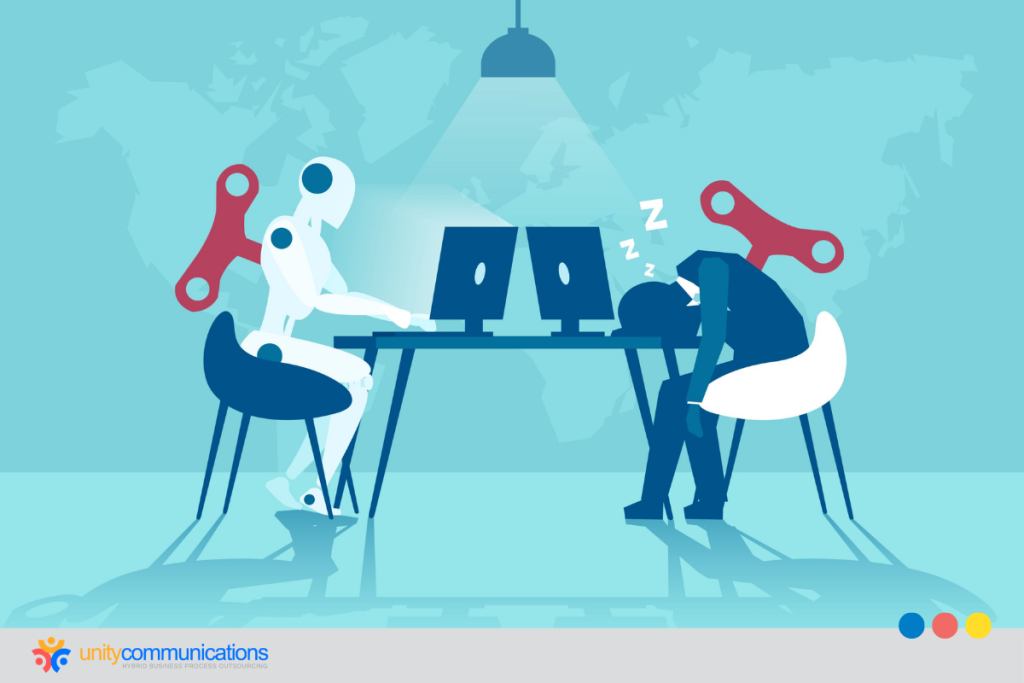
Will AI replace receptionists? No. Despite the benefits, AI cannot replace people. Complex, sensitive, or compliance-driven interactions often require a human touch. The real value of AI comes in how it supports humans rather than replacing them.
For example, AI systems can detect frustration in a caller’s tone and trigger an escalation to a live agent. They can flag conversations that involve compliance with the Healthcare Insurance Portability and Accountability Act of 1996 (HIPAA) and route them securely.
When a handoff happens, the AI passes the caller’s details and context to the receptionist, so customers don’t have to repeat themselves. This hybrid approach balances cost and efficiency:
- Escalation paths ensure humans handle complex issues.
- Compliance safeguards keep sensitive industries protected.
- Warm transfers maintain customer trust during handoffs.
- Hybrid workflows let AI qualify leads while humans close deals.
In other words, AI-powered virtual assistants handle efficiency in work while leaving empathy-related tasks to humans.
Best-fit use cases by industry and size
Not every business adopts AI reception for the same reasons. Smaller businesses often value cost savings most, while larger companies prioritize efficiency at scale. Different industries also benefit in various ways:
- Healthcare (appointment scheduling, after-hours calls, HIPAA-sensitive handoffs)
- Legal services (client intake, compliance-driven routing, cost control)
- E-commerce (order status, returns, seasonal spikes)
- SMBs (affordable coverage that levels the playing field)
- Enterprises (efficiency at scale with multilingual and 24/7 support)
These examples demonstrate how an AI-powered virtual receptionist works across industries, consistently delivering either efficiency, cost savings, or both.
The bottom line
AI-powered virtual assistants are no longer experimental. They’re rapidly becoming a core business function. They offer businesses a chance to deliver always-on customer service with measurable ROI.
That’s because they improve response times, lower costs, integrate seamlessly with enterprise tools, and provide scalable support.
Do you want to learn more about how AI virtual receptionists work? Are you considering employing AI agents in your customer service strategy? Let’s connect and find the best solution for your needs.