

More small and medium-sized businesses (SMBs) are investing in artificial intelligence (AI) to compete in a dynamic market. Tools such as AI agents can perform multiple tasks automatically, freeing teams from burdensome work.
If you’re considering embedding AI into your workflow, this article breaks down the top free agentic AI tools, selected for their fit and features.
Note that while licenses are free, processing costs and implementation remain expenses your SMB must budget for. Another way to access them without buying or maintaining platforms is by partnering with a business process outsourcing (BPO) provider, which can also serve as an extension of your team.
What are agentic AI tools, and why do they matter?

Agentic AI tools are autonomous systems that run multi-step tasks with minimal input, cutting repetitive work and boosting efficiency.
Understanding what an AI agent is highlights its ability to plan, act, and adapt dynamically, going beyond the capabilities of traditional AI. It can:
- Interpret natural language prompts to handle complex workflows
- Coordinate multiple steps without constant monitoring
- Adapt decisions in real time based on task results
- Maintain memory of past actions to improve future performance
- Integrate with existing software and tools to extend functionality
Agentic workflows are becoming a core part of modern business operations, a trend supported by market data. According to Grand View Research, the global AI market could rise to $3.5 trillion by 2033. People use it to improve workflows, increase productivity, and sustain growth.
The question is which of the top agentic AI tools will fit your business needs and goals.
Top free best agentic AI tools in 2026
For SMBs exploring AI tools to reclaim more time for staff to focus on high-value work, here are 10 autonomous agents with free plans worth considering in 2026. We’ve chosen them based on capabilities and benefits. We’ve also included their limitations to help you make more informed decisions.
1. AutoGPT
AutoGPT is an autonomous AI agent that breaks down complex goals into actionable tasks and executes them with minimal supervision. It remains among promising free agentic AI tools, but risks infinite loops that can quickly exhaust usage budgets.
Key AI capabilities for SMBs
- Plans, prioritizes, and self-corrects tasks to ensure efficient completion
- Automates repetitive activities, including research, content creation, and follow-ups
- Generates reports, marketing copy, and client communication sequences
Business benefits
- Increased employee focus on strategic, high-value work
- Reduced human error and consistent task execution
- Enhanced productivity across operations, marketing, and customer service
Limitations
- The platform requires careful AI prompt design and consistent human oversight to ensure task accuracy.
- The agent can produce imperfect or unintended results if it is not monitored during complex, multi-step processes.
- The initial setup can feel highly technical, especially for non-developers unfamiliar with environment configuration.
AutoGPT offers an accessible entry point into autonomous AI, helping your business test structured automation before investing in larger AI systems.
2. CrewAI
CrewAI is a multi-agent orchestration platform that enables AI agents to collaborate on complex tasks with defined roles. Its basic plan is a free agentic AI tool that already includes a visual no-code editor called CrewAI Studio and an AI copilot. Both allow non-technical users to build and deploy crews (a group of AI agents) using natural language and drag-and-drop nodes.
Key AI capabilities for SMBs
- Role-based agent teams that divide work similarly to real human crews
- Visual editor plus intuitive application programming interfaces (APIs) for workflow creation
- Integrated triggers and tools for real-world applications
Business benefits
- Rapid prototyping of autonomous processes
- Reduced manual coordination in multi-step tasks
- Better collaboration across departments without hiring extra staff
Limitations
- The free tier is capped at 50 workflow executions per month, which might be insufficient for high-volume production needs.
- While the visual editor is user-friendly, self-hosting the framework for unlimited use requires Python expertise and a dedicated technical setup.
- Orchestrating multiple agents is resource-intensive and requires careful planning to avoid high API usage costs.
CrewAI offers a scalable approach to autonomous collaboration for workflows that go beyond single-agent tasks.
3. LangGraph
Another popular free agentic AI tool is LangGraph, which lets developers build stateful, multi-step AI workflows with graphs. The LangGraph Platform (SaaS) and LangGraph Studio offer GitHub-to-Live deployment and a full graphical user interface (GUI) for debugging.
Key AI capabilities for SMBs
- Graph-based workflow modeling for complex logic
- Persistent memory throughout task sequences
- Conditional routing and dynamic decision flows
- Integration with large language models (LLMs) and external tools
Business benefits
- Ideal for customer support automation with contextual memory
- Useful for compliance-heavy or rules-driven processes
- Supports structured decision systems beyond simple prompts
Limitations
- Developing advanced agent logic still requires low-code or specialized developer skills, as the platform is not a fully “no-code” solution.
- Using the tool effectively requires a solid grasp of graph-logic concepts and state-machine architecture.
- The comprehensive features and setup process might be excessive for businesses only looking to automate simple, linear tasks.
With LangGraph, you can design reliable, state-aware AI systems that require continuity, traceability, and controlled execution paths.
4. Microsoft AutoGen (and Microsoft Agent Framework)
Microsoft AutoGen is an open-source framework for building and orchestrating collaborative multi-agent AI systems. In 2026, it has evolved alongside the Microsoft Agent Framework, merging research-grade flexibility with enterprise stability. The platform enables event-driven, distributed workflows with modular components, making it one of the most powerful free agentic AI tools for automating intricate, long-running tasks.
Key AI capabilities for SMBs
- Asynchronous messaging, allowing one agent to research while another writes
- Modular components for easy swapping of different LLMs, memory types, and specialized tools
- Built-in tracing and monitoring tools for visualizing agent communication and identifying stalling points
- Compatibility with both Python and .NET environments for integration into most existing business tech stacks
Business benefits
- Seamless management of complex data aggregation, automated report generation, and multi-step customer responses
- More reliability than single-task agents by using a defined “team” structure to catch and correct errors
- Ability to expand your operational capacity without significantly increasing your human headcount
Limitations
- The platform is best suited for teams with existing programming experience, as it requires a solid understanding of Python or .NET.
- Full deployment often necessitates integration with cloud-native or backend systems to manage state and persistent data.
- Non-technical SMB teams might find the framework’s initial implementation and long-term management overly complex without external support.
Microsoft AutoGen is not a “plug-and-play” app but a professional-grade infrastructure. The best way to use this tool is to have your BPO partner or a developer build a custom solution on top of it.
5. OpenHands
OpenHands is an open-source platform with autonomous AI coding agents primarily for AI-assisted coding, not general administrative or marketing tasks, although its 2026 version now includes a specialized browsing agent for live web research.
As one of the top free agentic AI tools, it helps teams reduce engineering workload by automating tasks that typically require extensive human effort.
Key AI capabilities for SMBs
- Autonomous code generation and editing
- Secure, sandboxed execution environments
- Integrated web browsing for documentation
- Parallel task execution for large projects
Business benefits
- Faster development and delivery cycles
- Reduced technical debt and backlogs
- Improved code quality and testing
- Zero licensing fees for scaled operations
Limitations
- The platform is ideal for teams with moderate technical skills, as it requires a command-line or Docker-based setup.
- The initial configuration of sandboxed workflows can be complex for users unfamiliar with containerization.
- The quality of the autonomous output depends heavily on the choice of the underlying AI model.
OpenHands lets your business add autonomous development support without upfront licensing fees, speeding product delivery and lowering engineering costs. Although the platform is free, you must still budget for the usage-based token costs of the AI models powering the agents.
6. DBOS Agentic Framework
The DBOS Agentic Framework is an open‑source platform for long-running, event-driven autonomous AI agents. It’s one of the robust, free agentic AI tools, requiring Postgres and offering high reliability with crash-recovery memory.
While it launched as a TypeScript tool, the 2026 version fully supports Python, making it accessible to a much wider range of SMB developers.
Key AI capabilities for SMBs
- Durable execution that persists through sessions
- Event‑triggered agents that react to changes in data or systems
- Automatic state storing for long-running workflows
- Native “time travel” debugging to trace agent errors
Business benefits
- High-reliability completion of critical business processes
- Significant reduction in manual error monitoring
- Seamless handling of high-volume transactional data
- Lower infrastructure costs via efficient state management
Limitations
- The framework is suitable for teams with at least moderate technical proficiency in Python or TypeScript.
- The initial setup requires configuring a Postgres database, which can be complex for non-technical users.
- The “durable” nature of the framework means complex workflows require careful upfront architectural planning.
The DBOS framework lets your business automate trigger-based processes with free, scalable autonomous agents that run consistently. It acts like a “black box” flight recorder for your AI. If a system crashes, the agent resumes exactly where it left off.
7. ChatGPT
ChatGPT has moved beyond simple chat to a free agentic AI tool with its Agent and Work modes. The system runs on an internal virtual computer. It browses live websites and works through multi-step tasks with less oversight than standard chat. Business teams can hand off full workflow projects instead of typing single prompts.
Key AI capabilities for SMBs
- Runs multi-hour research, content, and data tasks with minimal check-ins
- Reads and combines information across linked apps, including email, file storage, and CRM tools
- Navigates websites and fills out forms through a built-in browser
- Produces finished documents, spreadsheets, and presentations directly from a task
Business benefits
- Cuts the manual work of gathering information across separate tabs and tools
- Turns plain-language instructions into automation triggers without API mapping
- Pauses before sensitive actions, such as payments, for a human check
- Gives smaller teams wanting to build agent workflows a starting point without a developer
Limitations
- The free desktop tier covers agent tasks, but frequent recurring automation and full workspace integrations require a paid team plan.
- Logins that require secure authentication pause the agent and need manual sign-in.
- Multiple agents share a single chat thread, which gets crowded and hard to track when several tasks run at once.
ChatGPT gives SMBs already using OpenAI tools a starting point for agent workflows and automation triggers without new software. Teams running several agents at once might need a purpose-built orchestration platform rather than a single crowded chat thread.
8. Akka Agentic Platform
The Akka Agentic Platform is a framework for designing highly concurrent, distributed autonomous agents. It operates under a Business Source License (BSL), making it a free tool for organizations with annual revenue under $25 million. The 2026 version is Java/Scala-first, significantly lowering the barrier to entry for SMB development teams.
Key AI capabilities for SMBs
- Fault-tolerant execution with stateful persistence
- Distributed task scheduling and inter-agent messaging
- High-density processing for massive data volumes
- Self-healing agents that recover from infrastructure failure
Business benefits
- Reliable automation of large-scale processes
- Reduced operational bottlenecks and data handling delays
- Enhanced resilience for mission-critical digital workflows
- Lower compute costs through high-efficiency execution
Limitations
- The free version is restricted to organizations with under $25M in revenue. Production use above this requires a commercial license.
- The architecture remains complex and might be excessive for simple, low-volume business automations.
- Implementing the full self-healing features typically requires specialized engineering oversight.
The system provides your business with a robust, cost-free foundation to scale autonomous AI workflows efficiently and reliably. It is the “industrial strength” choice on this list, making it ideal for a BPO or a growing mid-sized business that needs to process millions of tasks without risking system crashes.
9. N8n
n8n is an open-source workflow automation platform with a visual, node-based editor for building agentic workflows. A self-hosted Community Edition runs for free with no execution limits, while n8n Cloud adds managed hosting on paid plans. Teams can drag and drop nodes to connect apps, models, and logic without writing code.
Key capabilities for SMBs
- Connects to hundreds of apps through pre-built nodes, plus custom API calls
- Runs an AI Agent node that chains reasoning steps and calls outside tools
- Delegates work from one primary agent to specialized sub-agents on a single canvas
- Supports no-code, low-code, and full-code steps inside the same workflow
Business benefits
- Cuts automation costs by billing per completed workflow run instead of per step
- Gives technical staff a code option when a node cannot cover a task
- Adds a human approval checkpoint at any point before an agent acts
- Fits SMBs wanting to build agent workflows without a large software budget
Limitations
- The visual canvas can become cluttered in workflows with many branching steps.
- Advanced agent logic still needs comfort with JSON, APIs, or basic scripting.
- Free use requires self-hosting; n8n Cloud has no permanent free plan for production use.
n8n fits SMBs already comfortable running their own server or teams that want workflow control without vendor lock-in.
10. Zapier Agents
Zapier Agents, formerly Zapier Central, is a no-code AI automation platform built on Zapier’s app ecosystem. It lets non-technical users build a standalone AI assistant through plain-language prompts instead of technical setup. These assistants watch business apps and act on multi-step instructions without constant supervision.
Key capabilities for SMBs
- Connects to more than 9,000 apps without added setup
- Builds an agent from a plain-language prompt instead of a technical workflow map
- Links agents to external chat tools such as ChatGPT or Claude (by Anthropic) through the Model Context Protocol
- Tracks how data moves between steps inside Zapier Tables and Canvas
Business benefits
- Removes the technical barrier for founders testing an agent idea in minutes
- Sets visual guardrails on which apps or folders an agent can reach
- Pauses before sensitive actions and asks for a human check first
Limitations
- The free plan caps tasks at 100 per month, a limit complex agents can hit in one afternoon.
- Free workflows run in a straight line. Branching logic and premium app connections need a paid plan.
- Zapier bills AI steps by model tier. The default model costs 1 task, Advanced costs 3, and Premium costs 5. A complex agent running on Premium AI can burn through several tasks fast.
Zapier Agents fits SMBs already using Zapier who want a fast, no-code way to test an agent idea. Teams planning heavier agent workloads should budget beyond the free tier before they build.
How can a beginner start with AI agent deployment to improve workflows?
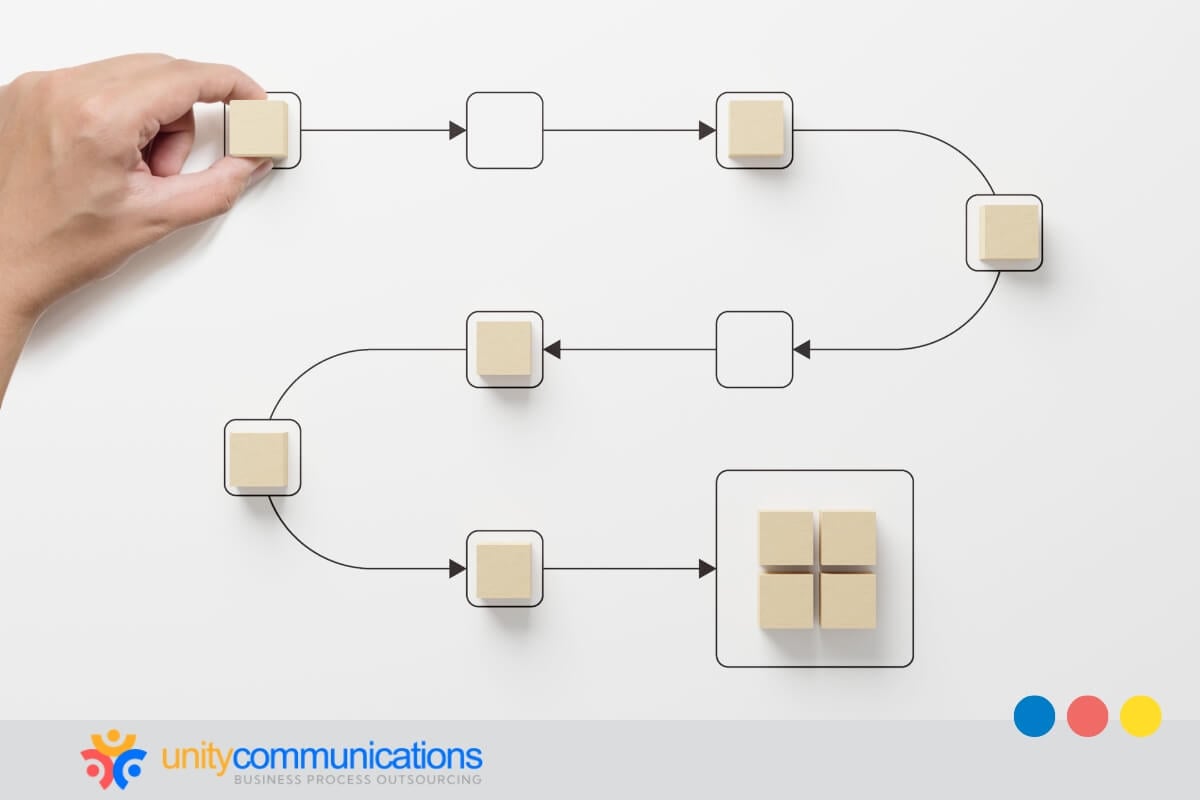
You can start with AI agent deployment by identifying repetitive processes, selecting suitable tools, and testing small pilot projects before wider rollout. A phased approach helps you integrate automation into daily operations without disrupting performance or strategic priorities.
Begin with a focused audit of routine tasks within operations, finance, marketing, or customer support. Then evaluate free agentic AI tools that align with your technical capabilities and business goals.
You can:
- Map high-volume, rule-based tasks suitable for automation.
- Define measurable workflow targets tied to revenue or cost control.
- Launch a limited pilot within one department to test agent reliability.
- Monitor output quality and workload impact.
- Refine processes and security protocols before expanding adoption.
Thoughtful experimentation lays the groundwork for steady performance gains and long-term competitive advantage.
How can outsourcing help SMBs maximize the impact of agentic AI platforms?
SMBs can pair free agentic AI tools with outsourced expertise, freeing internal teams to focus on high-value work while AI agents handle routine tasks.
In 2026, the strongest competitive advantage will come from seamless AI and BPO integration, in which technology handles the volume and humans handle the complexity:
- Technical setup and maintenance. BPO teams can handle technical work, such as API integrations and database management, for complex tools such as DBOS or AutoGen.
- Expert escalation management. Human agents act as the essential “safety net” for edge cases that autonomous agents cannot yet resolve.
- Enterprise-tier access. BPO partners often provide SMBs with the benefits of expensive pro AI tiers through their own consolidated licensing.
- Managed AI governance. External experts ensure that you adhere to strict data privacy and compliance protocols to prevent AI hallucinations.
- Accelerated ROI. Professional teams implement proven AI-human workflows in weeks, bypassing the steep learning curve of DIY automation.
How outsourcing works in the AI era
In 2026, how outsourcing works has shifted from simple labor arbitrage to “agentic orchestration.” Instead of just hiring a person to answer the phone, you are hiring a team to supervise a fleet of AI agents. This process involves:
- Scoping: Defining which tier 1 tasks the AI handles and which tier 2 tasks require human judgment
- Integration: Connecting your free agentic tools to the BPO’s professional management dashboard
- Continuous tuning: The BPO team continually training the AI on real-world escalations, making the system smarter each month
Combining AI tools like the ones above with outsourcing can improve your operations and uphold quality, helping you achieve high-value growth. By leveraging a BPO’s technical infrastructure and human oversight, your SMB can access the agentic AI space without the traditional costs of increasing your internal headcount.